
Store-bought cleaners are expensive, full of chemicals you can’t pronounce, and come in plastic you’ll throw away forever. The truth is, most of your house can be cleaned with three cheap ingredients: white vinegar, baking soda, and lemon. These 15 recipes actually work — not “sort of work if you squint,” but genuinely clean.
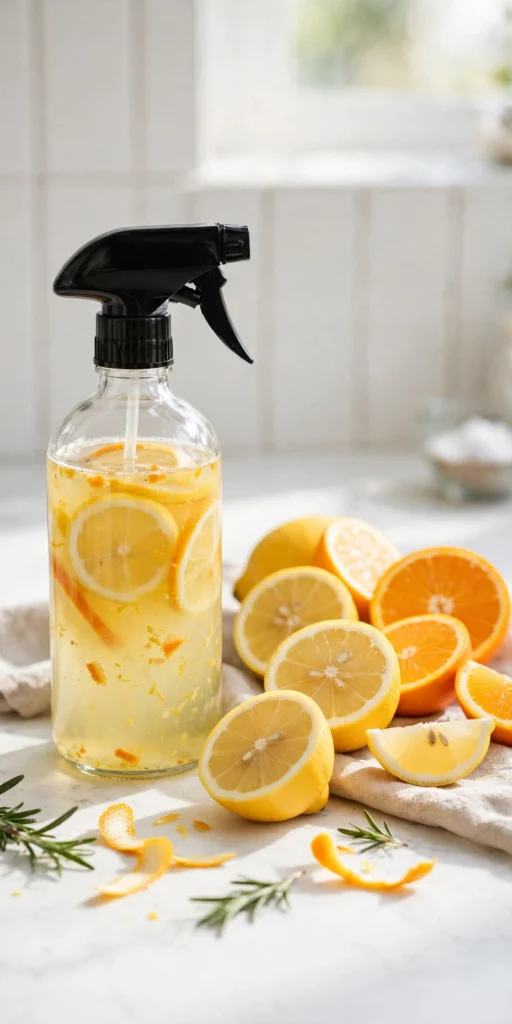
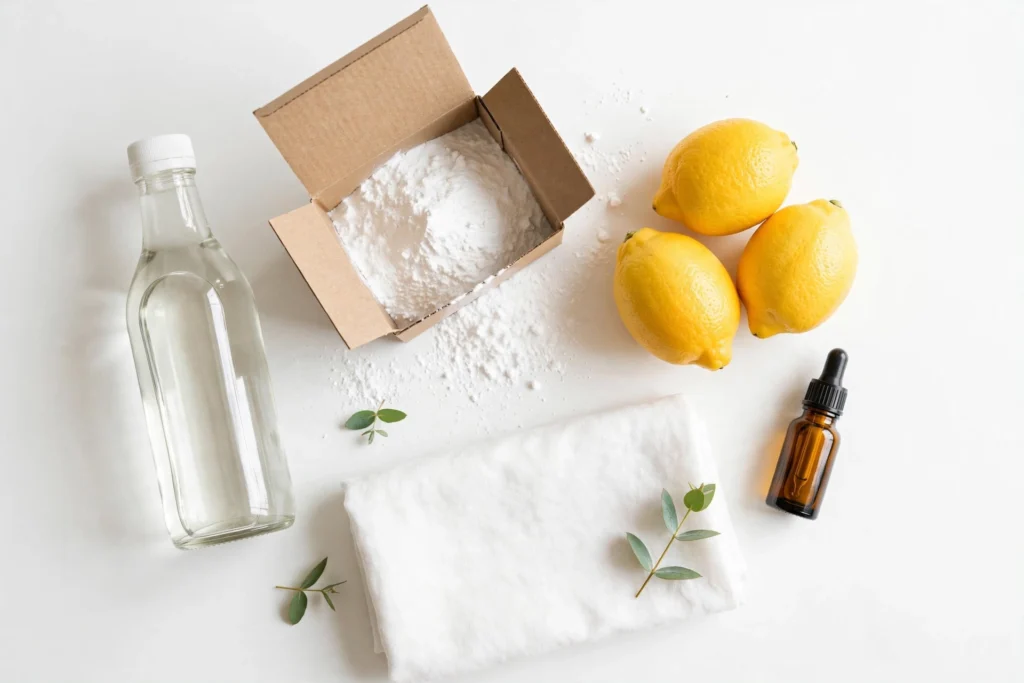
Your starter kit (buy once, costs under $10):
- 1 gallon white distilled vinegar
- 1 big box baking soda
- A few lemons (or a bottle of lemon juice)
- Castile soap (Dr. Bronner’s is the classic)
- Rubbing alcohol
- Spray bottles (glass if you can — vinegar and essential oils can degrade cheap plastic over time)
- Microfiber cloths
What you’ll learn in this guide
- The safety rules that matter before you mix anything
- 5 kitchen recipes, from all-purpose spray to dishwasher deep-clean
- 4 bathroom recipes that handle soap scum, grout, and glass
- 4 whole-house recipes for wood, carpet, air, and stainless steel
- 2 laundry recipes that brighten and deodorize
- What each recipe costs per use (spoiler: pennies)
Safety Rules First — Read Before You Mix
Natural ingredients still demand respect. These seven rules keep every recipe below completely safe:
- Never mix bleach with vinegar. It creates chlorine gas, which can cause serious breathing problems. If you use bleach anywhere in your routine, keep it far away from these recipes.
- Never mix bleach with ammonia — or with ammonia-based cleaners like some glass sprays. Same danger, toxic fumes.
- Don’t bottle vinegar and hydrogen peroxide together. The mix creates peracetic acid, which can irritate skin and eyes in a sealed bottle. The stain recipe below uses peroxide on its own — that’s fine.
- Label every bottle with what’s inside and the date you mixed it.
- Keep everything away from kids and pets, and store bottles up high or locked. “Natural” doesn’t mean “safe to drink.”
- Essential oil caution: tea tree, eucalyptus, and several other oils are toxic to cats and dogs. With pets in the house, skip the oils or check with your vet — every recipe here works fine without them.
- Never use vinegar on natural stone — marble, granite, travertine. The acid etches the surface permanently. Stone gets its own recipe below.
One more honest note: these recipes clean extremely well, but they are not EPA-registered disinfectants. For everyday cleaning, that’s plenty. After raw meat prep or a stomach bug in the house, use a proper disinfectant.
Kitchen Recipes
1. Citrus All-Purpose Spray
Your daily workhorse for counters, stovetops, sinks, and mystery sticky spots. It replaces the $6 bottle you keep rebuying.
Ingredients: 1 cup white vinegar + 1 cup water + 1 teaspoon castile soap + 10 drops lemon essential oil (optional). For the citrus version: steep lemon or orange peels in the vinegar for two weeks first, then strain and dilute 1:1 with water.
Steps: Combine in a spray bottle and shake gently before each use. Spray, let sit 30 seconds, wipe.
Best for: Sealed countertops (laminate, quartz), stovetops, sinks, cabinet fronts, trash cans. Skip on marble, granite, and natural stone.
Cost: about $0.40 per 16 oz bottle.
2. Baking Soda Soft Scrub
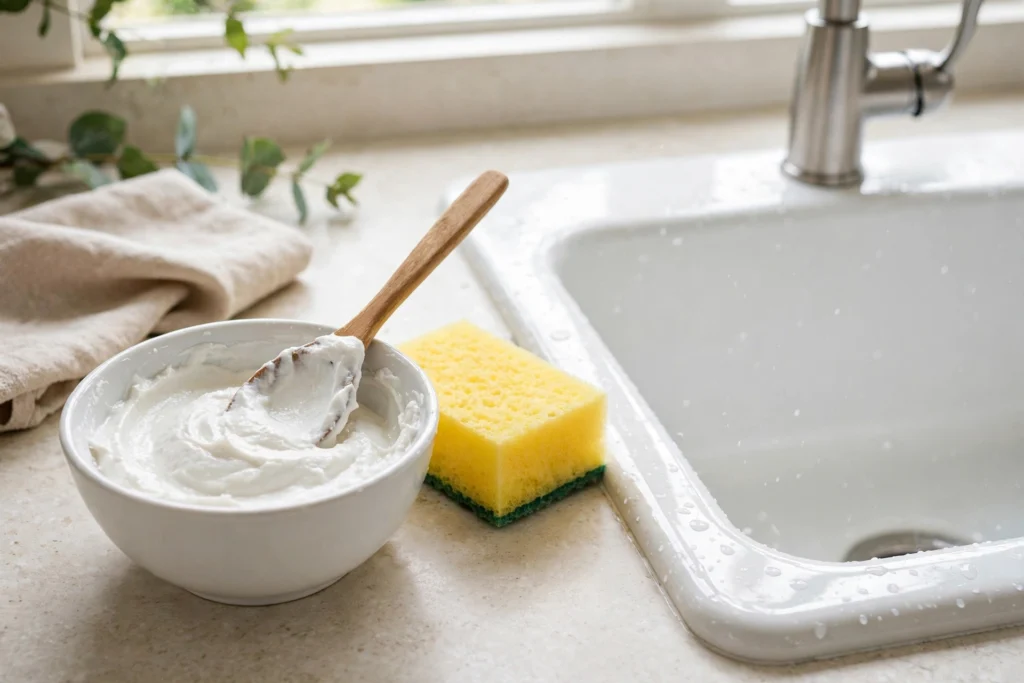
For sinks, tubs, and anything with stuck-on grime that needs gentle abrasion.
Ingredients: 1/2 cup baking soda + enough dish soap to make a frosting-like paste + a squeeze of lemon juice.
Steps: Mix into a paste, apply with a sponge, let sit 10 minutes, scrub lightly, rinse clean.
Best for: Kitchen and bathroom sinks, tubs, stovetop edges. The baking soda is a mild abrasive that won’t scratch porcelain or fiberglass; the lemon dissolves mineral deposits.
Cost: about $0.25 per batch.
3. Microwave Steam Clean (zero scrubbing)
Ingredients: 1 cup water + 2 tablespoons white vinegar + a few lemon slices, in a microwave-safe bowl.
Steps: Microwave on high for 5 minutes, then leave the door closed for 5 more minutes. The trapped steam loosens everything — wipe it out with a cloth. No scrubbing needed.
Best for: Splattered microwaves. The same steam principle works for oven interiors with a bigger bowl.
Cost: about $0.10 per clean.
4. Garbage Disposal Freshener
Ingredients: White vinegar frozen in an ice cube tray with lemon peels or slices.
Steps: Drop 2–3 frozen cubes into the disposal and run it with cold water running. The ice scours the grinding plates while the vinegar and lemon deodorize.
Best for: Kitchen sink disposals that smell funky. Monthly keeps them fresh.
Cost: about $0.15 per treatment.
5. Dishwasher Deep Clean
Ingredients: 1 cup white vinegar + 1/2 cup baking soda (used in two separate cycles).
Steps: Place the vinegar in a bowl on the top rack and run a full hot cycle, empty. Then sprinkle the baking soda across the bottom and run a short hot cycle. Wipe the door seal with a damp cloth.
Best for: Dishwashers with odors, film on dishes, or musty seals. Do this monthly.
Cost: about $0.50 per deep clean.
Bathroom Recipes
6. Toilet Bowl Fizz Cleaner
Ingredients: 1/2 cup baking soda + 1 cup white vinegar.
Steps: Sprinkle the baking soda into the bowl, pour the vinegar slowly over it, and let the fizz work for 10–15 minutes. Scrub with a brush and flush.
Best for: Toilet bowls with mineral rings or light staining. For the seat, handle, and base, wipe with the all-purpose spray instead.
Cost: about $0.30 per clean.
7. Tub and Tile Paste
That chalky ring around the tub is mineral buildup, not permanent damage.
Ingredients: 1/2 cup baking soda + dish soap to form a thick paste + 1 tablespoon lemon juice.
Steps: Spread the paste on the tub and tiles, wait 15 minutes, scrub with a sponge, rinse well.
Best for: Soap scum, hard-water film, and dull fiberglass tubs.
Cost: about $0.30 per batch.
8. Grout Whitening Paste
Ingredients: 1/2 cup baking soda + 1/4 cup hydrogen peroxide (3%, the brown bottle) + 1 teaspoon dish soap.
Steps: Mix into a paste, apply to grout lines with an old toothbrush, wait 10 minutes, scrub, and rinse or wipe clean.
Best for: Dingy tile grout in bathrooms and kitchens. Test on colored grout first — peroxide can lighten some dyes.
Cost: about $0.45 per batch.
9. Streak-Free Glass Cleaner
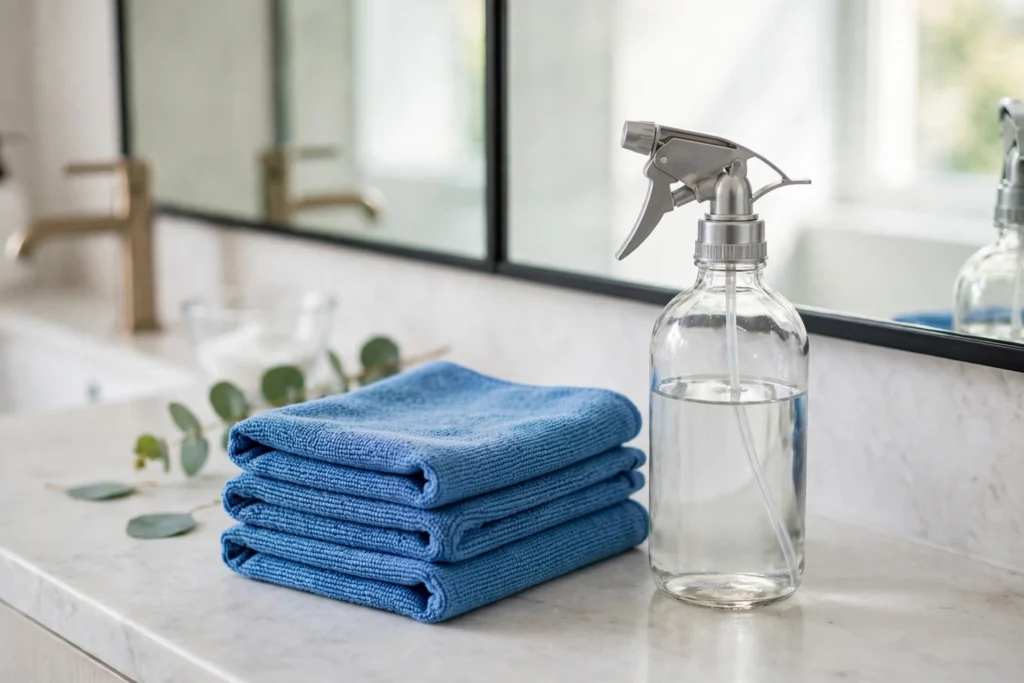
Ingredients: 1 cup water + 1 cup rubbing alcohol + 1 tablespoon white vinegar.
Steps: Spray lightly and wipe with a microfiber cloth using an S-pattern, top to bottom. No circles — circles cause streaks.
Best for: Bathroom mirrors, windows, glass shower doors. Pro tip: clean glass on a cloudy day or in the shade. Sunlight dries the spray before you wipe, and that’s what actually causes streaks.
Cost: about $0.35 per bottle.
Whole-House Recipes
10. Wood Furniture Polish
Ingredients: 1/4 cup olive oil + 1/4 cup white vinegar + 10 drops lemon essential oil (or 1 tablespoon lemon juice).
Steps: Shake well in a small bottle. Apply a thin layer with a soft cloth, then buff with a second dry cloth.
Best for: Sealed wood furniture and cabinets. It cleans and conditions — though it won’t fix scratches or restore damaged finish. Use sparingly; too much oil just collects dust.
Cost: about $0.75 per bottle (lasts months).
11. Carpet and Rug Deodorizer
For the lived-in smell carpets absorb — pets, cooking, teenagers.
Ingredients: 1 cup baking soda + 10–15 drops essential oil, shaken together in a jar with a shaker lid (an old parmesan cheese lid is perfect).
Steps: Sprinkle generously over the carpet, wait 20–30 minutes, and vacuum thoroughly.
Best for: Odors, not stains — this is a deodorizer, not a spot treatment.
Cost: about $0.50 per room.
12. Natural Air Freshener Spray
Most store sprays just add perfume to the stink. This neutralizes odor at the source.
Ingredients: 1 cup water + 2 tablespoons vodka or rubbing alcohol (helps it evaporate and disperse) + 15–20 drops essential oil.
Steps: Combine in a spray bottle and shake before each use. Mist into the air, not onto fabrics.
Best for: Bathrooms, bedrooms, musty closets.
Cost: about $0.50 per bottle.
13. Stainless Steel Polish
Fridge doors, dishwashers, and ovens pick up every fingerprint in the house.
Ingredients: Plain white vinegar in a spray bottle + a tiny drop of olive oil for buffing.
Steps: Spray with vinegar and wipe with a microfiber cloth with the grain — look closely, steel has faint lines, follow them. Then buff with the tiniest drop of olive oil on a dry cloth for a showroom shine.
Best for: Stainless appliances. Going against the grain is what leaves those visible streaks.
Cost: about $0.20 per polish.
Laundry Recipes
14. Laundry Scent Booster
Your detergent is probably fine — your water is the problem. Hard water makes detergent less effective.
Ingredients: 1/2 cup baking soda added to the wash cycle + 1/2 cup white vinegar in the fabric softener dispenser.
Steps: Add the baking soda with your regular detergent. Pour the vinegar into the softener dispenser so it releases during the rinse.
Best for: Dingy whites, musty towels, and hard-water areas. Your clothes will not smell like a salad, we promise.
Cost: about $0.25 per load.
15. Oxygen Whitening Soak
Ingredients: 1/2 cup hydrogen peroxide (3%) per gallon of warm water, in a basin or bucket.
Steps: Soak white or colorfast items for 30 minutes to an hour, then wash as usual. Test colored fabrics on an inside seam first.
Best for: Yellowed whites, dingy socks, and stained tablecloths. A gentler alternative to chlorine bleach.
Cost: about $0.40 per soak.
Your Natural Cleaning Cheat Sheet
- Citrus all-purpose spray — everyday surfaces (~$0.40)
- Baking soda soft scrub — sinks and tubs (~$0.25)
- Microwave steam clean — zero scrubbing (~$0.10)
- Disposal freshener cubes — monthly (~$0.15)
- Dishwasher deep clean — monthly (~$0.50)
- Toilet bowl fizz — weekly (~$0.30)
- Tub and tile paste — soap scum (~$0.30)
- Grout whitening paste — dingy grout (~$0.45)
- Streak-free glass cleaner — mirrors and windows (~$0.35)
- Wood furniture polish — sealed wood (~$0.75)
- Carpet deodorizer — odors, not stains (~$0.50)
- Air freshener spray — bathrooms and bedrooms (~$0.50)
- Stainless steel polish — appliances (~$0.20)
- Laundry scent booster — every wash (~$0.25)
- Oxygen whitening soak — dingy whites (~$0.40)
FAQ
Do natural cleaners disinfect as well as bleach?
For everyday cleaning, they’re plenty — vinegar kills many common household bacteria, and soap physically lifts germs off surfaces. But they aren’t EPA-registered disinfectants. After raw meat prep or a stomach bug, reach for hydrogen peroxide or a proper disinfectant.
How long do homemade cleaners last?
Vinegar-based sprays keep for months at room temperature. Anything with fresh lemon juice lasts about a week — make small batches.
Are essential oils safe around pets?
Some are toxic to cats and dogs — tea tree, eucalyptus, and several others. With pets in the house, either skip essential oils entirely or check with your vet first. Every recipe here works just as well without them; they only add scent.
Will vinegar damage my counters?
On natural stone — marble, granite, travertine — yes, it etches permanently. On laminate, quartz, tile, and sealed surfaces, vinegar is completely fine.
Is castile soap necessary, or can I use dish soap?
Dish soap works in most of these recipes. True castile soap just has no synthetic fragrances or dyes, which matters if anyone in the house has sensitive skin or allergies.
Start with the all-purpose spray and the glass cleaner — those two bottles replace half the cleaners under most sinks.
Keep going: build the habit with Cleaning Routines, get the whole house on a system in Decluttering, and organize the kitchen in Kitchen Organization.