
Open any under-sink cabinet and you’ll find the same scene: a tangle of pipes, half-empty cleaner bottles, a sponge graveyard, and one mysterious damp spot nobody wants to investigate. It’s the most-used storage in the house and somehow the least organized.
The trick with under-sink spaces is that you can’t organize them like normal cabinets. The plumbing runs the show — everything has to work around the pipes, survive the occasional drip, and stay reachable in a dark, cramped box. These 19 ideas do exactly that, for both kitchen and bathroom sinks. Most are renter-friendly and under $20.
What you’ll learn in this guide
- The 3 prep steps to do before buying a single organizer (measure, protect, detect)
- 8 kitchen under-sink ideas that work around garbage disposals and pipes
- 5 bathroom under-sink ideas for toiletries and styling tools
- Leak-proofing and maintenance habits that prevent cabinet damage
- What never to store under a sink
Before You Buy Anything: Measure and Protect
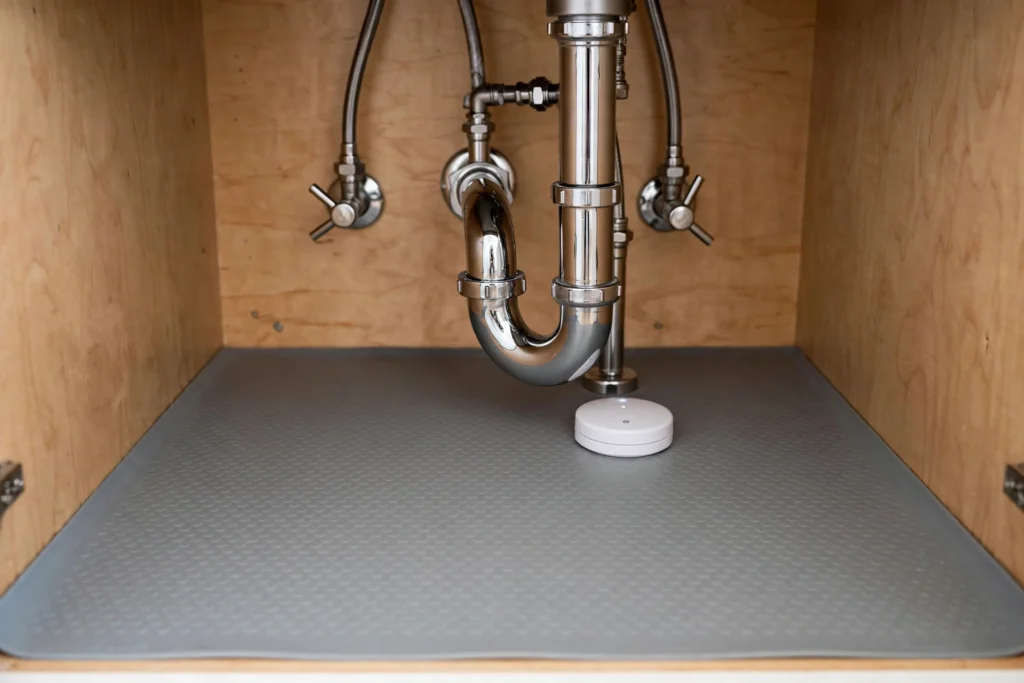
Skip this section and you’ll end up returning organizers that don’t fit around your pipes. Three steps, twenty minutes, zero regrets.
1. Measure around the pipes first
Grab a tape measure and note three things: the cabinet’s interior width and depth, the height from the cabinet floor to the lowest pipe, and where the pipes actually run (center? left? garbage disposal taking up the right side?). Write the numbers on your phone. Every organizer you buy has to clear those pipes — a $25 pull-out that hits the P-trap is a $25 return.
2. Lay a waterproof mat down
Before anything goes back in, line the cabinet floor with a waterproof silicone or plastic mat ($8–12, trim-to-fit). It catches drips, soap leaks, and the slow seep you won’t notice for weeks. This one mat has saved more cabinets than any organizer ever will — water damage under sinks is the #1 reason these cabinets rot.
3. Drop in a $12 leak detector
Battery-powered water leak detectors are the size of a hockey puck and scream (literally beep) the second they touch water. Put one at the back of the cabinet near the supply lines. Twelve dollars now beats a $400 cabinet replacement later. Check the battery when you change your smoke alarm batteries.
Kitchen Under-Sink Ideas
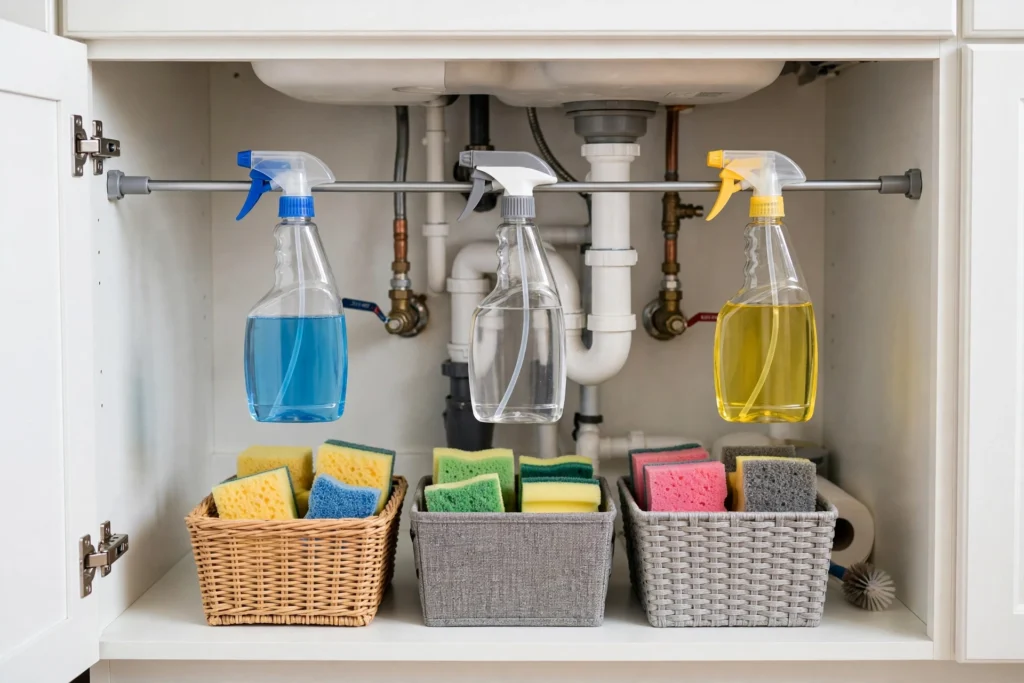
The kitchen cabinet is the war zone: garbage disposal hogging space, spray bottles everywhere, trash bags avalanching. Work with the plumbing, not against it.
4. Run a tension rod for spray bottles
A $6 spring tension rod mounted across the cabinet at mid-height is the classic for a reason: spray bottles hang by their triggers, labels out, using zero floor space. Measure your cabinet width first — rods come in adjustable ranges, and you want one that fits snugly without bowing.
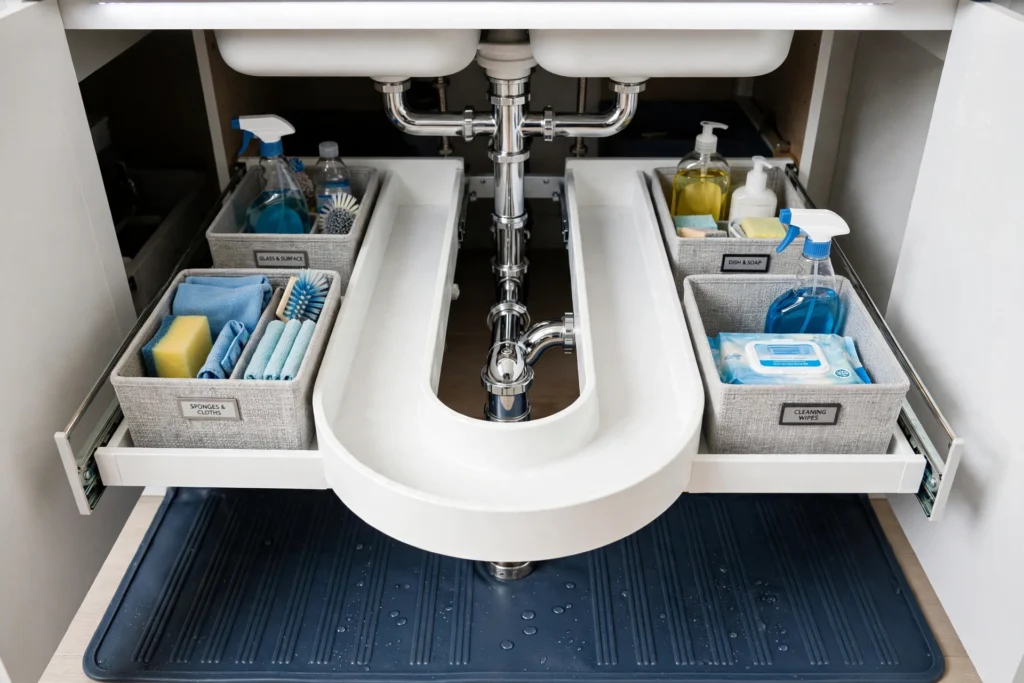
5. Get a U-shaped pull-out organizer
Standard pull-outs collide with pipes. U-shaped (or “around the plumbing”) organizers are designed with a cutout for the P-trap and disposal — two sliding tiers that glide out for full access. Around $25–35, and it’s the single biggest upgrade for a kitchen cabinet with a disposal.
6. Stack drawers that clear the plumbing
Low stackable drawers (6–8 inches tall) fit under most pipe runs and turn the cabinet floor into organized layers: top drawer for sponges and brushes, bottom for dishwasher pods and trash bags. Clear plastic so you can see what’s inside without pulling every drawer.
7. Spin a lazy Susan in the corner
The back corners of under-sink cabinets are dead zones — you can’t see or reach them. A 10-inch turntable ($10) back there holds the rarely-used stuff: drain cleaner, specialty brushes, the wood polish. Spin instead of spelunk.
8. Hang a caddy inside the cabinet door
Over-the-door wire caddies (the kind that hook over the cabinet door, no screws) hold trash bags, rubber gloves, and cleaning cloths on the door’s interior. That’s a full shelf of storage on a surface you weren’t using. Make sure the door still closes — measure the door thickness against the caddy hooks.
9. Stick Command hooks for gloves and brushes
Two or three adhesive hooks on the cabinet’s side wall hold dish gloves, the bottle brush, and the sink stopper. They peel off cleanly when you move, and they keep the grab-every-day tools off the cabinet floor where they get soggy.
10. Sort the rest into small bins by job
Whatever doesn’t have a dedicated spot goes into small open bins, one per job: “dish stuff” (soap, pods, rinse aid), “trash bags,” “cleaning sprays.” When a bottle runs out, you know exactly which bin to restock. Label the bins — in a dark cabinet, labels beat memory.
11. Add a stick-on motion light
A $10 battery motion-sensor light stuck to the cabinet’s interior top turns a pitch-black cave into a visible workspace. You’ll actually maintain the organization when you can see it. This tiny upgrade gets mentioned in reader emails more than almost anything else.
Bathroom Under-Sink Ideas
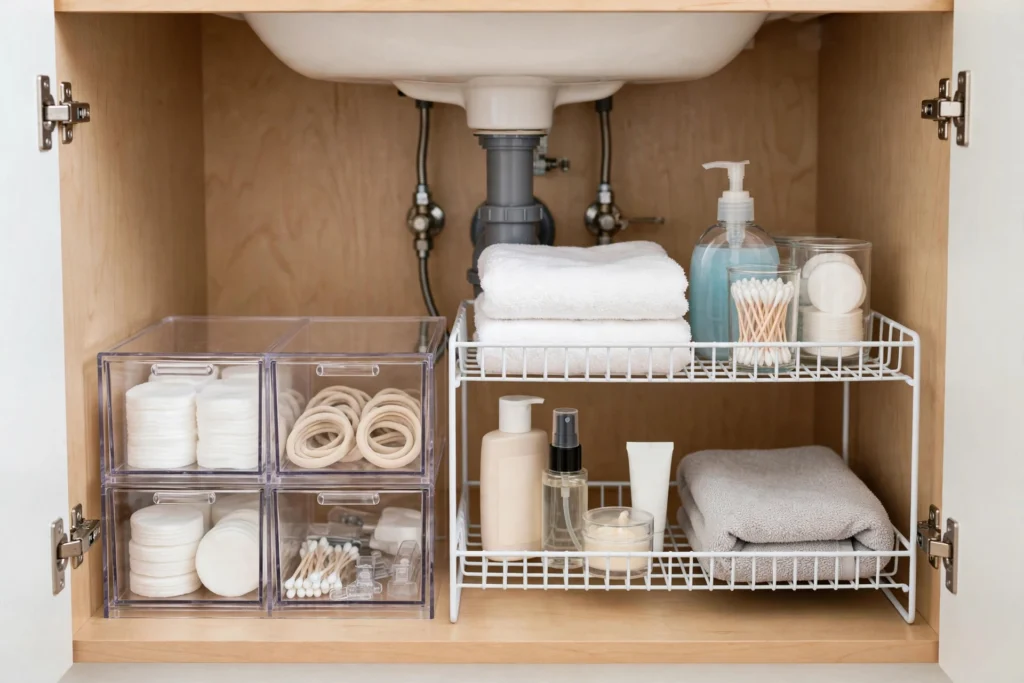
Bathroom cabinets are usually smaller and damper than kitchen ones, and they hold two different categories (daily toiletries + cleaning supplies) that should never mix.
12. Use a tiered shelf riser
A two-tier wire or bamboo shelf riser ($12–18) doubles the usable levels in a short cabinet: daily products up top where you grab them, backstock below. Measure your pipe clearance first — risers come in heights from 8 to 14 inches.
13. Clear stackable drawers for the small stuff
Bathroom clutter is 90% small items: cotton pads, hair ties, bobby pins, sample packets. Two or three clear stackable drawers corral them by category. Opaque drawers become junk drawers within a month; clear ones shame you into tidiness.
14. Mount a heat-resistant holder inside the door
Curling irons and straighteners need a home that won’t melt the cabinet. A heat-resistant silicone holder ($10) mounted inside the door with adhesive holds hot tools safely and keeps cords off the damp cabinet floor. Let tools cool 5 minutes before storing.
15. A small turntable for daily products
A 9-inch lazy Susan holds your everyday lineup — cleanser, moisturizer, serum, deodorant — and spins to the back row without knocking everything over. One turntable per person if you share the bathroom; his-and-hers spinning beats one chaotic shelf.
16. Keep cleaning supplies in their own caddy
Bathroom cleaners (toilet bowl cleaner, mildew spray, scrub brush) live in one handled caddy, separate from toiletries. When it’s cleaning day, you grab one caddy, not six bottles. And if something leaks, it leaks inside the caddy, not onto your skincare.
Leak-Proofing and Maintenance
Organization without maintenance is a six-month illusion. These three habits keep the system — and the cabinet — intact.
17. Do a monthly 2-minute leak check
First of the month: open the cabinet, run the faucet, and look at the supply lines and P-trap with a flashlight while water runs. Feel for moisture. Two minutes. Catches 90% of leaks while they’re still a damp paper towel problem instead of a rotted floor problem.
18. Toss expired products every season
Cleaners lose potency, sponges harbor bacteria, and half-used bottles multiply. Every three months, pull everything out, toss what’s expired or empty, wipe the mat, and put back only what you actually use. If you haven’t touched it in a season, you don’t need it under the sink.
19. Label everything and enforce one-in-one-out
In a dark cabinet, labels are the whole system — “dish,” “bathroom cleaners,” “trash bags.” And the maintenance rule: a new bottle only comes in when the old one goes out (or gets used up). Under-sink cabinets stay organized only when nothing new sneaks in unnoticed.
Your Under-Sink Checklist
Prep
- Measure cabinet + pipe clearance (write it down)
- Lay a waterproof mat
- Place a battery leak detector near supply lines
Kitchen
- Tension rod for spray bottles
- U-shaped pull-out organizer around pipes
- Low stackable drawers under pipe runs
- Lazy Susan for back corners
- Inside-door caddy for bags and gloves
- Command hooks for gloves and brushes
- Small bins sorted by job, labeled
- Stick-on motion light
Bathroom
- Tiered shelf riser
- Clear stackable drawers for small items
- Heat-resistant styling tool holder inside door
- Small turntable for daily products
- Separate caddy for cleaning supplies
Maintenance
- Monthly 2-minute leak check with flashlight
- Quarterly expiration toss + mat wipe
- Labels on everything + one-in-one-out rule
FAQ
How do I organize under the sink with pipes in the way?
Measure first, then buy organizers designed around plumbing: U-shaped pull-outs, low drawers that clear the P-trap, tension rods above the pipes. Work with the pipe layout instead of fighting it — the pipes aren’t moving, so your storage has to.
What should you never store under the sink?
Anything flammable (aerosols near heat sources), anything that can’t handle damp (paper towels in bulk, cardboard boxes), and anything kids or pets could reach — move harsh chemicals to a high locked cabinet if you have little ones. Also: don’t store the plunger there; it doesn’t fit and it drips.
How do I keep under the sink from smelling musty?
An open box of baking soda absorbs odors for about 3 months. More importantly, fix the cause: wipe up drips, make sure the mat isn’t trapping water underneath it, and leave the cabinet door open for an hour after any leak. Persistent musty smell means hidden moisture — investigate, don’t just deodorize.
Will organizers damage the cabinet? Renters?
Tension rods, adhesive hooks, over-door caddies, mats, and freestanding drawers need zero holes — fully renter-safe. If you do screw in a pull-out, fill the holes with wood filler before moving out. The waterproof mat actually protects the cabinet, which landlords appreciate.
Start with the prep trio — measure, mat, leak detector — then pick the three ideas that match your worst pain point. Under-sink cabinets reward systems more than stuff: fewer, better organizers beat a cabinet crammed with gadgets.
One last thing worth saying: the under-sink cabinet is also the place where small plumbing problems announce themselves first. Because you’re now opening it regularly (monthly leak check, remember?), you’ll spot the slow drip months before it becomes a repair bill. Organization that doubles as early warning — that’s the whole point.
Want more? Give the whole kitchen the treatment in Kitchen Organization, tackle the bathroom properly in Bathroom Organization, or stretch every dollar with Budget Finds.