
You know the feeling. You walk into a room, see the piles, and walk right back out. Not because you’re lazy — because you genuinely don’t know where to start. The whole house feels like one giant project, so nothing gets done.
Weekend decluttering marathons don’t fix it either. You tear the closet apart on Saturday, burn out by noon, and shove everything back in worse shape than before.
This plan works differently. Thirty days. Fifteen to thirty minutes a day. One small zone at a time. By the end, you’ll have touched every room in your home — and built the kind of momentum that makes the whole thing feel easy.

What you’ll learn in this guide
- How the 30-day method works (and the 3-box system that makes decisions fast)
- Week 1: easy wins that build momentum in just 15–20 minutes a day
- Week 2: living spaces — shelves, closets, and the toy explosion
- Week 3: bedrooms and closets, including the big clothing purge
- Week 4: kitchen, bathrooms, storage, plus a digital declutter bonus
- What to do with donations and how to keep it decluttered after day 30
How the 30-Day Plan Works
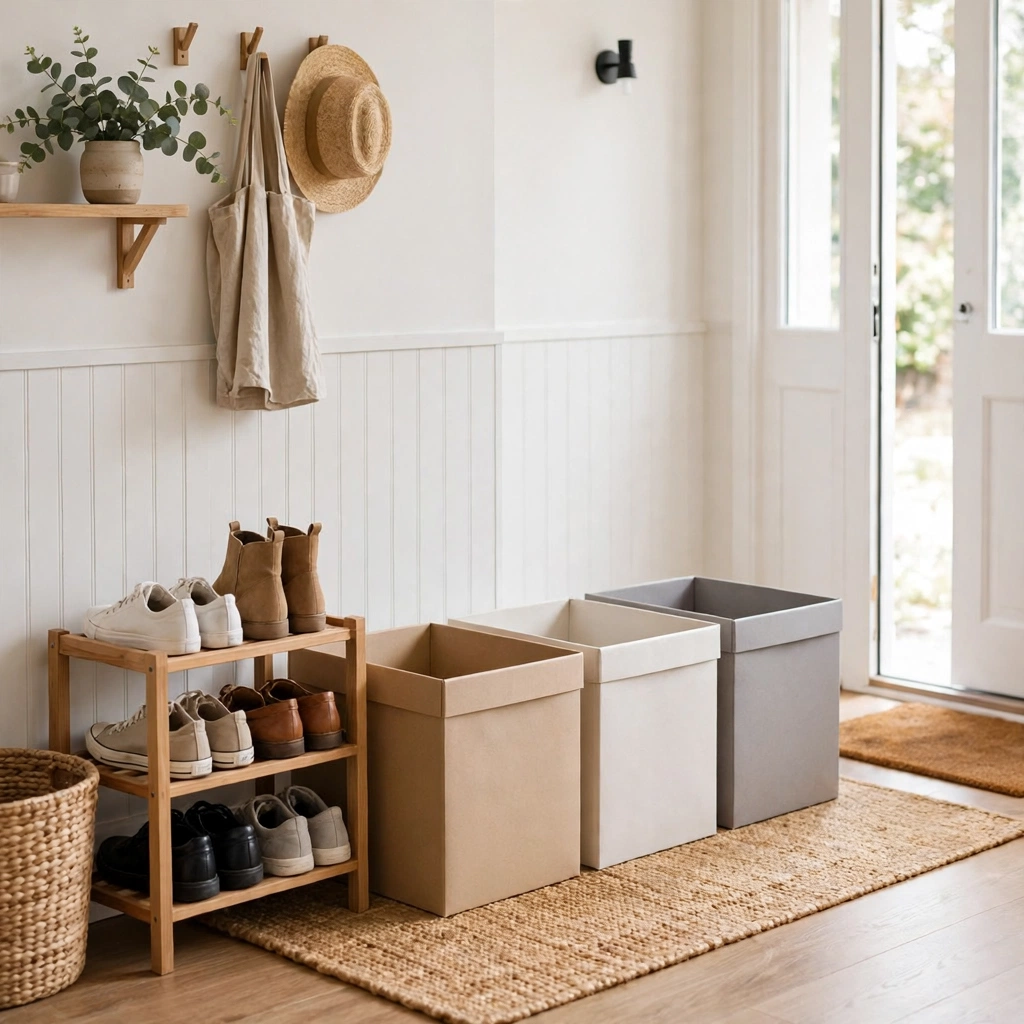
Before day one, grab three boxes or bags and label them: Keep (relocate), Donate, and Trash. Every single day, you’ll sort that day’s zone into these three. No “maybe” pile — maybe piles are where decluttering goes to die. If you haven’t used it in a year and it has no real purpose, it goes.
Set a timer for the day’s time estimate and stop when it rings. The point is consistency, not perfection. And here’s our biggest rule: don’t buy a single organizer until the 30 days are over. You need to see what you actually own first. Organizers bought too early just become expensive clutter.
Week 1: Easy Wins (Days 1–7)
Quick, visible victories. This week is about proving to yourself that you can do this.
Day 1: The Entryway (20 minutes)
Shoes, coats, mail, keys — the entryway collects the whole family’s daily debris. Put away what belongs elsewhere, toss expired coupons and dead batteries from the catch-all bowl, and limit shoes to one pair per person. Hang a single hook per family member if you don’t have them; a $6 pack of adhesive hooks does the job.
Day 2: The Junk Drawer (15 minutes)
Every home has one. Dump it onto the counter, toss dried-out pens, mystery keys, and manuals for appliances you no longer own. Put back only what you actually reach for. A $5 drawer divider tray keeps the survivors sorted.
Day 3: The Bathroom Counter (15 minutes)
Clear everything off the counter. Toss expired sunscreen, dried-up nail polish, and the hotel toiletries from 2019. Keep out only what you use daily — everything else goes in a cabinet or a $8 under-sink bin. Wipe the counter while it’s empty.
Day 4: The Fridge (20 minutes)
Pull everything out shelf by shelf. Check every date. Wipe each shelf with warm soapy water as you go. Group like with like when you reload: condiments together, leftovers together, drinks together.
Day 5: The Pantry (25 minutes)
Same drill as the fridge. Toss anything expired or stale — spices older than a year have lost their punch anyway. Donate unopened non-perishables you know you’ll never cook. Line up what’s left so you can see it all at a glance.
Day 6: Under the Kitchen Sink (20 minutes)
This cabinet is usually a swamp of half-empty cleaners. Keep one all-purpose spray, one scrub, dish soap, and trash bags. Recycle the empties and toss anything dried out. A $10 tension rod across the cabinet gives spray bottles a place to hang.
Day 7: Rest + Donation Drop (15 minutes)
Bag up everything in your Donate box and get it out of the house today — drop it at a donation bin or schedule a pickup. Donations sitting in your hallway don’t count as decluttered.
Week 2: Living Spaces (Days 8–14)
The rooms everyone sees. Decluttering here changes how your whole home feels.
Day 8: Coffee Table and Side Tables (15 minutes)
Clear every surface. Keep one remote, one coaster set, and one decorative item per table — that’s it. Old magazines, random chargers, and the kids’ homework migrate to their real homes or the trash.
Day 9: Bookshelves (25 minutes)
Pull books off one shelf at a time. Donate what you won’t reread — be honest, that novel from 2016 isn’t getting a second chance. Dust the shelf before reloading, and leave a little breathing room instead of cramming every inch.
Day 10: The TV Console (20 minutes)
Untangle the cable nest behind the TV and toss dead remotes, obsolete chargers, and scratched DVDs. A $12 cable management box hides the power strip and adapters in one clean swoop.
Day 11: The Coat/Hall Closet (25 minutes)
Try on the “one in, one out” test for every coat: if you didn’t wear it last winter, donate it. Toss single gloves and broken umbrellas. Put a small bin on the floor for shoes that actually get worn.
Day 12: The Linen Closet (20 minutes)
Keep two sheet sets per bed — that’s plenty. Old, thinning towels become cleaning rags (cut them up) or go in the donate bag. Fold everything the same way so the shelf looks calm when you open the door.
Day 13: Toys and Play Areas (30 minutes)
Get the kids involved with a simple rule: fill one bag for donation to make room for what they love. Toss broken toys and anything missing pieces. A $15 set of stackable bins — one per toy category — ends the daily toy explosion.
Day 14: Catch-Up Day (15 minutes)
No new zone today. Finish anything you skipped, break down cardboard boxes, and take another donation bag out. Momentum matters more than a perfect streak.
Week 3: Bedrooms and Closets (Days 15–21)
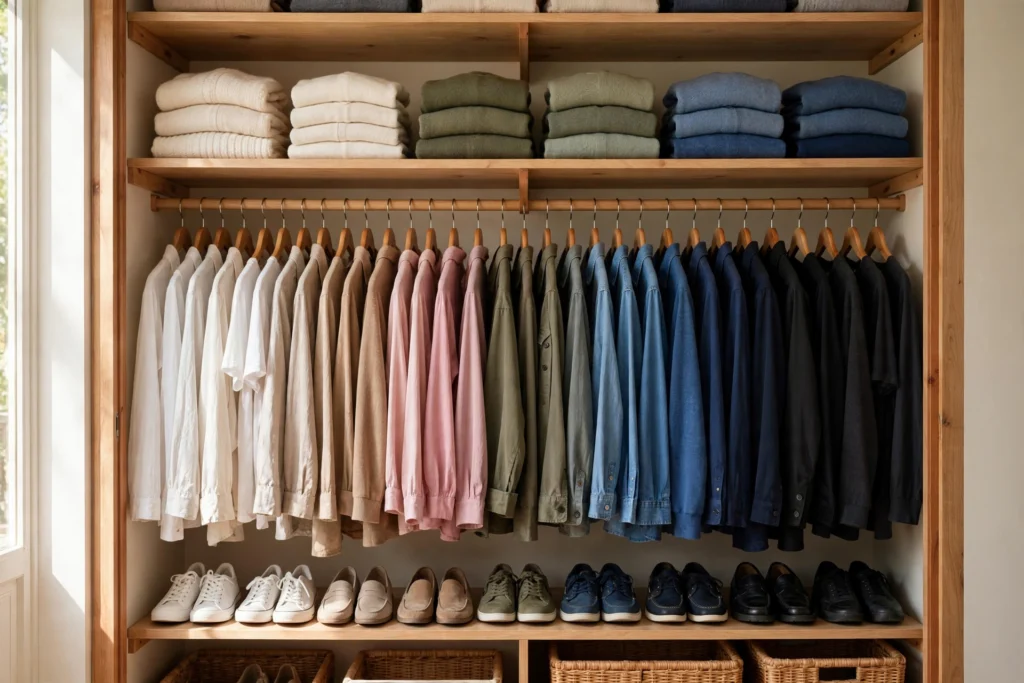
The big one. Clothes are emotional, so we go slow and steady.
Day 15: Nightstands (15 minutes)
Clear both sides of the bed. Toss dead pens, old receipts, and the water glasses multiplying on your side. Keep: lamp, book you’re actually reading, lip balm, phone charger. That’s the whole list.
Day 16: Dresser Drawers (25 minutes)
One drawer at a time. Anything stained, stretched, or unworn in a year goes — donate the good stuff, trash the rest. File-fold what remains (folded upright like files) so you can see everything in the drawer at once.
Day 17: The Main Closet — Clothes, Part 1 (30 minutes)
Work in sections. Hold each item and ask: does it fit right now, and did I wear it in the last year? Sentimental pieces get a small memory box — not the whole closet. Bag donations immediately so they don’t creep back onto hangers.
Day 18: The Main Closet — Shoes and Accessories, Part 2 (25 minutes)
Shoes you haven’t worn in a year, belts that don’t fit, bags with broken zippers — out. Keep everyday shoes on a low rack or in clear boxes so pairs stay together. Donate the rest today, not “someday.”
Day 19: Kids’ Closets (30 minutes)
Kids outgrow clothes fast, so this one’s usually quick once you start. Pull everything out, sort by size, bag up outgrown items for donation or hand-me-downs. Leave growing room — literally and figuratively.
Day 20: Under the Bed (20 minutes)
Slide everything out. This is where wrapping paper, old magazines, and “I’ll deal with it later” go to hide. Keep only flat storage that fits: off-season bedding in a $14 under-bed bag, nothing else.
Day 21: Rest + Donation Drop #2 (15 minutes)
Second donation run. By now the Donate box is probably overflowing — that’s a great sign. Get it out of the house and enjoy how much lighter the closets feel.
Week 4: Kitchen, Bathrooms and Storage (Days 22–30)
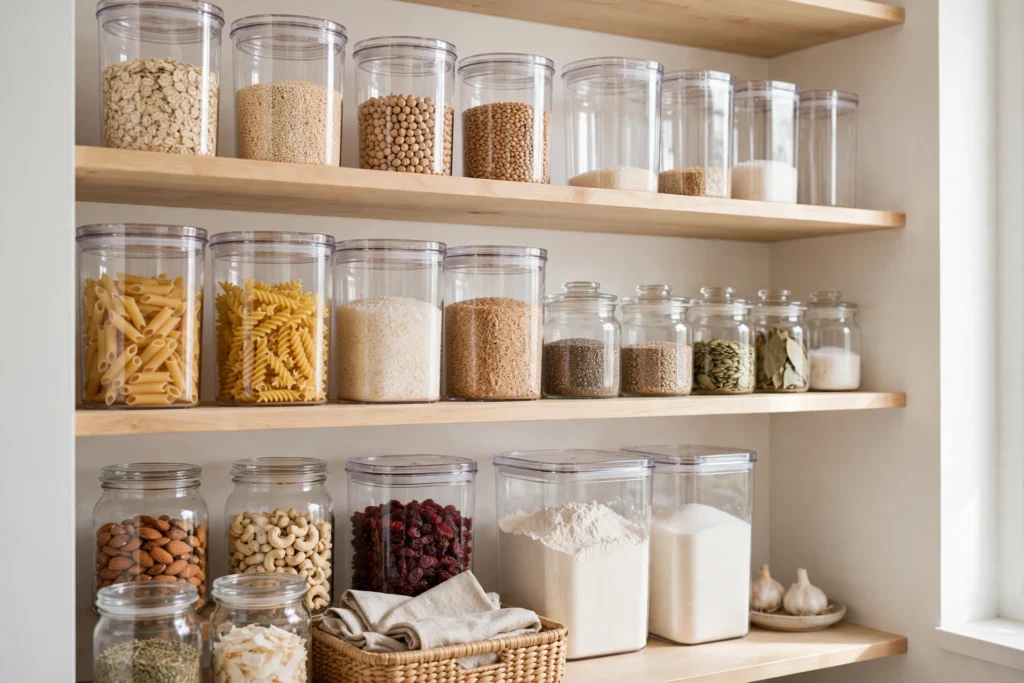
The workhorse rooms, plus the storage zones everyone avoids. Finish strong.
Day 22: Kitchen Cabinets — Dishes (25 minutes)
Pull out every plate, bowl, and mug. Toss chipped ones (they’re not safe and you won’t miss them). Keep the number your household actually uses — a family of four doesn’t need fourteen mugs. Donate the extras.
Day 23: Gadgets and Small Appliances (20 minutes)
The bread maker you used twice, the third spatula, the avocado slicer — be ruthless. If it does a job a regular knife does, it goes. Keep one good version of each tool and donate the duplicates.
Day 24: Bathroom Cabinets and Drawers (20 minutes)
Same as day 3, but deeper. Toss expired medications (check local take-back programs — don’t flush them), old makeup, and the twelve hotel shampoo bottles. Group what’s left: daily items up front, backups in back.
Day 25: The Laundry Room (20 minutes)
Toss dried-out dryer sheets, empty detergent bottles, and single socks with no partners. Decant bulk detergent into one container and recycle the giant jug. Hang a small $7 mesh bag on the wall for the next round of lost socks.
Day 26: Desk and Paperwork (30 minutes)
Sort paper into four piles: act on, file, shred, recycle. Shred old bank statements and anything with account numbers. Go digital going forward — snap a photo of receipts instead of keeping the paper. A $10 desktop file box holds what’s left.
Day 27: Garage or Storage Closet, Part 1 (30 minutes)
Start with the easy stuff: broken tools, dried-up paint cans (check local hazardous waste drop-off), and boxes you haven’t opened since you moved in. If you haven’t needed it in two moves, you don’t need it.
Day 28: Garage or Storage Closet, Part 2 (30 minutes)
Finish the zone. Group what remains by category — tools, sports gear, holiday decor — and label the bins. Future you will be grateful every single time you open that door.
Day 29: Digital Declutter (20 minutes)
Your phone counts as a room. Delete blurry photos and screenshots you’ll never need, unsubscribe from ten email lists, and clear your desktop downloads folder. A lighter digital life feels surprisingly like a lighter home.
Day 30: Victory Lap (20 minutes)
Walk through every room you decluttered. Notice how it feels. Then write down your maintenance rule: ten minutes a day, one zone a week, or a monthly donation bag — pick the rhythm you’ll actually keep. You didn’t just declutter a house. You built a system.
Your 30-Day Decluttering Checklist
- Day 1: Entryway (20 min)
- Day 2: Junk drawer (15 min)
- Day 3: Bathroom counter (15 min)
- Day 4: Fridge (20 min)
- Day 5: Pantry (25 min)
- Day 6: Under the kitchen sink (20 min)
- Day 7: Rest + donation drop
- Day 8: Coffee table and side tables (15 min)
- Day 9: Bookshelves (25 min)
- Day 10: TV console (20 min)
- Day 11: Coat/hall closet (25 min)
- Day 12: Linen closet (20 min)
- Day 13: Toys and play areas (30 min)
- Day 14: Catch-up day
- Day 15: Nightstands (15 min)
- Day 16: Dresser drawers (25 min)
- Day 17: Main closet — clothes (30 min)
- Day 18: Main closet — shoes and accessories (25 min)
- Day 19: Kids’ closets (30 min)
- Day 20: Under the bed (20 min)
- Day 21: Rest + donation drop #2
- Day 22: Kitchen cabinets — dishes (25 min)
- Day 23: Gadgets and small appliances (20 min)
- Day 24: Bathroom cabinets and drawers (20 min)
- Day 25: Laundry room (20 min)
- Day 26: Desk and paperwork (30 min)
- Day 27: Garage/storage, part 1 (30 min)
- Day 28: Garage/storage, part 2 (30 min)
- Day 29: Digital declutter (20 min)
- Day 30: Victory lap + maintenance plan
Frequently Asked Questions
What if I miss a day?
Nothing breaks. Just pick up the next day’s task — don’t try to double up. The catch-up days on days 14 and 21 exist for exactly this reason. A 35-day finish is still a finish.
Where should I take donations?
Local charities, thrift stores, and shelters take most household goods. Many offer free home pickup if you schedule online — search for pickup services in your area. Clothes in rough shape can go to textile recycling bins instead of the trash.
How do I keep the house decluttered after the 30 days?
Pick one rhythm and stick to it: ten minutes of tidying a day, one zone a week, or a monthly donation bag by the door. The “one in, one out” rule for clothes and kitchen gadgets stops new clutter at the source.
What if my family won’t participate?
Start with your own spaces — your closet, your nightstand, your desk. Visible results are contagious. And make it easy for them: labeled bins and a permanent donation bag by the door lower the effort to almost zero.
Thirty days from now, your home can feel completely different — not because you worked harder, but because you worked smaller. One zone, one timer, one day at a time.
Keep the momentum going: build a routine that sticks with Cleaning Routines, tackle storage zones with Closets & Storage, or make small rooms work harder with Small Spaces.