
To clean a wood stove glass door, wait until the stove is completely cold, then dip a damp crumpled sheet of newspaper (or a damp paper towel) into fine, cool ash from the firebox and rub the glass in small circles. The ash works as a gentle abrasive that lifts black soot. Wipe with a clean damp cloth, dry, and finish with a spritz of vinegar and water if you want it streak-free.
⏱️ Short on time?
Grab our FREE printable checklists — the exact routines behind every calm home on this blog:
📋 Room-by-Room Checklist (PDF)📅 Weekly Reset Checklist (PDF)
Part of our Cleaning Routines & Checklists Guide, which brings every related post together in one place.
There’s nothing cozier than a wood stove on a cold night, until the glass turns black and you can’t see the flames. Soot on the glass is normal, but it’s also the stove telling you something about the fire. This guide shows how to clean a wood stove glass door with things you already have, which store-bought cleaners are worth it, how to deal with brown tar and baked-on creosote, and how to burn so the glass stays clearer between cleanings. The same steps work on most fireplace insert and pellet stove glass.
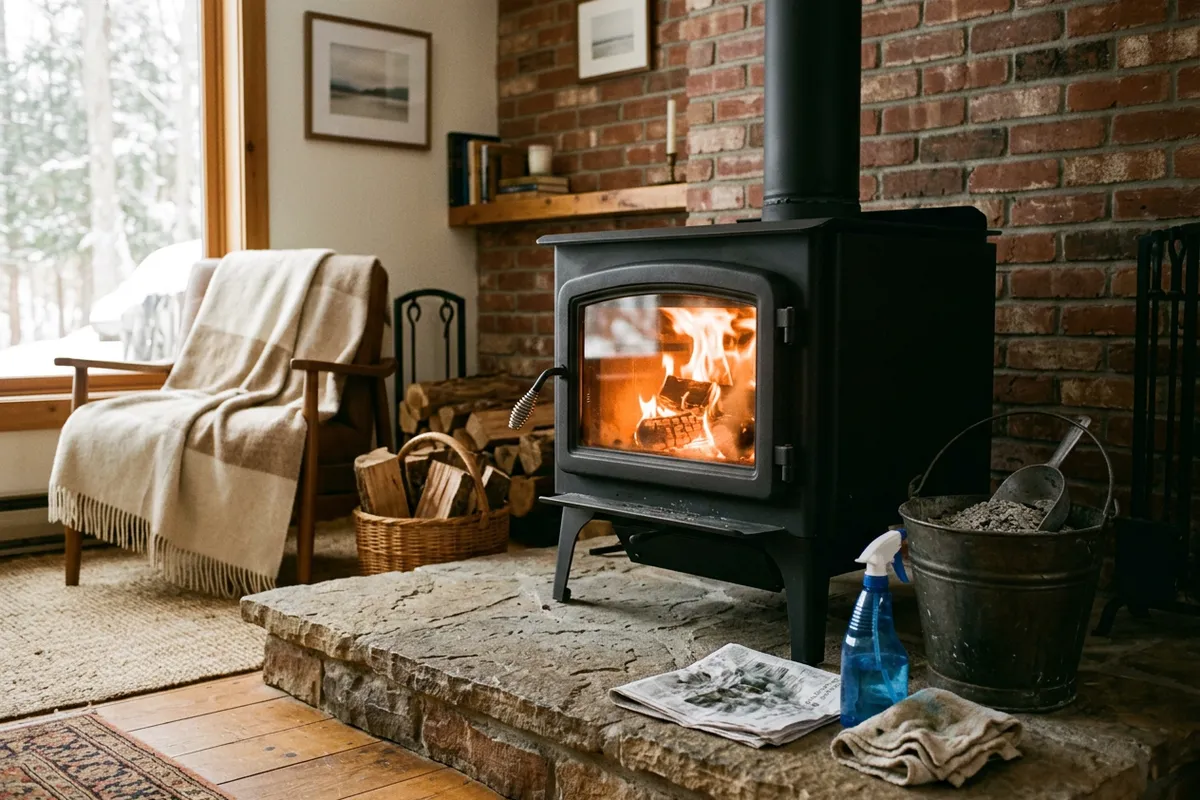
What You Need
- Newspaper or paper towels (plain, no glossy ink)
- A small bucket or bowl of warm water
- Fine, cold wood ash from your own stove
- A spray bottle with equal parts white vinegar and water
- Two or three clean cloths or microfiber towels
- Rubber or work gloves
- A drop cloth or old towel for the hearth
- A metal ash bucket with a lid
- Optional: a wood stove glass cleaner made for ceramic glass
Skip these: steel wool, razor blades on printed glass, abrasive powders, and oven cleaner. They can scratch or etch the glass, and spray can reach the rope gasket around the door, which should stay clean and dry.
When to Clean Wood Stove Glass
Only clean glass that is completely cold, ideally the morning after a fire when the stove has been out for at least 8 to 12 hours. Hot glass can crack when it meets a wet cloth, and hot soot-and-ash paste is a burn risk. If you burn daily all winter, a quick wipe once a week keeps buildup from baking on, and a deeper clean every two to four weeks keeps the view clear.
How to Clean a Wood Stove Glass Door With Ash (Free Method)
Step 1: Make sure the stove is cold and protect the floor
Check the stove top and the glass with the back of your hand; it should feel room temperature. Lay a towel or drop cloth on the hearth and put on gloves. Open the door (most stoves open with a latch handle) so you can reach the inside of the glass.
Step 2: Scoop a little fine ash
Take a small scoop of the pale gray ash from the firebox into a bowl. Make sure there are no live coals, and leave nails, bits of charcoal and large chunks out. Fine ash feels like flour and works like a gentle scouring powder. Keep some in a bowl so the fire’s ashes stay out of the room.
Step 3: Wet the newspaper, dip it in ash and scrub
Crumple a half sheet of newspaper, dampen it (damp, not dripping), and dip it into the ash. Rub the glass in small circles with light pressure, working top to bottom. You’ll see gray streaks come off and the black soot fade. Use a fresh piece when the first gets dirty, and work in sections.
Step 4: Wipe off the ash paste
Use a damp cloth, wrung out well, to wipe away the ash paste. Rinse the cloth often. Try not to let the grit sit in the corners or near the gasket.
Step 5: Finish with vinegar and water
Lightly mist the glass with equal parts white vinegar and water and buff with a dry microfiber cloth or crumpled dry newspaper. This cuts the last gray film and leaves the glass streak-free. Don’t spray directly on the gasket; spray the cloth instead.
Step 6: Clean the outside too
The outside is easier. Wipe it with a damp cloth and a standard glass cleaner or the same vinegar mix. Wipe the frame and handle with a damp cloth. For the cast iron or painted steel body, a dry cloth or a soft brush is usually enough; check your manual before using any liquid on the paint.
How to Remove Brown Tar and Baked-On Creosote
Brown, sticky or shiny black glaze on the glass isn’t regular soot. It’s creosote, and it forms when the fire burns too cool or the wood is too wet. The ash trick may not be enough, so:
- Try a damp cloth with a squirt of dish soap first to remove loose film.
- Use a cleaner made specifically for wood stove or fireplace glass, applied to a cloth, left for the time on the label, then wiped off. Follow the instructions, and keep it off the gasket.
- Repeat once or twice rather than scraping. Heavy pressure is how glass scratches.
- If the glass is etched, cracked or has white spots that won’t wipe off, it may need to be replaced with the glass specified by your stove’s manufacturer. Don’t swap in ordinary window glass.
Which Cleaning Method Works Best?
| Method | Best for | Cost | Notes |
|---|---|---|---|
| Damp newspaper + cold ash | Light to moderate soot | Free | Gentle abrasive; use fine ash only |
| Vinegar and water spray | Final polish, light film | About $1 | Won’t cut heavy soot alone |
| Dish soap and warm water | Loose soot and fingerprints | About $1 | Wipe, then dry well |
| Wood stove glass cleaner | Brown tar and baked-on creosote | $8 to $15 | Use gloves; keep off gasket |
| Razor blade scraper | Heavy glaze on plain (unprinted) glass only | $3 to $6 | Risky; check manual first |
Why Does My Wood Stove Glass Keep Turning Black?
Constantly sooty glass is almost always a fuel or airflow problem, not a cleaning problem. The EPA’s Best Wood-Burning Practices page says to burn only dry, split, well-seasoned wood, that wood burns best at a moisture content under 20 percent, and that a hot fire is both safer and more efficient than a smoldering one. In practice that means:
- Wet or unseasoned wood. The EPA recommends seasoning wood for at least six months and testing it with a moisture meter. Wet wood is the number one cause of black, tarry glass.
- Smoldering the fire. Choking the air down too early cools the fire and leaves soot on the glass. Follow your stove’s manual for air settings and give new logs a hot start before turning the air down.
- Opening the door too often. The EPA also notes to keep the doors of a wood-burning appliance closed unless you’re loading or stoking, which keeps smoke and carbon monoxide out of the room.
- Burning the wrong things. Never burn trash, painted or pressure-treated wood or glossy paper; the EPA page lists them as materials that can release toxic chemicals and damage your appliance.
- A dirty chimney or flue. If you smell smoke inside or the glass blackens fast with dry wood, have a certified chimney sweep inspect it.
A Quick Weekly Wood Stove Cleaning Routine
- Let the stove cool, then scoop ashes into a covered metal container. The EPA says to store it outdoors on a nonflammable surface, since embers can stay hot for days.
- Leave about an inch of ash on the bottom if your stove manual recommends it.
- Wipe the glass with a damp cloth and a little ash if it’s sooty.
- Brush off the stove top and sweep the hearth.
- Check that the gasket is intact and the door latches firmly.
Winter cleaning has a way of piling up. Add the stove to your fall cleaning checklist and your deep cleaning checklist, and use our holiday cleaning checklist to get the rest of the living room ready for guests. If the hearth area doubles as storage, our cozy living room storage ideas keep firewood and tools tidy, and our natural cleaning recipes have more vinegar-and-water mixes like the one above.
Safety Notes
Safe operation tips here follow the EPA’s Best Wood-Burning Practices page: keep flammable items like curtains, furniture, newspapers and books away from your appliance, empty ashes into a covered metal container stored outdoors, keep a fire extinguisher handy and install smoke and carbon monoxide detectors. Your stove manufacturer’s manual comes first for door, gasket and glass instructions. Never clean or touch the glass while it is warm.
Related guides
Save this for later
Pin this image to your Pinterest board so it’s there when you need it.
 Save to Pinterest
Good to know: A hot, clean burn will often clear light soot off the glass by itself. After you wipe the glass, burn a small hot fire with dry wood and see how much of the haze burns off before you scrub again.
Frequently Asked Questions
What is the best way to clean a wood stove glass door?
Wait until the stove is cold, dip a damp crumpled newspaper in fine cool ash, and rub the glass in small circles. Wipe with a damp cloth, then spray lightly with equal parts white vinegar and water and buff dry.
Can I clean wood stove glass while it is warm?
No. Always wait until the glass is completely cold. Wet cloths on hot glass can crack it, and warm ash and soot paste can burn your hands.
Why does the glass on my wood stove keep turning black?
The most common causes are wet or unseasoned wood, burning a smoldering fire with the air turned down too early, and a dirty chimney. Burn dry wood under 20 percent moisture and give the fire a hot start.
Can I use oven cleaner on wood stove glass?
It’s best not to. Oven cleaner can damage the rope gasket and paint, and some products etch glass. Use a cleaner made for stove and fireplace glass or the free ash method instead.
How often should I clean my wood stove glass?
Wipe it weekly if you burn every day, with a deeper clean every two to four weeks. If it blackens in one burn, fix the fuel or airflow problem rather than cleaning it more often.
To clean a wood stove glass door, let it go fully cold, rub on damp newspaper dipped in fine ash, wipe off the paste, and polish with vinegar and water. If it keeps blackening, switch to dry seasoned wood and hotter fires.