
Puffer coats, chunky sweaters and snow boots take up three times the room of summer clothes, and in a small apartment that space simply isn’t there. Learning how to store winter clothes in a small space comes down to four things: owning less of it, cleaning it before it’s packed, matching each fabric to the right container, and using the hidden spots most homes ignore. This guide walks you through each step, with real measurements, so your winter wardrobe stays fresh, moth-free and out of the way.
⏱️ Short on time?
Grab our FREE printable checklists — the exact routines behind every calm home on this blog:
📋 Room-by-Room Checklist (PDF)📅 Weekly Reset Checklist (PDF)
Part of our Closets, Laundry & Storage Guide, which brings every related post together in one place.
The same system works in both directions: packing winter things away in spring, and making room for bulky layers you’re wearing right now in fall and winter.
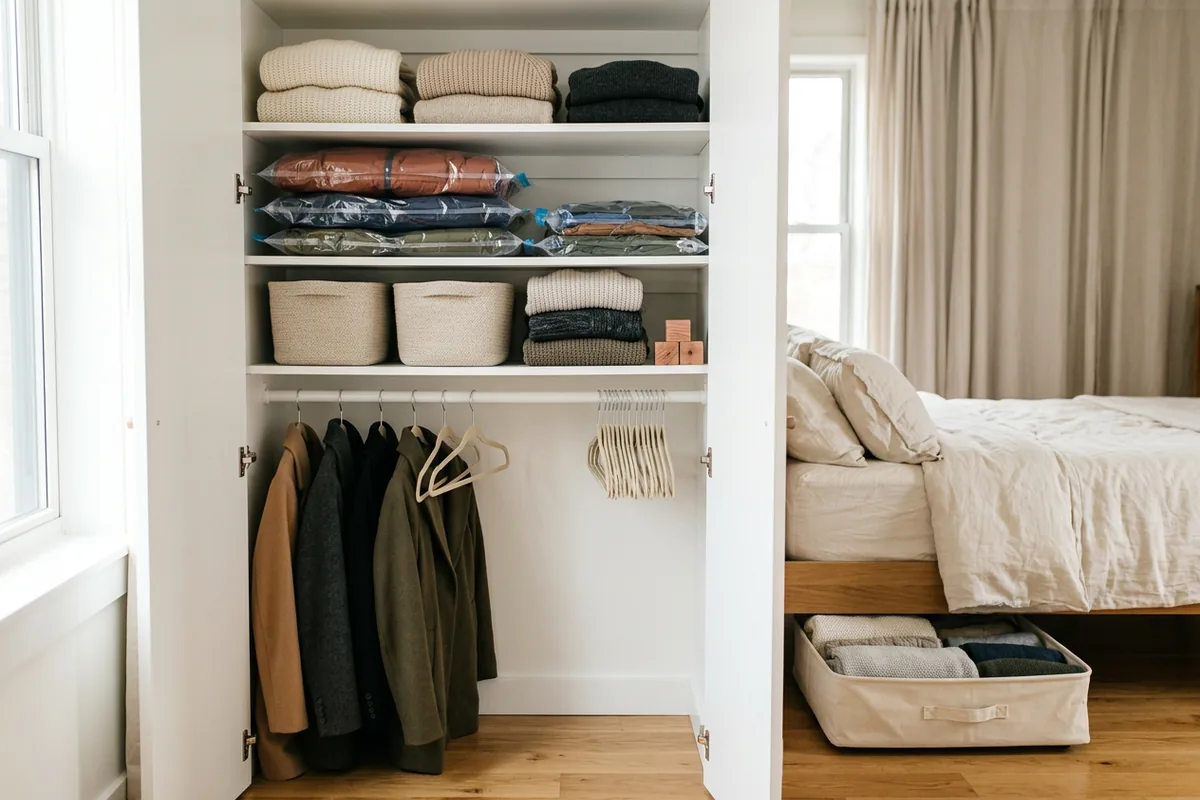
How to Store Winter Clothes in a Small Space: What You’ll Learn
- A quick edit that frees up the most space
- Why clean-before-storing stops moths and stains
- Which container suits wool, down, leather and boots
- How to fold, roll and hang bulky pieces
- 7 hidden storage spots in a small home
- How to store winter clothes you’re still wearing
Step 1: Edit Before You Store
The cheapest storage space is the space you no longer need. Before anything goes into a bin, lay your winter clothes on the bed by category (coats, sweaters, base layers, accessories, boots) and ask three questions about each piece:
- Did I wear it at least once last winter?
- Does it still fit and keep me warm?
- Would I buy it again today?
Two “no” answers means it goes in a donate bag. Most people find they reach for the same two coats and six or seven sweaters all season, so be honest about duplicates: you rarely need more than one heavy coat, one lighter jacket and one dressy option. Hats, scarves and gloves multiply quietly too; keep one set per person plus a spare. If decluttering feels big, the 30-day decluttering checklist breaks it into small daily wins.
Step 2: Clean Everything First
Never pack away worn clothes, even if they look clean. Clothes moth and carpet beetle larvae feed on natural fibers like wool, cashmere, silk and down, and they are drawn to the body oils, sweat and food traces left on worn garments. Invisible stains such as sugary drinks or skin oils also oxidize in storage and turn into yellow marks by next season.
- Wash or dry-clean every item following its care label. Hand-wash wool and cashmere in cool water with a wool wash, then dry flat.
- Skip fabric softener and starch on stored items, since residue can attract pests.
- Dry completely. Let knits and down air-dry for a full 24 to 48 hours before packing; trapped moisture causes mildew and musty smells.
- Clean boots, let them dry away from direct heat, and condition leather.
- Empty every pocket (tissues and snack wrappers attract pests).
Step 3: Match Each Fabric to the Right Container
This is where most storage goes wrong. Vacuum bags save the most space, but they aren’t right for everything. Use this table as your guide:
| Item | Best storage | Avoid |
|---|---|---|
| Wool and cashmere sweaters | Folded in a breathable cotton or canvas bin with cedar | Hanging (stretches shoulders); long-term vacuum sealing |
| Down jackets and comforters | Loosely in a large breathable bag, or lightly compressed for a short season | Tightly vacuum-sealing for months (crushes the loft) |
| Synthetic puffers, fleece, ski wear | Vacuum storage bags | Damp storage areas |
| Wool and leather coats | Hung on wide, shaped hangers in a breathable garment bag | Dry-cleaner plastic, wire hangers |
| Base layers, thermals, scarves | Rolled in drawer dividers or a shallow bin | Loose piles that tangle |
| Boots | Stuffed with paper or boot shapers, upright in a boot bag or bin | Squashed flat under heavier items |
A good rule of thumb: natural fibers need to breathe, synthetics can be compressed. If you use vacuum bags for wool or down at all, squeeze out only about half the air instead of sealing them rock-hard, and unpack them as soon as the season changes. Clear plastic bins with lids work well for synthetics and accessories because you can see what’s inside, but slip a cotton pillowcase or tissue around natural fibers inside them and never seal anything that is even slightly damp.
Step 4: Fold, Roll or Hang the Right Way
Fold knits
Sweaters should always be folded, never hung for long periods, because the weight pulls the shoulders out of shape. Fold them in thirds lengthwise, then in half, and stack no more than four or five high so the bottom ones don’t crush. Acid-free tissue between layers prevents creases on delicate knits.
Roll the small stuff
Rolling saves space and stops wrinkles on soft items: thermals, leggings, scarves, beanies and fleece layers. Rolled items can be filed upright in a bin so you see every piece at once, the same file-fold idea we use in our small closet organization ideas.
Hang coats on shaped hangers
Heavy coats need sturdy wooden or wide-shoulder hangers about 1.5 to 2 inches thick at the ends. Button or zip the coat closed so it holds its shape, and give each one a little breathing room on the rod. Slim velvet hangers are great for everything else, since they take about half the rod space of plastic tube hangers.
Step 5: Use the Hidden Spots in a Small Home
The secret to how to store winter clothes in a small space is going vertical, going under and using things you already own. These are the best places, roughly from most to least useful:
1. Under the bed
Measure the clearance from the floor to the bed frame first. Most rolling under-bed bins are 6 to 7 inches tall, so you need at least 7 inches. If you have less, bed risers can add 3 to 8 inches. Choose lidded bins or zippered fabric boxes to keep dust out, and put the items you’ll want first at the foot of the bed. Our under-bed storage ideas cover drawers, rolling carts and lift-up frames.
2. The top closet shelf
The shelf above the rod is prime off-season space. Use matching lidded bins about 12 to 15 inches deep so nothing hangs over the edge, and label the front. A sturdy step stool makes the shelf usable, not just a place to forget things.
3. Inside your suitcases
Empty luggage is wasted storage. Pack sweaters or snow gear inside your suitcases with a few cedar blocks, then store the suitcases as usual. When you travel, move the clothes to a bin for the trip.
4. Storage furniture
Storage ottomans, lift-top benches and bed frames with drawers hide a whole season of knits. If you’re short on space, a storage bench at the end of the bed earns its spot twice. See more in our small bedroom organization ideas.
5. The back of a door
An over-the-door pocket organizer or hook rack holds hats, gloves, scarves and ear warmers in about 4 inches of depth. It works on closet, bedroom or bathroom doors.
6. A hanging shelf organizer
A fabric hanging shelf turns empty space below short hanging clothes into five or six cubbies for folded sweaters, without adding furniture.
7. A linen or hall closet shelf
If one high shelf in the hall or linen closet is free, use it for one or two labeled bins of off-season clothes.
Avoid attics, garages and basements unless they are climate-controlled. Heat, cold swings and humidity cause mildew, yellowing and pests. Clothes last longest somewhere cool, dark and dry, ideally below about 50 percent humidity.
Step 6: Protect Against Moths and Moisture
- Cedar blocks, rings or hangers help repel moths. Cedar loses its scent over time, so lightly sand blocks at the start of each season to refresh them.
- Lavender sachets are a pleasant extra deterrent, though they work best alongside clean storage, not instead of it.
- Silica gel or moisture absorbers in each bin keep things dry, especially in humid climates.
- Never use dry-cleaner plastic for storage. It traps moisture and fumes; switch to breathable cotton garment bags.
- Check bins every 2 to 3 months. Look for small holes, webbing or larvae, and air things out if anything smells musty.
Storing Winter Clothes You’re Still Wearing
In fall and winter, the challenge is daily-wear bulk, not off-season storage. Keep it manageable with a simple “active and backup” system:
- Active: the coat, boots, hat and gloves you wear this week stay by the door on hooks, a slim boot tray and a small basket.
- Backup: everything else lives in the bedroom closet or a bin, and swaps in when the weather changes.
- One hook per person keeps the entryway from turning into a coat pile.
- A drip tray under boots protects floors from slush and salt.
For more ideas, see our coat closet organization ideas and entryway organization ideas. If your whole apartment is tight, how to organize a small apartment shows how to plan storage room by room.
Label It and Plan Your Seasonal Swap
Label every bin with its contents and owner (for example, “Sweaters, Mom” or “Kids’ snow gear”). A quick photo of each bin’s contents saved on your phone means you never have to dig through five boxes to find one pair of gloves.
Plan two swaps a year. In most of the U.S., pack winter clothes away from about mid-April to May, once nights stay above freezing, and bring them back out in October. Keep one light layer accessible for surprise cold snaps. Each swap takes about an hour if you follow the steps above, and it’s the best moment to donate anything you didn’t wear.
Related guides
Save this for later
Pin this image to your Pinterest board so it’s there when you need it.
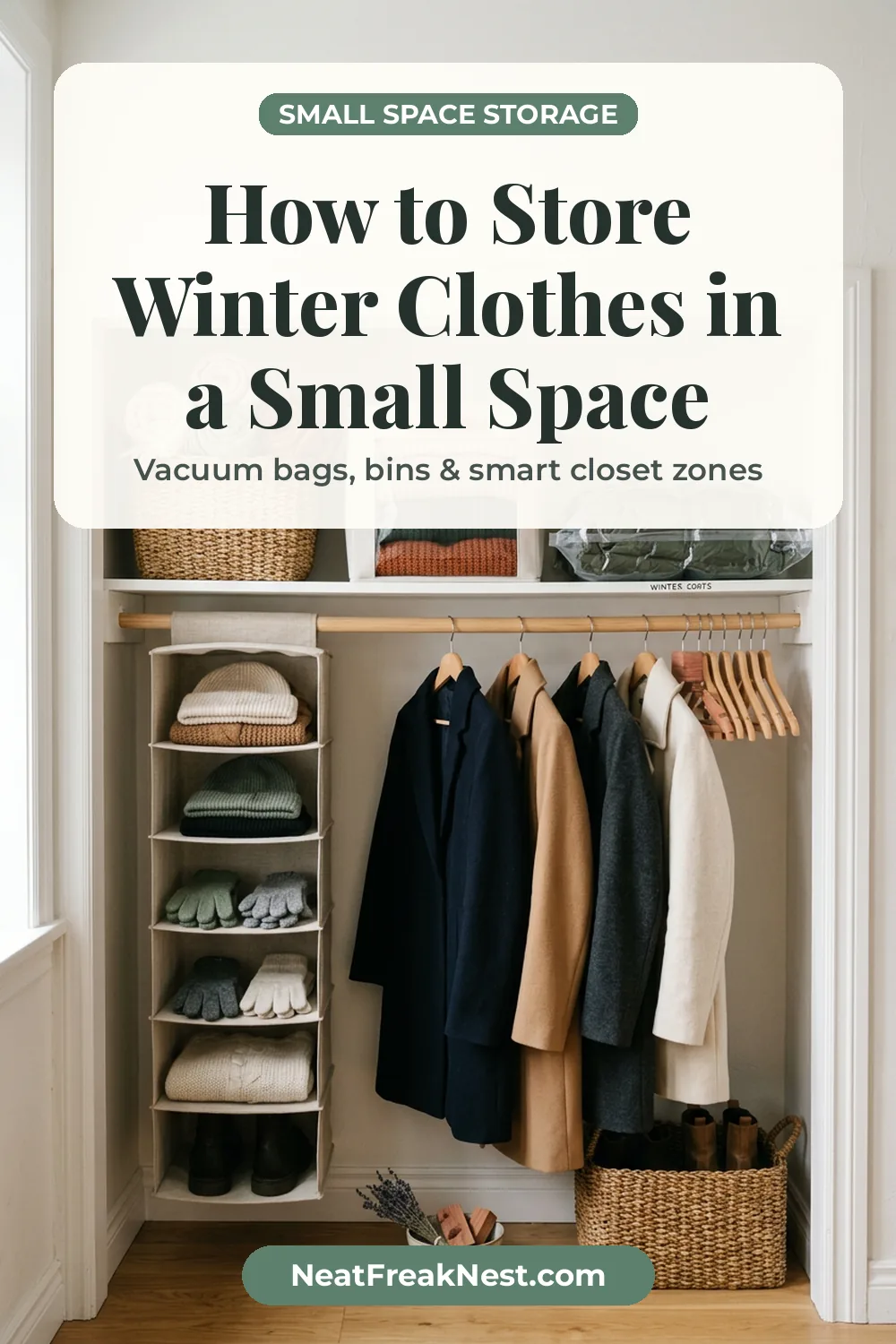 Save to Pinterest
Frequently Asked Questions
How do you store winter clothes in a small space?
Declutter first, then wash everything. Fold knits into breathable bins, vacuum-seal synthetic puffers and fleece, hang wool coats on shaped hangers, and use hidden spots like under the bed, the top closet shelf, inside suitcases and storage furniture.
Is it OK to store winter clothes in vacuum bags?
Vacuum bags are great for synthetic jackets, fleece and ski wear. For wool, cashmere and down, remove only about half the air or use breathable bins instead, because tight long-term compression can crush fibers and loft.
Should winter clothes be stored in plastic bins?
Lidded plastic bins work well if clothes are clean and completely dry. Line them with a cotton pillowcase or tissue for natural fibers, add a moisture absorber, and never use dry-cleaner plastic bags for long-term storage.
How do you keep moths out of stored winter clothes?
Clean every item before storing, since moths are drawn to body oils and food residue. Store in sealed or breathable bins with cedar blocks or lavender, keep the area cool and dry, and check bins every two to three months.
Where should you not store winter clothes?
Avoid attics, garages and basements that are not climate-controlled. Heat, temperature swings and humidity cause mildew, yellowing and pests. A cool, dark, dry closet, shelf or under-bed space is best.
Now you know how to store winter clothes in a small space: edit what you own, clean before you pack, let natural fibers breathe, compress only synthetics, and use the space under, above and behind what you already have. Do it once well and next season’s swap takes an hour.