
The entryway is the first thing you see coming home and the first thing guests see arriving. It’s also where clutter goes to reproduce — shoes breed under the bench, mail piles on the console, and keys vanish into the exact pocket you never check. These entryway organization ideas stop the pile-up at the door.
⏱️ Short on time?
Grab our FREE printable checklists — the exact routines behind every calm home on this blog:
📋 Room-by-Room Checklist (PDF)📅 Weekly Reset Checklist (PDF)
Part of our Living Room, Bedroom & Holiday Storage Guide, which brings every related post together in one place.
The entryway has one job: catch everything that enters and exits the house, gracefully. These 12 ideas build a landing zone for shoes, coats, keys, bags, and mail — even if your “entryway” is just a wall beside the front door.
Entryway Organization Ideas: What You’ll Learn
- The 5 zones every entryway needs (shoes, coats, keys, bags, mail)
- Storage that fits hallways, corners, and door-adjacent walls
- Small-entryway and no-foyer solutions
- A mail system that ends the paper pile
- The 2-minute arrival/departure habits that maintain it
Build the Five Zones
Every entryway needs the same five landing spots. Miss one and its clutter migrates to the kitchen counter.
1. Shoes: one pair per person, visible
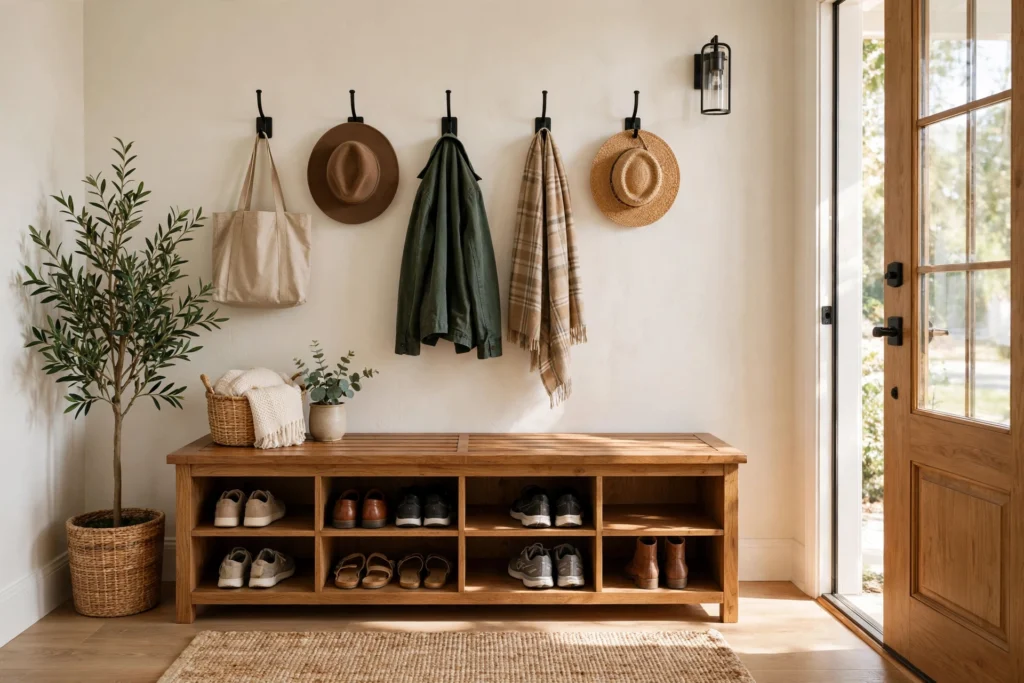
The shoe pile starts when there’s no defined limit. Give each person one slot — a cubby, a tray section, or a labeled spot on a rack. Everything beyond the daily pair lives in bedroom closets. A boot tray ($15–25) by the door catches wet and muddy shoes and defines the boundary: shoes on the tray or in their slot, never on the floor between.
2. Coats: hooks beat closets for daily wear
The hall closet is for off-season coats. Daily jackets need hooks — one per person, at reachable height (kids’ hooks lower). Wall-mounted hook rails ($15–30) hold more than they look like they should, and hooks are faster than hangers, which means jackets actually get hung. If you have zero wall space, an over-the-door hook rack on the closet door works.
3. Keys and wallets: a single dish or wall organizer
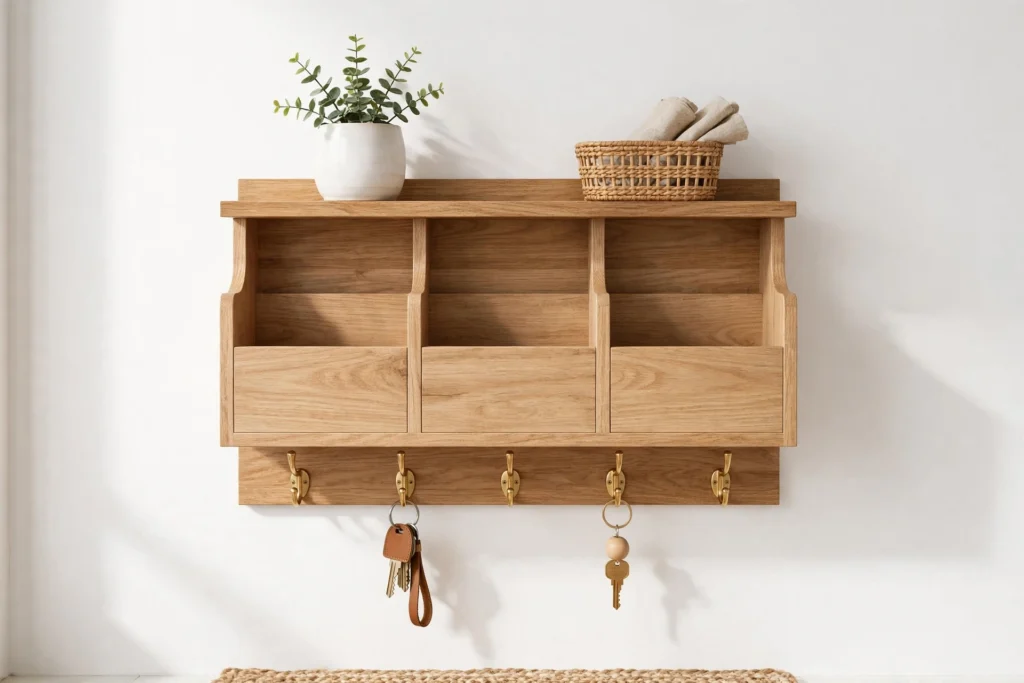
Keys need exactly one home — a small tray, a wall-mounted key holder with hooks ($10–20), or a magnetic strip inside a cabinet door. The rule is absolute: keys live here or in your bag, nowhere else. Households that adopt this stop losing keys within a week. It feels too simple to work. It works.
4. Bags: a hook or cubby per person
Backpacks, purses, gym bags — they need a vertical home, not floor space. Assign each person a hook (on the same rail as coats, or a separate lower rail for kids’ backpacks). School bags hung up means no more tripping over them in the dark hallway.
5. Mail: an inbox with a weekly purge
Mail is the entryway’s silent killer. Mount a simple wall file or set a slim tray ($10–15) labeled “inbox” — every piece of mail lands here, nowhere else. Once a week (pick a day), sort it: recycle junk immediately, file bills, act on the rest. The inbox empties weekly or the system dies.
Furniture That Fits the Space
Match the furniture to your entryway’s actual footprint — oversized pieces in a small hall make everything worse.
6. A bench with hidden storage
A storage bench ($60–120) is the entryway multitool: seating for putting on shoes, hidden storage for gloves, hats, and reusable bags inside. In narrow halls, choose a bench no deeper than 14 inches so it doesn’t block the walkway. Measure your hall width first — you need at least 3 feet of clear passage.
7. A slim console for the drop zone
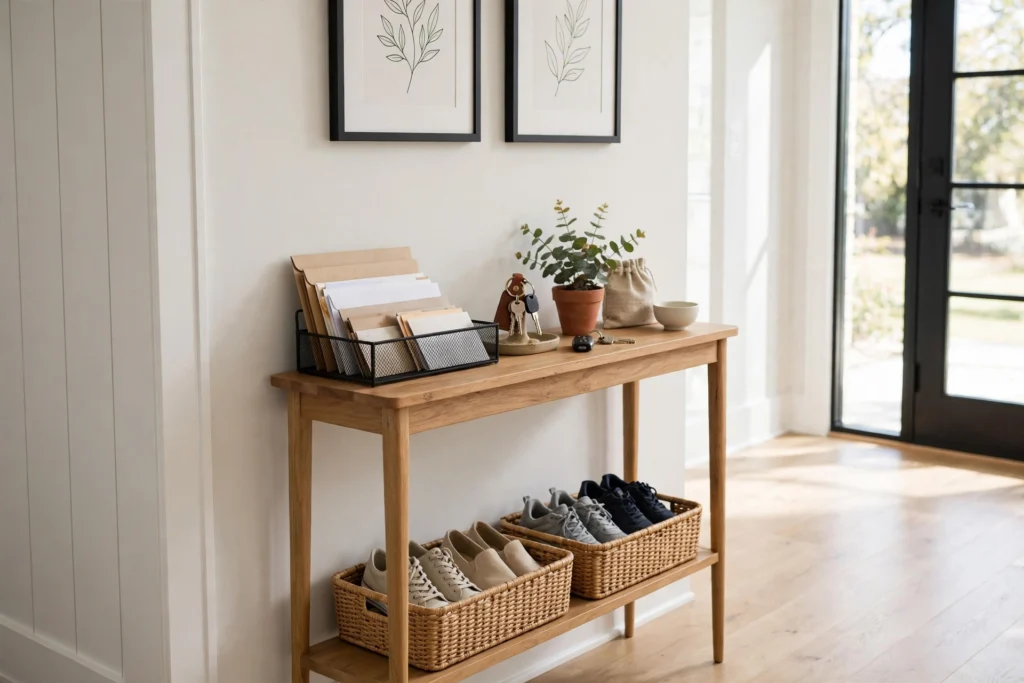
If you have wall space but no depth, a slim console table (10–12 inches deep, $50–90) holds the key tray, mail inbox, and a small basket for sunglasses and dog leashes. Add two baskets underneath for shoes or bags. It defines the entryway as a “room” even in an open floor plan.
8. Vertical shoe storage for tight halls
When floor space is zero, go up: an over-the-door shoe organizer ($12–20) holds 12+ pairs on the back of a closet door, or a tall narrow shoe cabinet ($70–120) fits in 12 inches of wall. Tilt-out shoe cabinets look like regular furniture — guests never know your shoe chaos is behind those doors.
No-Foyer Fixes
No defined entryway? No problem. You just build one with furniture instead of walls.
9. Define the zone with a rug
A rug ($30–60) visually marks “this is the entryway” in an open plan. Everything entryway-related lives on or beside the rug. It’s a psychological boundary — once the zone exists, the family respects it. Choose low-pile and washable; entryway rugs take abuse.
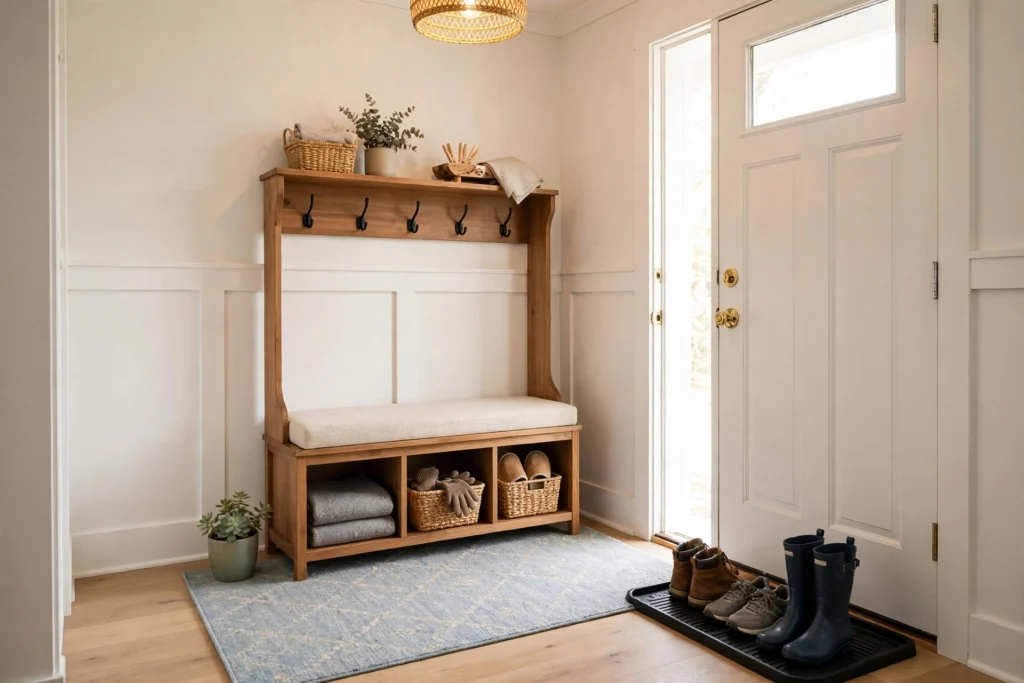
10. Use a freestanding hall tree
A hall tree ($80–150) combines bench, hooks, and cubbies in one footprint — a complete entryway system for a blank wall. It’s the fastest no-foyer fix: one purchase, five zones solved. Anchor it to the wall if you have kids; they’re top-heavy when loaded with winter coats.
Keep It Working
11. The 2-minute arrival rule
When you walk in: shoes in slot, coat on hook, keys in dish, bag on hook, mail in inbox. Two minutes. Teach it to everyone in the house like a drill for the first week. The entryway stays organized not because of the furniture but because of this habit.
12. Seasonal swap twice a year
Entryways clog with off-season gear — winter boots in July, sandals in January. Twice a year, swap: current season stays, off-season goes to closets or storage. This one habit prevents the slow accumulation that quietly doubles entryway clutter every year.
Your Entryway Checklist
The Five Zones
- Shoe slots defined (one pair per person + boot tray)
- Coat hooks (one per person, kids’ height adjusted)
- Key home (tray, wall holder, or magnetic strip)
- Bag hooks or cubbies per person
- Mail inbox with weekly sort day chosen
Furniture
- Storage bench (measured to hall width)
- Slim console for drop zone (if space allows)
- Vertical shoe storage (if floor space is tight)
- Rug defining the zone (no-foyer homes)
- Hall tree alternative (blank-wall homes)
Habits
- 2-minute arrival rule taught to household
- Weekly mail purge day set
- Seasonal gear swap scheduled (2x/year)
Keep going: the small stuff is what wrecks an entryway. Follow our guide on how to organize hats and gloves in a closet to give every glove, scarf and mitten its own landing spot.
Related guides
Save this for later
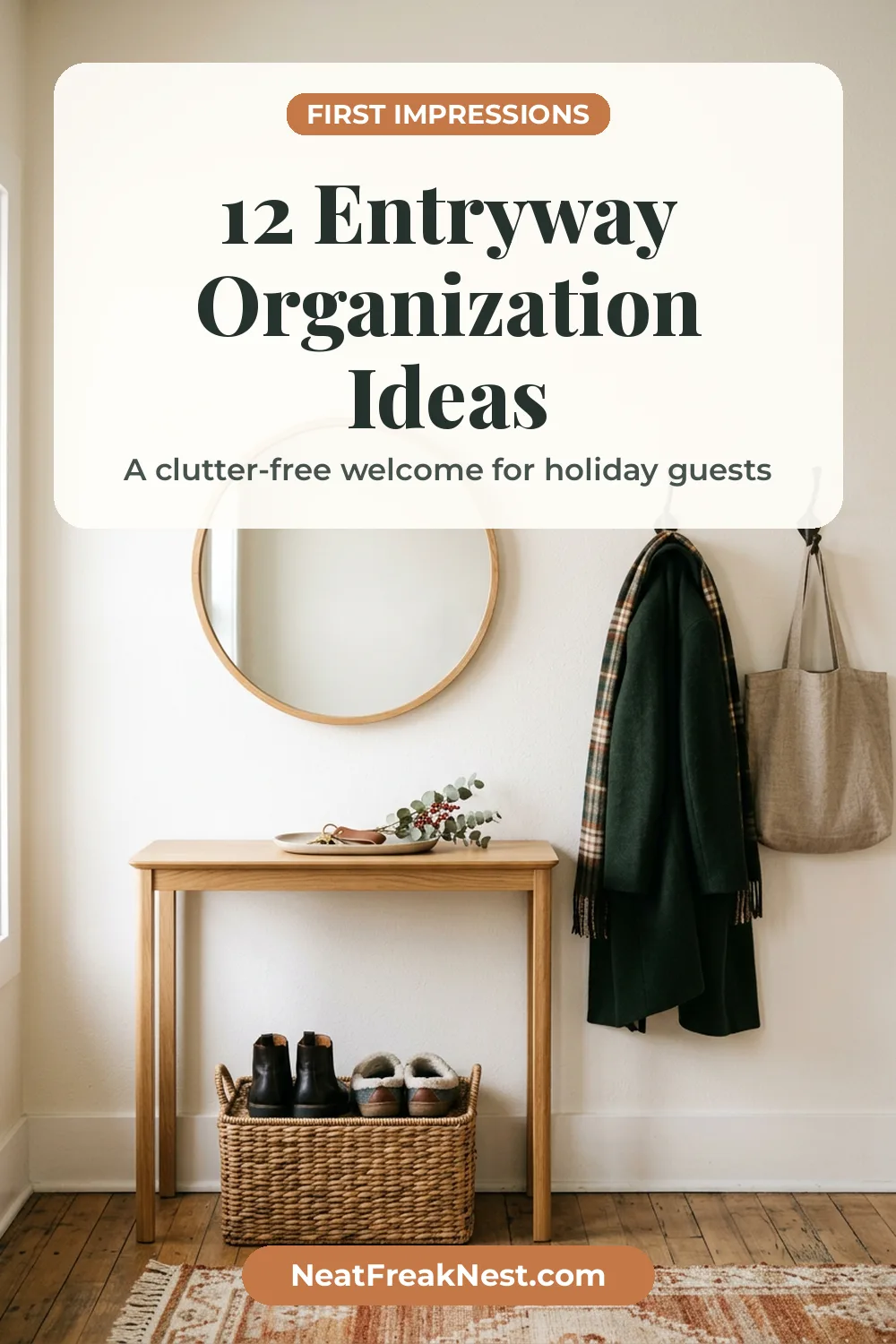
Pin this image to your Pinterest board so it’s there when you need it.
 Save to Pinterest
FAQ
How do I organize an entryway with no closet? Combine a hall tree or storage bench (for coats and shoes), wall hooks for bags, a small tray for keys, and a wall-mounted mail file. That covers all five zones with zero closet. A rug defines the area visually.
How do I stop shoes from piling up by the door? One visible pair per person plus a boot tray for wet shoes — everything else lives in bedroom closets. The pile exists because there’s no limit and no alternative home. Set both and enforce for two weeks; the habit sticks.
What’s the best way to handle mail clutter? One inbox tray by the door, sorted once a week: recycle, file, act. Most mail is junk — stand over the recycling bin when you sort and be ruthless. Go paperless for bills you can, and the inbox shrinks by half.
An organized entryway changes how your whole home feels — you walk into calm instead of chaos, every single day.
Free printables: grab our Room-by-Room Cleaning Checklist and Weekly Reset Planner — add “entryway reset” to your weekly routine and it never piles up again.
Keep going: entryways flow into living spaces — 21 Small Living Room Organization Ideas keeps the first impression going. Shoes multiplying beyond the entryway? Small Closet Organization Ideas gives every pair a real home. And if the whole house needs a purge before any of this sticks, start with the 30-Day Decluttering Checklist.
Pingback: 12 Mudroom Organization Ideas for Busy Families - Neat Freak Nest
Pingback: 18 Fall Entryway Decor Ideas (Cozy & Organized) - Neat Freak Nest
Pingback: Thanksgiving Prep Checklist: A Stress-Free Holiday Timeline - Neat Freak Nest
Pingback: 19 Coat Closet Organization Ideas for a Tidy Entryway
Pingback: How to Organize a Small Apartment: 19 Smart Ideas
Pingback: 15 Halloween Decor Organization Ideas (Zero Mess)