
A queen bed hides about 30 square feet of floor space. In most homes, that space holds dust bunnies, one lost sock, and nothing else — while the closet overflows and the dresser drawers won’t close. It’s the biggest unused storage zone in the bedroom, and it’s already paid for. These under-bed storage ideas put it to work.
⏱️ Short on time?
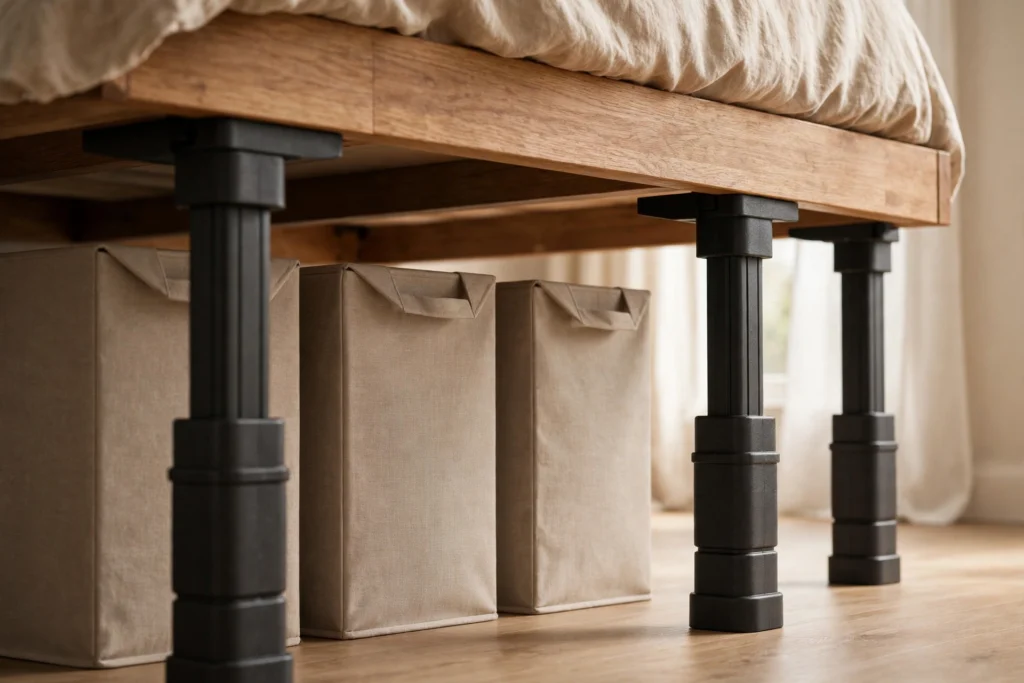
Grab our FREE printable checklists — the exact routines behind every calm home on this blog:
📋 Room-by-Room Checklist (PDF)📅 Weekly Reset Checklist (PDF)
Part of our Living Room, Bedroom & Holiday Storage Guide, which brings every related post together in one place.
Under-bed storage works when it’s intentional: the right containers, the right height, and a rule about what lives down there. These 19 ideas cover bins, drawers, risers, and the honest list of what should never go under a bed.
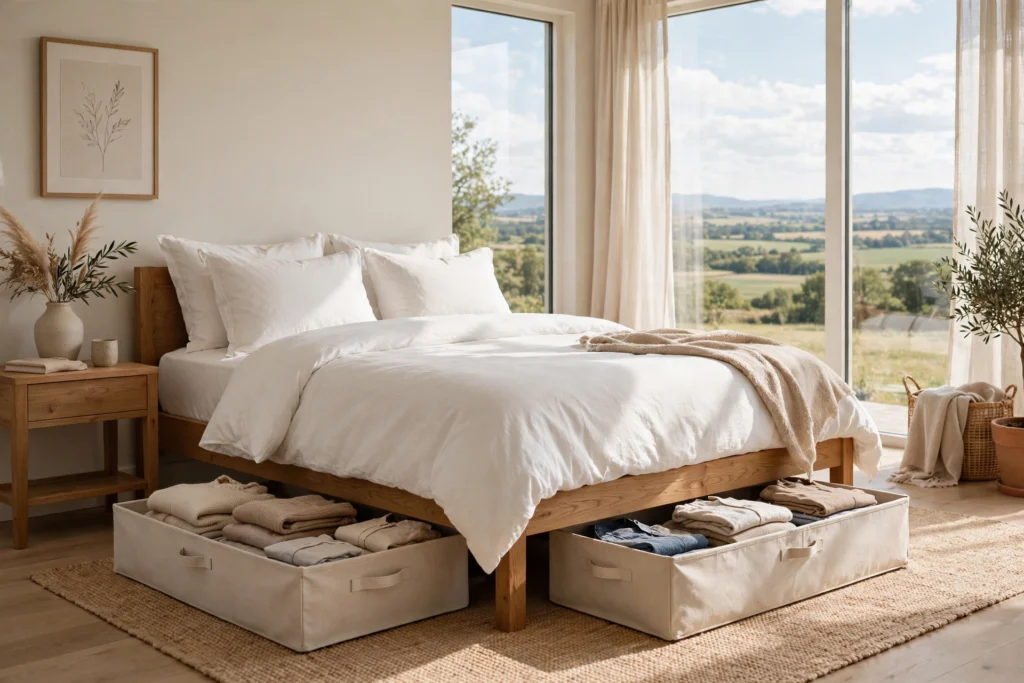
Under-Bed Storage Ideas: What You’ll Learn
- How to measure your clearance and pick containers that actually fit
- Bed risers that manufacture extra inches (and which ones to trust)
- The best bins, drawers, and bags for under-bed storage
- Exactly what to store under the bed — and what to never store there
- Dust-proofing and maintenance so it stays clean
Measure and Prep First
Buy the bins before measuring and you’ll own bins that don’t fit. Ten minutes with a tape measure prevents that.
1. Measure your clearance before buying anything
Slide a tape measure under the bed: floor to the bottom of the frame (or box spring). Most beds offer 7–9 inches; platform beds sometimes as little as 5. Write down the clearance AND the full under-bed footprint (a queen is roughly 60×80 inches). Every container you buy must be at least an inch shorter than your clearance, or it won’t slide.
2. Consider bed risers for instant inches
Standard risers ($15–25 for a set of four) lift the bed 3–8 inches, turning 7 inches of clearance into 12+. Get the heavy-duty kind rated for your bed’s weight plus two sleepers — cheap hollow risers crack. Risers with built-in USB ports or outlets exist ($30–40) if your nightstand is outlet-starved. Note: skip risers on beds with already-tall frames or if anyone in the house struggles getting into a high bed.
3. Vacuum and lay down a dust barrier
Before anything goes under there, vacuum the floor thoroughly and wipe the frame. Then lay a cheap flat bedsheet or a purpose-made under-bed dust cover on the floor. It takes five minutes and means your stored items sit on clean fabric instead of bare dusty floor — and cleanup later is “pull out the sheet and shake it.”
Bins and Boxes
Bins are the workhorse. The right bin slides easily, keeps dust out, and lets you see what’s inside.
4. Use rolling bins with wheels
Wheels are non-negotiable for bins you’ll access regularly. Rolling under-bed bins ($18–30 each) glide out with one hand — no yanking, no scraped floors. Look for recessed wheels (they don’t add height) and a low profile that clears your frame. Two 40-inch bins fit neatly under a queen.
5. Pick lidded bins for dusty homes
If anyone has allergies — or the bedroom floor is hardwood that shows every speck — lidded bins win. Snap-on lids ($15–25) seal out dust completely. Clear lids or clear bins let you identify contents without opening six boxes. Label the ends that face out.
6. Try fabric bins with structured sides
Soft-sided fabric bins ($10–16) with reinforced walls collapse flat when empty and won’t scratch floors. They’re ideal for clothes and linens. Get the ones with handles on the short ends — you pull from the side of the bed, so end handles matter more than top handles.
7. Vacuum-seal the bulky stuff
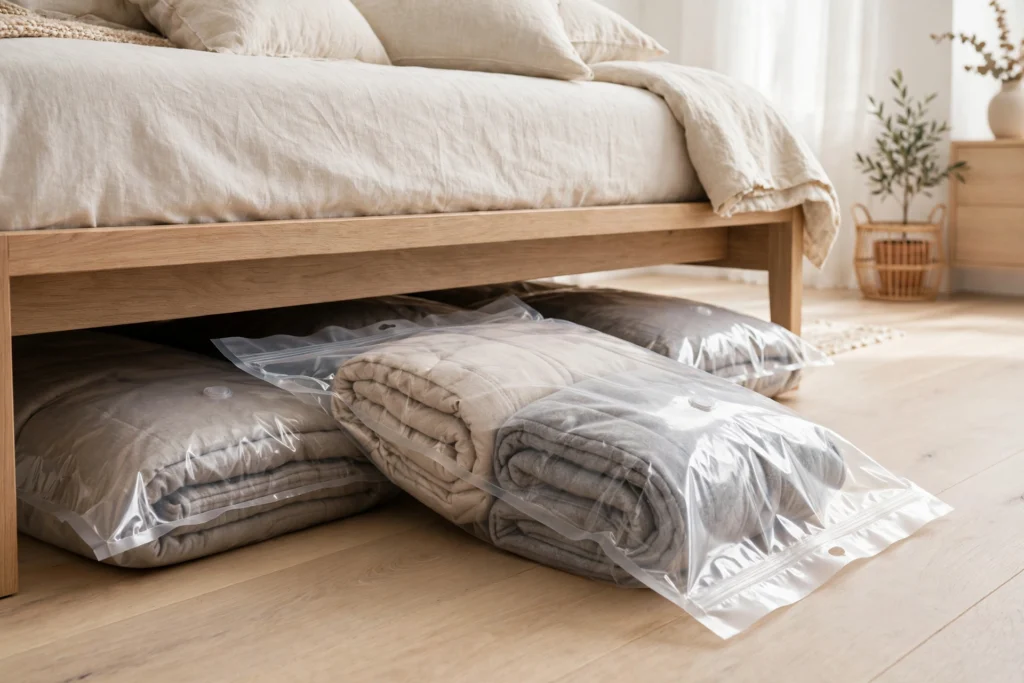
Comforters, winter coats, and spare pillows compress to a third of their size in vacuum storage bags ($15 for a 6-pack). Flat bags slide under even low-clearance beds where rigid bins won’t fit. Pro tip: don’t overfill — a bag stuffed to bursting won’t compress flat and will fight you every time.
8. Use flat shoe organizers for pairs
A flat under-bed shoe organizer ($12–18) with 12–16 compartments keeps shoes visible, paired, and off the closet floor. It’s also perfect for handbags, clutches, and small accessories. If shoes are the reason your closet overflows, this one purchase fixes it.
9. Split long bins by category, not by person
One bin per category (“winter scarves,” “gift wrap,” “kids’ art supplies”) beats one bin per person. Category bins mean you open exactly one bin per task. Mixed bins mean opening three. When a bin’s category is done — holiday decorations in January — the whole bin leaves the bedroom.
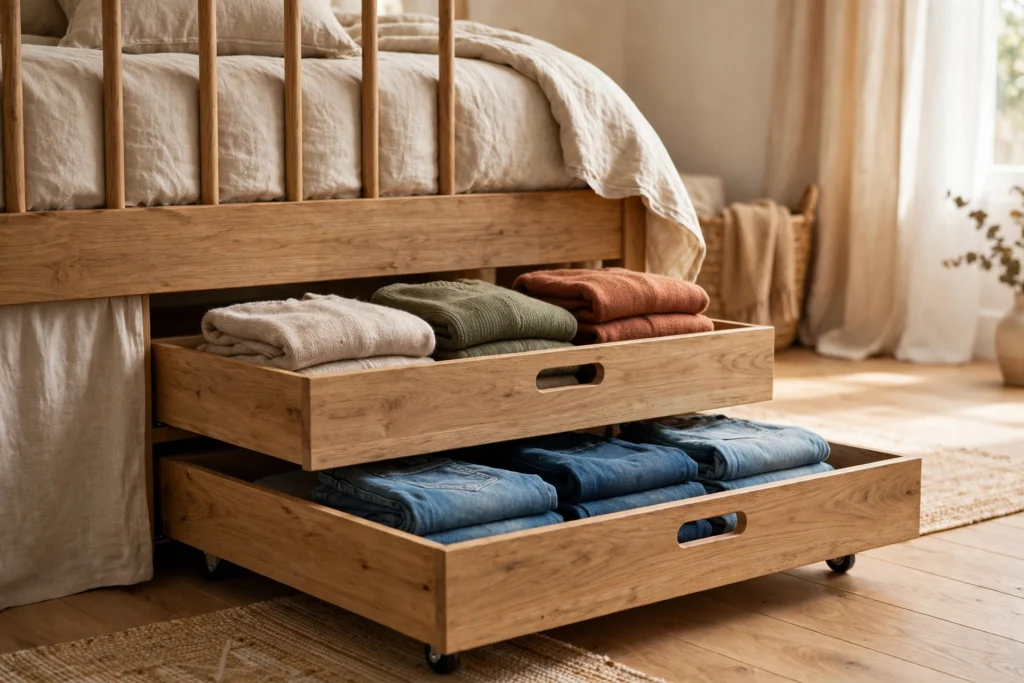
Drawers and DIY Upgrades
Drawers cost more than bins but feel like real furniture — worth it for daily-use items.
10. Add rolling drawers for clothes
Wooden or sturdy plastic rolling drawers ($30–50 each) turn under-bed space into a dresser you can’t see. They’re ideal for off-season clothes, workout gear, or kids’ clothes in small rooms. Two drawers under a twin bed roughly equal one dresser drawer stack — without using a square foot of floor.
11. Build a simple plywood platform with cubbies
Handy? A sheet of plywood on low casters, divided into cubbies with 1×8 boards, makes custom under-bed drawers for about $40 in lumber. Size the cubbies to standard fabric bins so you can swap bins in and out. One weekend afternoon, basic tools, and you’ve got storage no store sells.
12. Repurpose dresser drawers on casters
Old dresser drawers with $8 caster wheels screwed to the bottom become perfect under-bed drawers — free if you’re replacing a dresser anyway. Sand rough edges, add a cup pull to the front, and they slide like they were made for it. Measure drawer height against your clearance first.
13. Hang a bed skirt to hide it all
Storage only looks good hidden. A tailored bed skirt ($20–30) in a fabric matching your bedding conceals every bin and keeps dust out at the same time. Get the wrap-around style with velcro — it goes on without lifting the mattress, and you can pull one side up to access bins without removing the whole thing.
What to Store (and What Never To)
Not everything belongs under the bed. The right inventory makes the system work; the wrong inventory makes it a junk drawer the size of a mattress.
14. Store off-season clothes and linens
The #1 best use: clothes you won’t touch for months. Winter sweaters in summer, shorts in winter, the guest bedding, spare blankets. They’re bulky, infrequently needed, and perfectly happy in the dark. Vacuum bags for the puffy stuff, bins for the rest.
15. Stash shoes, bags, and accessories
Shoes you wear weekly (not daily), handbags, belts, and hats all thrive under the bed. They’re awkward in closets and drawers, and under-bed compartments keep them visible and paired. Daily shoes stay by the door — under-bed is for the rotation, not the everyday.
16. Keep keepsakes and documents in sealed bins
Photo albums, kids’ school memory boxes, and important documents in a fire-resistant document bag inside a lidded bin. Under-bed is actually good for these: dark, undisturbed, and out of sight. Just keep them in sealed containers — not loose — and know exactly which bin holds what.
17. Never store these under the bed
Food (attracts pests, even sealed snacks), anything damp or mildewy (it will get worse in the dark), important medications (heat and inaccessibility), heavy items you can’t safely lift from floor level, and anything you need weekly — if you’re crawling under there constantly, the system has failed. Also skip: candles in hot climates (they warp) and electronics with batteries (heat + pressure = bad idea).
Keep It Clean and Working
18. Dust-proof with lids and skirts
The bed skirt plus lidded bins means under-bed storage needs dusting roughly twice a year instead of monthly. When you do clean, pull everything out, vacuum the floor and wipe the bins, and check for anything that migrated in uninvited. Fifteen minutes, twice a year.
19. Audit every season change
When you swap seasonal clothes (spring/fall), audit the bins: anything you didn’t touch all season gets donated, anything broken gets tossed, and categories get relabeled if they’ve drifted. The seasonal swap is the natural maintenance moment — ten extra minutes while you’re already down there.
Your Under-Bed Storage Checklist
Prep
- Clearance measured (height + footprint)
- Risers installed if needed (heavy-duty, weight-rated)
- Floor vacuumed, dust sheet laid down
Containers
- Rolling bins with recessed wheels (or lidded for dust)
- Vacuum bags for bulky items
- Flat shoe organizer
- Bins split by category, labeled ends-out
- Bed skirt to hide everything
Inventory
- Off-season clothes and spare linens stored
- Rotation shoes, bags, accessories stored
- Keepsakes in sealed bins
- Banned list respected (no food, damp, meds, batteries)
Maintenance
- Twice-yearly pull-out and vacuum
- Seasonal audit during clothes swap
Keep going: put that under-bed space to work this season with our guide on how to store winter clothes in a small space.
Keep going: an under-bed box is also one of the best gift wrap storage ideas, with more for rolls, bags and ribbon in our full guide.
Related guides
Save this for later
Pin this image to your Pinterest board so it’s there when you need it.
 Save to Pinterest
FAQ
How much clearance do I need for under-bed storage?
Seven inches fits most rolling bins and flat organizers; 5–6 inches limits you to vacuum bags and very flat bins. Below 5 inches, bed risers ($15–25) are the fix — they add 3–8 inches safely when you buy weight-rated ones.
Will storing things under the bed attract bugs or mold?
Only if you store the wrong things or skip dust protection. Keep food and damp items out, use lidded bins in humid climates, and lay a dust sheet on the floor. With those three rules, under-bed storage is no riskier than a closet.
Are bed risers safe?
Yes, when they’re weight-rated for your bed plus sleepers and seated fully on the leg. Avoid stacking risers, avoid them on waterbeds or already-tall frames, and check them yearly for cracks. Solid wood or heavy-duty plastic — skip the flimsy hollow ones.
Measure first, then buy — that’s the whole game. One afternoon with a tape measure, two rolling bins, and a bed skirt will reclaim thirty square feet you already own. Start with the off-season clothes; they’re the easiest win and the bulkiest space-hogs.
Free printables: our Room-by-Room Cleaning Checklist and Weekly Reset Planner include a bedroom reset routine — free and printable.
More space where you need it: 23 Small Closet Organization Ideas doubles your hanging space, 21 Small Bedroom Organization Ideas covers the whole room, and 17 Linen Closet Organization Ideas tames the shelves that hold the spare bedding.
Pingback: 23 Small Closet Organization Ideas That Double Space
Pingback: 15 Kids Room Organization Ideas (That Kids Will Actually Maintain)
Pingback: 21 Nightstand Organization Ideas for Calmer Mornings
Pingback: 17 Gift Wrap Storage Ideas That Keep Every Roll Tidy
Pingback: 21 Toy Organization Ideas for Small Spaces That Stay Tidy