
To clean a humidifier with mold, unplug it, empty the tank, and scrub the tank and base with a soft brush and white vinegar. Soak the tank and parts in undiluted white vinegar for 30 to 60 minutes, scrub away pink, black or slimy film, rinse until the vinegar smell is gone, and dry everything. Throw out a moldy filter or wick, and refill with distilled water.
⏱️ Short on time?
Grab our FREE printable checklists — the exact routines behind every calm home on this blog:
📋 Room-by-Room Checklist (PDF)📅 Weekly Reset Checklist (PDF)
Part of our Cleaning Routines & Checklists Guide, which brings every related post together in one place.
Humidifiers run all night all winter, which makes them one of the easiest appliances to forget and one of the best places for mold, pink slime and mineral scale to grow. If the mist smells musty, the water looks cloudy, or you see black specks or pink film in the tank, it needs a full cleaning today. This guide shows how to clean a humidifier that has mold, how to handle scale and filters, and a simple weekly routine to keep it clean, based on guidance from the EPA and the Consumer Product Safety Commission.
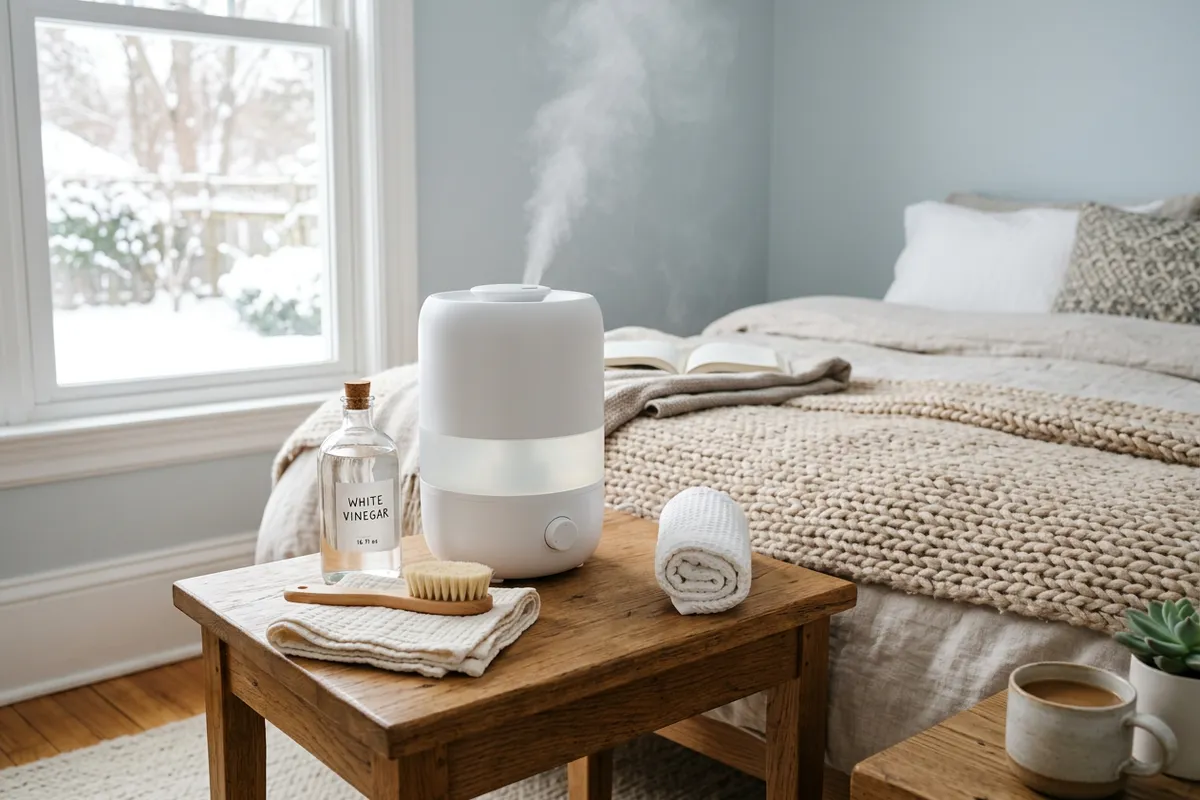
Why Humidifiers Grow Mold and Slime
Warm, still water plus a little dust and minerals is an ideal home for bacteria and mold. The CPSC’s Care of Room Humidifiers guide says bacteria and fungi often grow in the tanks of portable and console room humidifiers and can be released into the mist, and that film or scum on the water surface, tank sides or motor parts may be a sign of that growth. The EPA’s Use and Care of Home Humidifiers guide adds that minerals from tap water can form scale, and scale gives microorganisms a rough surface to grow on.
Signs your humidifier needs cleaning now:
- A musty or sour smell from the mist
- Pink, orange, brown or black film or specks in the tank or base
- A slimy feel inside the tank
- White crust (scale) around the base or on the ultrasonic plate
- Fine white dust on nearby furniture
- Cloudy water, or mist that suddenly seems weaker
If anyone in the house has asthma or allergies, don’t run a humidifier with visible mold. Clean it first or replace it.
What You Need
- Distilled white vinegar (5% acidity)
- A soft bottle brush and an old toothbrush
- Cotton swabs for small crevices
- Dish soap and warm water
- Clean microfiber cloths
- Rubber gloves
- Your humidifier manual, or the model number to look it up
- Distilled water for refilling
- Replacement filter or wick if yours uses one
Check the manual first. Some manufacturers allow vinegar and others recommend only certain cleaners or a specific descaling solution. Never mix vinegar with bleach or other cleaners; combining chemicals can make harmful fumes.
How to Clean a Humidifier With Mold in 7 Steps
Step 1: Unplug it and take it apart
Unplug the humidifier and remove the tank, lid, any cap, filter, wick or demineralization cartridge. Pour out leftover water. Never submerge the base, which holds the motor, heater or ultrasonic plate. Take photos if you’re worried about reassembly.
Step 2: Throw out moldy filters and wicks
A wick or filter with visible mold or a strong smell can’t be saved by soaking. Replace it with the exact model your manufacturer lists. A filter that is only stiff with scale can be soaked in vinegar (Step 5) if the manual allows it.
Step 3: Wash the tank with soap and a brush
Fill the tank with warm water and a few drops of dish soap, then scrub the walls with a bottle brush. Rinse. This removes loose slime so the vinegar can reach the scale and film underneath.
Step 4: Soak the tank and small parts in white vinegar
Fill the tank about a quarter full with undiluted white vinegar, put the cap on, and swirl so the vinegar coats the whole inside. Let it sit for 30 to 60 minutes, swirling every 15 minutes. Drop the cap, lid and small parts into a bowl of vinegar at the same time. For heavy buildup, leave it for a couple of hours.
Step 5: Scrub the base, ultrasonic plate and crevices
Pour a little vinegar into the base reservoir (not on the electrical parts) and let it sit for 20 to 30 minutes. Scrub the reservoir with a soft brush or toothbrush, and use cotton swabs around the mist outlet and the ultrasonic plate or heating element, which is delicate. Wipe white scale away with a vinegar-dampened cloth; never use a metal scraper, which can damage the plate.
Step 6: Rinse thoroughly
Rinse the tank and base several times with clean water until you can’t smell vinegar. The EPA warns that if you use a cleaning or disinfecting agent on your humidifier, you should rinse the tank thoroughly to avoid releasing chemicals into the air.
Step 7: Dry it and refill with distilled water
Wipe the parts with a clean cloth and let them air-dry completely before reassembling. Refill with distilled water (or whatever your manual recommends) and put in a fresh filter if needed. Set the humidifier on a waterproof tray or tile, off carpet and away from walls and bedding.
How to Remove Scale, Pink Slime and Black Mold Specks
| Problem | What it usually is | Best fix |
|---|---|---|
| White crust | Mineral scale from tap water | Vinegar soak, 30 to 60 minutes, then soft brush |
| Pink or orange slime | Bacteria growth | Soap scrub, then vinegar soak, rinse well |
| Black or green specks | Mold | Soap scrub, vinegar soak twice; discard moldy filters; replace unit if it keeps coming back |
| Brown film in the tank | Minerals and organic buildup | Vinegar soak and brush |
| Fine white dust around the room | Minerals in the mist | Switch to distilled water and clean the base |
A Simple Humidifier Cleaning Schedule
The EPA’s Use and Care of Home Humidifiers guide gives a clear routine for portable humidifiers: empty the tank, wipe all surfaces dry and refill the water daily; use water with low mineral content such as distilled water; and clean portable humidifiers every third day, using a brush to remove any scale, deposits or film. In practice, that works out to this:
| How often | What to do |
|---|---|
| Every day | Empty the tank, wipe it dry, refill with fresh distilled water |
| Every 3 days | Scrub the tank and base with a brush; remove any film or scale (EPA) |
| Weekly | Vinegar soak for the tank and parts; rinse well |
| Monthly or per manual | Replace the filter, wick or cartridge |
| End of season | Deep clean, dry completely and store with the lid off |
How to Store a Humidifier for Summer
Do a full vinegar cleaning, rinse, and let every part dry fully for a day. Store the tank with the lid off or loosely on to let air circulate, remove used filters and wipe the base. Store in the original box or a bin in a dry closet shelf; our linen closet organization ideas and under-bed storage ideas have spots for seasonal gear.
Tips to Prevent Mold From Coming Back
- Use distilled water to reduce scale and white dust.
- Never leave water sitting in the tank for days when the unit is off.
- Keep room humidity moderate; a humidity monitor helps you avoid overhumidifying and condensation on windows.
- Place the humidifier on a hard surface, a few feet from walls and bedding.
- Change the water daily instead of topping it off.
- If mold returns quickly after cleaning, replace the humidifier.
Winter is also when bedrooms and bathrooms trap moisture. Our bedroom cleaning checklist, deep cleaning checklist and natural cleaning recipes help you keep the whole room fresh, and our washing machine guide uses the same vinegar approach for another moisture-prone appliance.
Sources and Safety Notes
Cleaning frequency, distilled water and rinsing advice follow the EPA’s Use and Care of Home Humidifiers guide. The mold and bacteria warning and signs of contamination follow the CPSC’s Care of Room Humidifiers guide. Always unplug the unit before cleaning, follow your manufacturer’s instructions, and never mix vinegar with bleach. If you have breathing problems and notice mold in or around a humidifier, talk to your doctor and replace or clean it before using it again.
Related guides
Save this for later
Pin this image to your Pinterest board so it’s there when you need it.
 Save to Pinterest
Good to know: Set a repeating phone reminder for every third day, written as “scrub humidifier tank.” It is the easiest way to build the habit the EPA recommends.
Frequently Asked Questions
How do you clean a humidifier that has mold?
Unplug it, discard moldy filters, scrub the tank and base with soap and a soft brush, soak the tank and parts in undiluted white vinegar for 30 to 60 minutes, then rinse until the smell is gone and dry completely.
How often should you clean a humidifier?
The EPA recommends emptying the tank, wiping it dry and refilling it daily, and cleaning portable humidifiers every third day to reduce buildup of scale and microorganisms.
Can you use vinegar to clean a humidifier?
Usually yes. White vinegar is a common cleaner for scale and film, but check your manual first because some brands recommend other cleaners. Rinse thoroughly so no vinegar smell or residue goes into the air.
What is the pink slime in a humidifier?
Pink or orange slime is a bacterial film that grows in warm, still water. Scrub it with soap and a brush, soak the parts in vinegar, rinse well, and switch to daily water changes.
Should I use tap water or distilled water in my humidifier?
Distilled or other low-mineral water is recommended to reduce scale and the white dust that minerals leave in the room. The EPA says to use water with low mineral content, such as distilled water.
To clean a humidifier with mold, unplug it, toss moldy filters, scrub with soap, soak the tank in white vinegar, rinse until it no longer smells, dry completely and refill with distilled water. Then scrub it every third day so the mold never gets a start.