
If your towels come out smelling faintly sour, or you have spotted gray gunk in the folds of the door seal, your washer is overdue for a clean. Washers collect detergent residue, softener and lint where you can’t see them. Here is exactly how to clean a washing machine with vinegar, step by step, for both top-loaders and front-loaders, including the parts most people skip: the rubber gasket, the detergent drawer and the drain filter. It takes about 90 minutes, most of it hands-off, and costs less than a dollar.
⏱️ Short on time?
Grab our FREE printable checklists — the exact routines behind every calm home on this blog:
📋 Room-by-Room Checklist (PDF)📅 Weekly Reset Checklist (PDF)
Part of our Closets, Laundry & Storage Guide, which brings every related post together in one place.
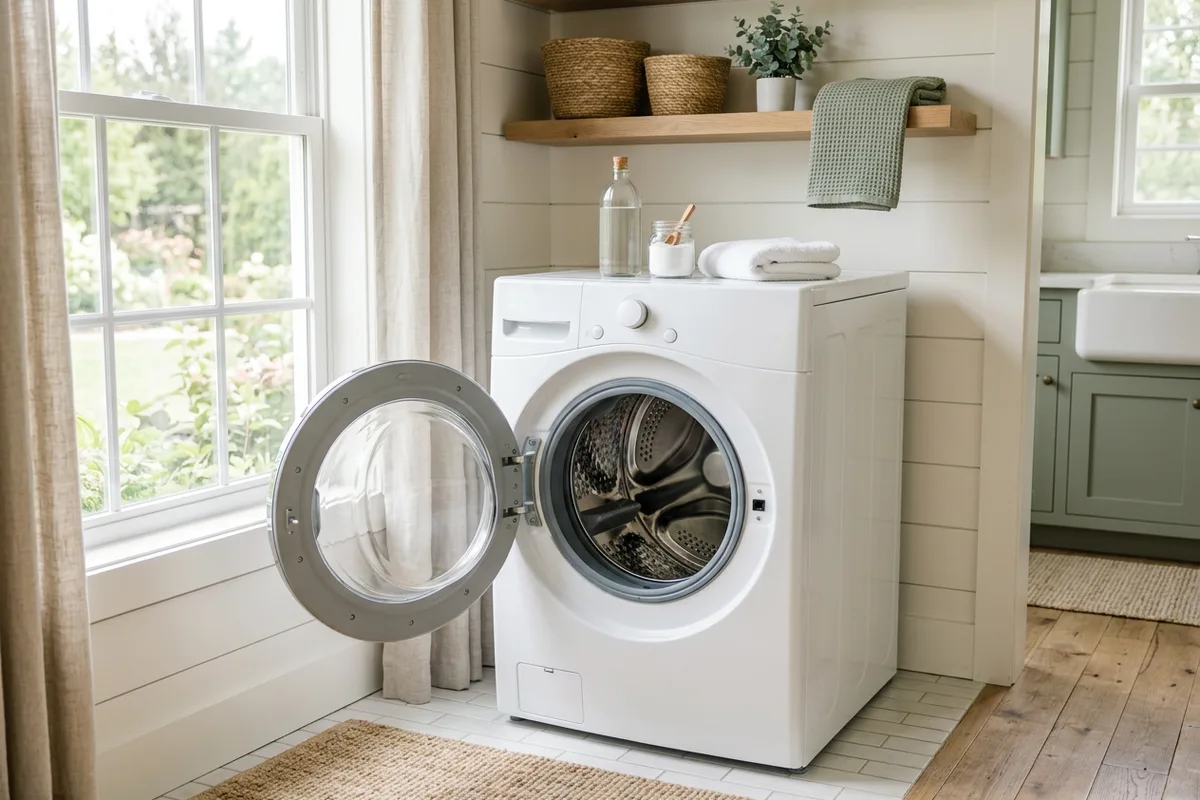
Quick Answer: How to Clean a Washing Machine With Vinegar
- Top-loader: fill the tub on the hottest, largest setting, add 4 cups of white vinegar, let it agitate 1 minute, soak 1 hour, then finish the cycle.
- Front-loader: pour 2 cups of white vinegar into the drum (or 1 cup in the detergent drawer) and run the Tub Clean or hottest, longest cycle with no clothes.
- Then baking soda: run a second hot cycle with 1/2 cup of baking soda to scrub and deodorize. Never in the same cycle as the vinegar.
- Wipe the details: gasket, detergent drawer, lid, door and drain filter.
- Repeat monthly, and leave the door or lid open between loads.
What You Need
- Distilled white vinegar (5% acidity), about 4 cups for a top-loader or 2 cups for a front-loader
- Baking soda, 1/2 cup
- A spray bottle of 1:1 vinegar and warm water
- Microfiber cloths, an old toothbrush and a soft bottle brush
- Rubber gloves, a shallow pan or baking dish and an old towel (for the drain filter)
- Optional: washer cleaner tablets or chlorine bleach, for a mold problem only (see below)
Skip cleaning vinegar (6%+) and apple cider vinegar. Regular white vinegar is strong enough, and cider vinegar can leave a tint. Every cleaner in this guide is from our natural cleaning recipes kit.
Vinegar or the Washer’s Cleaning Cycle?
Most newer machines have a Tub Clean, Clean Washer or Self Clean cycle. It runs extra-hot water, extra-long, with a high water level, and it is designed for a washer cleaner tablet or a measured amount of bleach. That is the best tool for a real mildew or black-mold problem. Vinegar shines at a different job: dissolving mineral scale and soap scum and cutting odors cheaply.
| Situation | Best choice | Why |
|---|---|---|
| Mild musty smell, soap film | Vinegar cycle + baking soda cycle | Acid dissolves residue and scale; baking soda deodorizes |
| Hard water, chalky white deposits | Vinegar | Vinegar dissolves calcium and lime scale |
| Black spots, slimy gasket, strong mildew odor | Tub Clean cycle with a washer cleaner tablet or bleach | Disinfects mold that vinegar alone may not kill |
| Monthly upkeep | Either; follow your manual | Many manuals call for the clean cycle about every 30 washes |
Check your manual first. Some manufacturers warn that frequent, undiluted vinegar can dry out rubber seals and hoses over time. A monthly cleaning cycle is fine for most machines; just don’t add vinegar to every load as a softener. And never mix vinegar and bleach: together they release chlorine gas. If you use both, run a plain rinse cycle between them.
How to Clean a Top-Loading Washing Machine With Vinegar
- Set the hottest water, largest load size and longest cycle. Let the tub fill completely with no clothes.
- Add 4 cups of white vinegar to the water and let the machine agitate for about 1 minute to mix.
- Pause the cycle (lift the lid or press pause) and let it soak for 1 hour. This is where buildup softens.
- Scrub above the waterline while it soaks: dip a cloth in the tub water and wipe the lid, the underside of the lid, the rim and the agitator top. A toothbrush gets the bleach and softener dispensers.
- Close the lid and finish the cycle.
- Run a second hot cycle with 1/2 cup of baking soda sprinkled in the empty tub to lift loosened grime and neutralize the vinegar smell.
HE top-loaders without an agitator often lock the lid and won’t let you pause. Use the Clean Washer cycle (or hottest, longest), add the vinegar to the drum before starting and skip the soak.
How to Clean a Front-Loading Washing Machine With Vinegar
- Empty the drum and pull out any stray socks hiding in the gasket.
- Add 2 cups of white vinegar directly to the drum, or 1 cup to the detergent drawer (main wash compartment) if your manual prefers it.
- Run the Tub Clean cycle, or the hottest water with the longest cycle and an extra rinse.
- Run a second cycle with 1/2 cup of baking soda sprinkled in the drum on hot.
- Wipe the drum and door glass dry and leave the door open to air out for a few hours.
Clean the Gasket (Door Seal)
The rubber gasket on a front-loader is where most washer smells come from. Water, lint, hair and soap collect in its folds and never fully dry.
- Peel the gasket back all the way around and look underneath, especially at the bottom where water pools.
- Pull out debris (hair, lint, coins) with a gloved hand or a paper towel.
- Spray with 1:1 vinegar and water, wait 5 minutes, then wipe each fold with a microfiber cloth.
- For stubborn spots, scrub with a paste of 2 tablespoons baking soda and a few drops of water using a soft toothbrush. Don’t use steel wool; it tears the rubber.
- Dry it completely with a towel.
Black mold that won’t budge? Vinegar may not remove the stain. Many manufacturers suggest a diluted bleach solution on the gasket (follow the ratio in your manual, often about 3/4 cup bleach per gallon of water), with gloves and a window open, then a rinse cycle. Do this on a different day from a vinegar clean.
Clean the Detergent Drawer and Dispensers
A slimy detergent drawer drips gunk back onto clean clothes. Most drawers come out completely:
- Pull the drawer out until it stops, then press the release tab (usually a colored tab marked PUSH in the softener compartment) and lift it free.
- Soak it 30 minutes in a sink of hot water with 1 cup of vinegar.
- Scrub every compartment and the siphon caps with a toothbrush, then rinse and dry.
- Clean the cavity the drawer slides into: spray with vinegar solution and use a bottle brush on the top, where mold often hides out of sight.
- Top-loaders: pull off the removable fabric softener cup on the agitator and soak it the same way.
Don’t Skip the Drain Pump Filter
Most front-loaders have a small hatch at the bottom front with a coin trap or drain pump filter. If your washer still smells after cleaning, or drains slowly, this is often the reason.
- Lay down an old towel and set a shallow baking dish under the hatch. Expect 1 to 3 cups of water.
- Pull out the small drain hose (if there is one) to empty water first, then unscrew the filter counterclockwise.
- Rinse lint, coins and gunk out in the sink, wipe the housing, screw it back tight and run a short rinse to check for leaks.
Do this every 1 to 3 months. Many top-loaders don’t have a user-serviceable filter; check your manual.
How to Get Rid of a Smelly Washing Machine for Good
Cleaning removes the smell; these habits stop it from coming back:
- Leave the door or lid open after every load so the drum dries. On a front-loader, also leave the detergent drawer slightly open.
- Move wet laundry out within an hour or two. A load left overnight is the fastest way to a sour washer.
- Use less detergent. Excess soap is the main food for washer mildew. HE machines need only about 2 teaspoons of HE detergent for a normal load; follow the line on the cap, not the top.
- Cut back on liquid fabric softener, which leaves a waxy coating. Wool dryer balls are a no-residue alternative.
- Wipe the gasket dry after the last load of the day; it takes 20 seconds.
- Run a hot wash (towels or sheets) at least once a week; constant cold washes let residue build up.
A dedicated hook for a gasket cloth and a little caddy for vinegar and baking soda make these habits easier. Our small laundry room organization ideas show where to fit them.
How Often to Clean a Washing Machine
| Task | How often |
|---|---|
| Leave door open, wipe gasket dry | After every wash day |
| Vinegar + baking soda clean (or Tub Clean cycle) | Monthly, or about every 30 loads |
| Detergent drawer soak | Monthly |
| Drain pump filter | Every 1 to 3 months |
| Deep check of gasket for mold | Every 3 months |
Large households, hard water and heavy cold-water use push you toward every 2 to 3 weeks. Add the monthly clean to your deep cleaning checklist or the room-by-room cleaning checklist so it actually happens.
Mistakes to Avoid
- Mixing vinegar and baking soda in the same cycle. They neutralize each other into salty water; run them separately.
- Mixing vinegar with bleach. Never. Rinse between them.
- Using vinegar in every load as softener; occasional use is fine, constant use may wear rubber parts.
- Scrubbing the gasket with abrasive pads or harsh chemicals.
If your dishwasher has the same sour smell, the method is almost identical: see how to clean a dishwasher with vinegar and baking soda. For more chemical-free swaps, browse our eco-friendly cleaning swaps.
Keep going: another moisture-prone appliance: how to clean a humidifier with mold with vinegar.
Related guides
Save this for later
Pin this image to your Pinterest board so it’s there when you need it.
 Save to Pinterest
Good to know: if the smell comes back within a week of cleaning, check the drain pump filter and cut your detergent in half. Those two fix most repeat cases.
Sources & safety notes
The safety and care points in this guide are based on these public sources. Your appliance manual and product labels always come first, so follow them where they differ from general advice.
- Cleaning the Interior: Front Load Washer (Whirlpool): run the washer’s Clean Washer cycle monthly with a washer cleaner or liquid chlorine bleach, and leave the door open afterward so the drum can dry. Check your own model’s manual before using vinegar or bleach.
- Dangers of Mixing Bleach with Cleaners (Washington State Department of Health): never mix chlorine bleach with vinegar or other acids, or with ammonia. Run separate cycles if you use both.
- A Brief Guide to Mold, Moisture and Your Home (U.S. EPA): moisture control is the key to mold control, so drying the drum and gasket between loads matters as much as cleaning.
Frequently Asked Questions
Can I put vinegar in my washing machine to clean it?
Yes. Run an empty hot cycle with 4 cups of white vinegar in a top-loader or 2 cups in a front-loader, then a second hot cycle with 1/2 cup of baking soda. Check your manual first, and avoid adding vinegar to every load, since frequent use may dry out rubber seals.
Should I use vinegar or baking soda first in my washing machine?
Use vinegar first to dissolve residue and mineral scale, then baking soda in a separate cycle to scrub and deodorize. Don’t put them in the same cycle, because they neutralize each other.
How do I get rid of the mildew smell in my washing machine?
Clean the gasket folds, detergent drawer and drain filter, then run a hot vinegar cycle and a baking soda cycle. For black mold, use the Tub Clean cycle with a washer cleaner tablet or diluted bleach instead. Leave the door open after every load and use less detergent.
How often should you clean a washing machine with vinegar?
About once a month, or every 30 loads. Wipe the gasket dry and leave the door open after each wash day, soak the detergent drawer monthly and clean a front-loader’s drain filter every 1 to 3 months.
Can vinegar damage a washing machine?
Occasional, diluted use is safe for most washers, but some manufacturers warn that frequent, undiluted vinegar can wear rubber gaskets and hoses over time. Use it for a monthly clean rather than every load, and never mix it with bleach.
That’s how to clean a washing machine with vinegar the right way: a hot vinegar cycle, a separate baking soda cycle, a careful wipe of the gasket and drawer, and a filter check. Do it once a month, leave the door open between loads, and your towels will smell like nothing at all, which is exactly the point.