
If you want to know how to clean grout on floor tiles without wrecking your back or your budget, the answer is a short ladder: start with the gentlest method, and only move up when the grout doesn’t respond. Most dingy grout is just dirt, grease and soap film packed into a porous surface, and a baking soda paste plus a stiff brush clears it in an afternoon.
⏱️ Short on time?
Grab our FREE printable checklists — the exact routines behind every calm home on this blog:
📋 Room-by-Room Checklist (PDF)📅 Weekly Reset Checklist (PDF)
Part of our Bathroom Cleaning & Organization Guide, which brings every related post together in one place.
This guide covers the exact ratios, dwell times and tools for kitchen and bathroom floors, what to do about stubborn stains, how to avoid damaging grout, and how to keep it clean afterwards. It works for white, grey and colored grout on ceramic and porcelain tile.
Why Floor Grout Gets Dirty
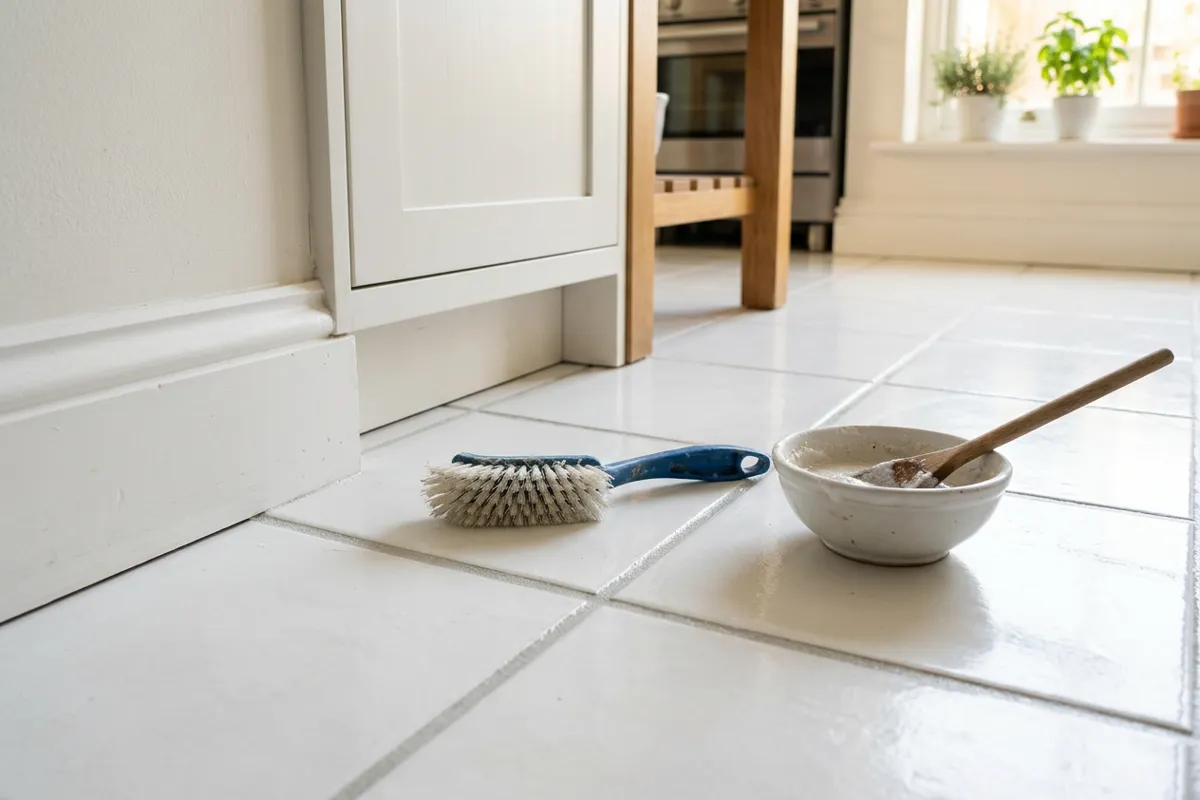
Grout is a cement-based material full of tiny pores. Every time you mop, dirty water settles into those pores and dries there. In kitchens, cooking grease adds a sticky layer that traps dust. In bathrooms, soap scum and damp air feed mildew. Tile itself is glazed and wipes clean, which is why the grout lines look darker than ever next to a clean tile.
Unsealed grout is the worst offender. Sealed grout resists stains for roughly one to two years before it needs another coat. If your grout soaks up a drop of water in under a minute, it needs sealing after cleaning.
What You Need
- Baking soda and white vinegar
- 3% hydrogen peroxide (the brown bottle) and a spray bottle
- Dish soap with grease-cutting power
- A stiff nylon grout brush or an old toothbrush (never wire brushes)
- Oxygen bleach powder (sodium percarbonate) for tough stains
- Two microfiber cloths, a bucket and a pair of rubber gloves
- A grout sealer, if your grout is unsealed
The 4-Level Grout Cleaning Ladder
Always sweep or vacuum first, so you aren’t pushing grit into the lines. Then test each level on a small hidden area and move to the next only if needed.
Level 1: Hot water and dish soap (for light dirt)
Mix 1 tablespoon of dish soap into 2 cups of hot water. Scrub a 2-foot section with the brush using small circles, then wipe with a damp microfiber cloth. This alone fixes grout that is only a few weeks overdue, and it’s the safest option for any grout.
Level 2: Baking soda paste (the workhorse)
Mix 3 tablespoons baking soda with about 1 tablespoon of water until it feels like toothpaste. Spread it along the grout line, let it sit for 10 minutes, then scrub with the brush and rinse with clean water. For extra lift, spray a little white vinegar on top and let it fizz for a minute before scrubbing. Our natural cleaning recipes have more baking soda mixes for other surfaces.
One caution: never use vinegar on natural stone tile such as marble, travertine or limestone, and use it sparingly on cement grout, since acid can slowly eat away at it. Rinse well every time.
Level 3: Hydrogen peroxide and baking soda (for stains)
Combine 1/2 cup baking soda with 1/4 cup of 3% hydrogen peroxide and a drop of dish soap. Spread it on stained lines, wait 15 minutes, scrub and rinse. Peroxide lightens gently and is safe for most white and light grout. Test colored grout first, since it can lighten the color.
Level 4: Oxygen bleach (for deep, set-in stains)
Dissolve oxygen bleach powder in hot water according to the package, usually about 1 tablespoon per cup. Pour or brush it onto the grout, let it sit for 15 to 30 minutes and scrub. Wear gloves and ventilate the room. Rinse thoroughly with clean water so no residue remains.
| Method | Best for | Dwell time | Safe on colored grout? |
|---|---|---|---|
| Dish soap and hot water | Light dirt, weekly upkeep | None | Yes |
| Baking soda paste | Grease and general grime | 10 minutes | Yes |
| Peroxide + baking soda | Stains and yellowing | 15 minutes | Test first |
| Oxygen bleach | Set-in stains, mildew | 15 to 30 minutes | Test first |
Never Mix These on Grout
Cleaning accidents usually come from mixing products. Keep these rules:
- Never mix bleach with vinegar or ammonia. The result is toxic gas.
- Never mix vinegar and hydrogen peroxide in one bottle. They form peracetic acid, which irritates skin and lungs. Use them one after the other with a water rinse between.
- Skip wire brushes and steel wool. They gouge grout and make it dirtier faster.
- Avoid chlorine bleach on colored grout, as it fades and can leave blotches.
How to Clean Grout in Different Rooms
Kitchen floors
Grease is the main issue. Start with dish soap and hot water, then follow with baking soda paste. Do the area in front of the stove and sink first; they get the worst of it. If you’re already deep-cleaning the kitchen, pair this with our guide to cleaning a glass stove top.
Bathroom floors
Soap scum and mildew love bathroom grout. Use the peroxide paste, then run the exhaust fan for 20 minutes to dry the room. For shower walls and glass, use the steps in our shower glass door guide.
Entryways and hallways
Dirt tracked in from outside grinds into grout. A doormat on each side of the door and a quick vacuum with a crevice tool each week do more than any scrub session.
A Step-by-Step Method for a Whole Floor
- Move rugs and furniture, then vacuum the floor, using a crevice attachment on the grout lines.
- Mop with dish soap and hot water to lift loose grease.
- Apply baking soda paste to one 3 by 3 foot section at a time.
- Let it sit 10 minutes, scrub along each line with the brush, working back and forth.
- Wipe with a damp microfiber cloth, rinsing it often, then mop with clean water.
- Repeat with the next level only on spots that are still dark.
- Let the floor dry completely, ideally overnight, before sealing.
A 100 square foot kitchen takes about 60 to 90 minutes with this method. Work in sections so the paste never dries on the tile.
How to Seal Grout After Cleaning
Sealing is what keeps grout from turning dingy again. Wait 24 to 72 hours after cleaning so the grout is fully dry, then apply a penetrating (impregnating) grout sealer with the small applicator brush, working along the lines only. Wipe the excess off the tile after 5 to 10 minutes, and apply a second coat if the label says so. Avoid walking on the floor for the time given on the bottle, usually 24 hours.
How to Keep Grout Clean Longer
- Vacuum or sweep every few days, so grit never grinds in.
- Mop weekly with a pH-neutral cleaner instead of plain water.
- Wipe spills right away, especially coffee, wine and oil.
- Reseal every 1 to 2 years.
- Fold grout cleaning into your regular routine: see our deep cleaning checklist and weekly reset routine.
Related guides
Save this for later
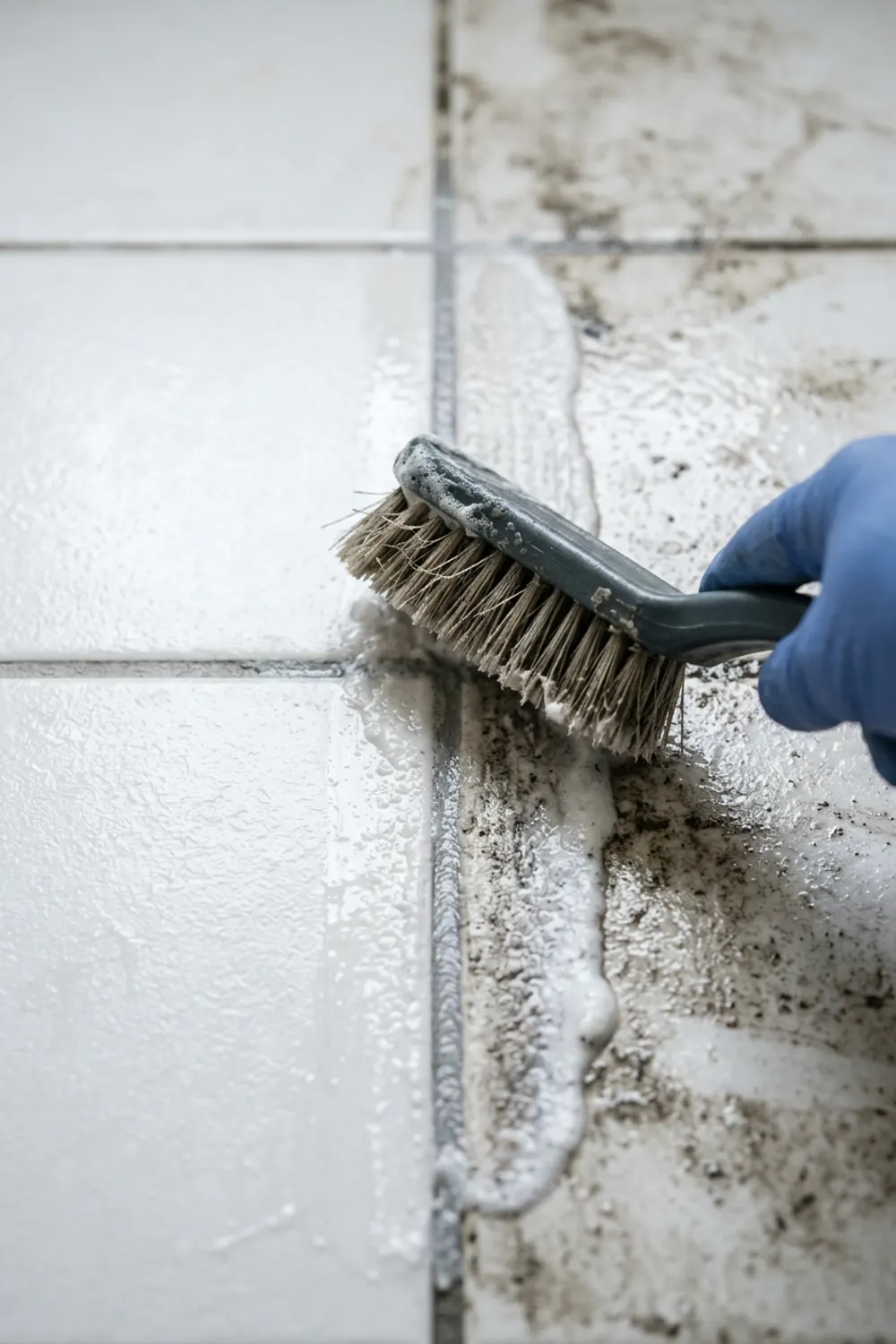
Pin this image to your Pinterest board so it’s there when you need it.
 Save to Pinterest
Good to know: Always test any cleaner on a small hidden patch of grout first, wear gloves, and ventilate the room. Never mix bleach with vinegar or ammonia.
Sources & safety notes
The safety and care points in this guide are based on these public sources. Your appliance manual and product labels always come first, so follow them where they differ from general advice.
- Dangers of Mixing Bleach with Cleaners (Washington State Department of Health): chlorine bleach reacts with ammonia, acids such as vinegar, and hydrogen peroxide, so never combine grout cleaners.
- Top tips for a safe spring cleaning (National Capital Poison Center): read product labels, never mix household cleaners, ventilate small rooms such as bathrooms, and wear gloves for strong products.
- Mold (CDC): if you use chlorine bleach on mildew, use no more than 1 cup of household bleach per gallon of water, open windows and never mix it with ammonia or other cleaners.
Frequently Asked Questions
What is the best homemade grout cleaner for floors?
A paste of 3 tablespoons baking soda and 1 tablespoon water works for most grime. For stains, mix 1/2 cup baking soda with 1/4 cup 3% hydrogen peroxide and a drop of dish soap, leave it 15 minutes, then scrub and rinse.
Can you use vinegar to clean floor grout?
Yes on ceramic or porcelain tile with cement grout, if you use it sparingly and rinse well. Never use it on natural stone, and don’t mix it with bleach or hydrogen peroxide in the same container.
How do you get dark grout white again?
Work up the ladder: dish soap, baking soda paste, peroxide paste, then oxygen bleach for set-in stains. If the color is permanent, grout colorant or re-grouting is the next option.
How often should you clean grout?
Mop grout lines weekly as part of floor cleaning and do a deeper scrub every 3 to 6 months. High-traffic kitchens and bathrooms may need it every 2 to 3 months.
Should you seal grout after cleaning?
Yes, if it’s unsealed. Wait 24 to 72 hours for it to dry, then apply a penetrating sealer. Sealed grout resists stains and typically needs a fresh coat every one to two years.
Clean grout doesn’t need harsh chemicals: start gentle, climb the ladder only when needed, then seal it. Do it once properly, and a weekly mop keeps your tile floors looking new.