
Glass cooktops look beautiful when they’re clean, and terrible after one pot of pasta boils over. The good news is that learning how to clean a glass stove top without scratching is simple once you know which tools are safe and which ones leave permanent swirl marks. This guide covers the daily wipe, the baking soda and hot towel method for burnt-on food, how to use a razor scraper safely, and how to deal with boil-overs, white rings and melted plastic.
⏱️ Short on time?
Grab our FREE printable checklists — the exact routines behind every calm home on this blog:
📋 Room-by-Room Checklist (PDF)📅 Weekly Reset Checklist (PDF)
Part of our Kitchen Cleaning & Organization Guide, which brings every related post together in one place.
Everything here works on smooth glass-ceramic electric and induction cooktops. Always let the surface cool completely before you start, and check your cooktop manual for anything it specifically warns against.
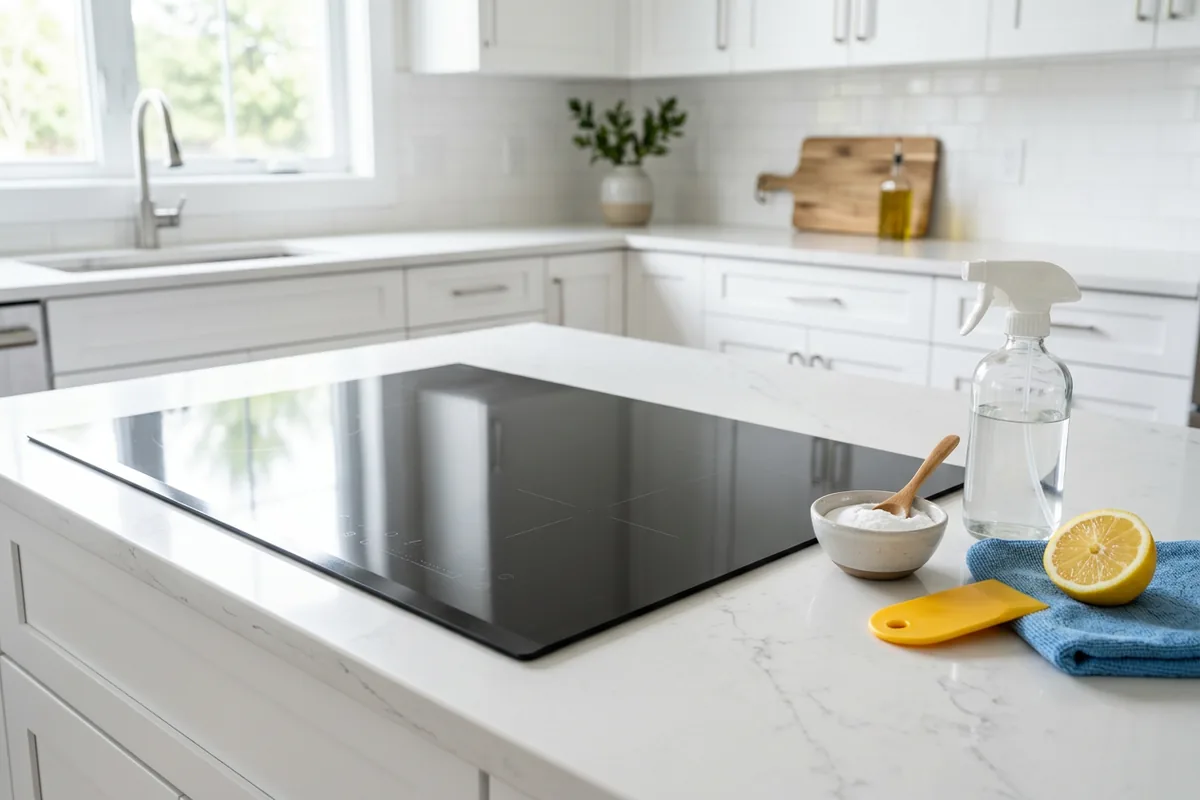
How to Clean a Glass Stove Top Without Scratching: What You’ll Learn
- The safe tools (and the ones that scratch)
- A 2-minute daily wipe that prevents buildup
- The baking soda and hot towel method for burnt food
- How to use a razor scraper safely
- Fixes for boil-overs, white rings, melted plastic and streaks
Why Glass Stove Tops Scratch So Easily
Glass-ceramic is tough against heat, but its glossy surface is easy to scuff. Most scratches come from three things: abrasive pads and powders, grit trapped under a pot that gets dragged across the surface, and rough-bottomed cookware like cast iron and stoneware. Burnt-on sugar is another hidden danger, because it can bond to the glass and pull tiny pits out of the surface if it’s left to cool and harden. So the goal is to lift residue, not grind it off.
Safe Tools vs. Tools to Avoid
| Safe to use | Avoid |
|---|---|
| Microfiber cloths | Steel wool and scouring pads |
| Non-scratch sponges (white or blue) | Green abrasive scrubbers |
| Baking soda (as a paste, not dry scrubbing) | Powdered cleansers with grit |
| White vinegar, diluted 1:1 | Ammonia or bleach-based sprays (can streak or stain) |
| Cooktop cream cleaner made for glass | Oven cleaner |
| Single-edge razor scraper held at a low angle | Knives or metal spatulas |
What You Need
- 2 or 3 microfiber cloths
- A spray bottle with equal parts white vinegar and water
- 1/2 cup baking soda
- A bath towel or large dish towel and a bowl of hot water with a few drops of dish soap
- A cooktop razor scraper with a fresh blade
- Glass cooktop cleaning cream (optional, for polishing)
The 2-Minute Daily Wipe
Once the cooktop is cool, spray it lightly with the vinegar mix and wipe with a damp microfiber cloth, then buff with a dry one. Doing this after dinner stops splatters from being baked on again the next time you cook. It’s the same habit-first idea we use in our weekly reset routine: small daily steps mean you rarely need a big clean.
The Baking Soda and Hot Towel Method
This is the best way to clean a glass stove top without scratching when you have burnt-on food, grease rings or a dull film.
Step 1: Spray with vinegar
Make sure the cooktop is completely cool. Spray the dirty areas generously with the 1:1 vinegar and water mix.
Step 2: Sprinkle baking soda
Sprinkle a thin, even layer of baking soda over the spots, about 2 to 3 tablespoons for a standard four-burner cooktop. It will fizz a little when it meets the vinegar.
Step 3: Cover with a hot, soapy towel
Soak a towel in hot water with a few drops of dish soap, wring it out so it’s damp but not dripping, and lay it flat over the baking soda.
Step 4: Wait 15 to 20 minutes
The warmth and moisture soften the residue. Don’t rush this part; the wait is what replaces scrubbing.
Step 5: Wipe in small circles
Remove the towel and use it, or a non-scratch sponge, to wipe the baking soda in small circles. The paste is a very mild polish that lifts residue without scratching.
Step 6: Rinse and buff
Spray with vinegar again to dissolve any white baking soda film, wipe with a clean damp cloth and buff dry with microfiber for a streak-free shine.
How to Use a Razor Scraper Safely
Many cooktop manufacturers recommend a razor scraper for hardened spills, and used correctly it’s safe. The keys are a fresh blade, a wet surface and a low angle.
- Use only a single-edge blade in a holder, and replace it as soon as it feels dull or has a nick.
- Spray the area first. Never scrape a dry surface.
- Hold the scraper at about a 30 to 45 degree angle, flat against the glass.
- Push gently in short, straight strokes, then wipe away the loosened residue.
- Never scrape the printed burner markings, which can wear off.
Fixes for Common Problems
Boil-overs and sugary spills
Sugar is the one exception to the let-it-cool rule. If syrup, jam or a sweet sauce boils over, turn off the burner and, wearing an oven mitt, carefully scrape it off with the razor scraper while it’s still warm, before it hardens and bonds to the glass. Then clean normally once cool.
White rings and cloudy spots
These are usually mineral deposits from boiled-over water. Lay a vinegar-soaked paper towel over the ring for 10 minutes, then wipe and buff. A cooktop cleaning cream removes anything left behind.
Melted plastic or foil
Turn off the burner and let it cool only until it’s safe to touch the scraper, then gently lift the softened plastic. Fully cooled plastic is harder to remove. If it’s stuck, check your manual; some manufacturers advise a specific approach.
Streaks after cleaning
Streaks are almost always leftover cleaner or hard water. Wipe with plain distilled water and buff with a completely dry microfiber cloth.
Light scratches
Deep scratches are permanent, but a glass cooktop cream can make very fine surface marks less visible. Buff it in with a soft cloth, following the product directions.
How to Prevent Scratches
- Lift pans to move them; never slide them across the glass.
- Check that pot bottoms are clean and dry before you cook.
- Use flat-bottomed cookware made for glass or induction cooktops.
- Don’t use the cooktop as a counter for heavy items like cutting boards or appliances.
- Wipe crumbs and grit away before you set a pot down.
Holiday cooking puts the stove to work, so pair this with our guide on how to clean oven racks without scrubbing and the lemon microwave method. If counter space near the stove is tight, our kitchen countertop organization ideas help keep it clear.
How Often to Clean a Glass Stove Top
- After each use: a quick wipe once cool.
- Weekly: vinegar spray, wipe and buff the whole surface.
- As needed: the baking soda towel method for burnt spots.
- Monthly: a cooktop cream polish to keep the shine and help repel stains.
Add the weekly wipe to your kitchen list in our room-by-room cleaning checklist and the deeper polish to your deep cleaning checklist.
Keep going: the oven window is next. Here’s how to clean oven door glass, inside, outside and between the glass.
Keep going: while you’re degreasing, give the small oven a turn with our guide to how to clean a toaster oven inside and out.
Keep going: don’t forget the burners on a gas range: how to clean stove grates with baking soda.
Related guides
Save this for later
Pin this image to your Pinterest board so it’s there when you need it.
 Save to Pinterest
Sources & safety notes
The safety and care points in this guide are based on these public sources. Your appliance manual and product labels always come first, so follow them where they differ from general advice.
- Glass Cooktop Cleaning Instructions (GE Appliances): clean a cool glass cooktop with a ceramic cooktop cleaner, use a razor scraper at about 45 degrees for burned-on residue, and remove sugary spills right away to avoid pitting.
- Cleaning Ceramic Glass Cooktops (Whirlpool): do not use steel wool, abrasive powder cleansers, chlorine bleach, rust remover or ammonia on a ceramic glass cooktop.
- Top tips for a safe spring cleaning (National Capital Poison Center): always read and follow cleaning product labels, and never mix household cleaners.
Frequently Asked Questions
What is the best way to clean a glass stove top without scratching?
Spray the cool cooktop with a 1:1 mix of white vinegar and water, sprinkle baking soda over the dirty spots, cover with a hot, damp towel for 15 to 20 minutes, then wipe in small circles and buff dry with microfiber.
Can you use a magic eraser on a glass stove top?
Melamine sponges are mildly abrasive, so many manufacturers don’t recommend them on glass cooktops. Use a non-scratch sponge with baking soda paste or a cream made for glass cooktops instead.
Is a razor blade safe on a glass cooktop?
Yes, if you use a fresh single-edge blade in a holder, keep the surface wet and hold it at a low angle. Most cooktop manufacturers recommend a scraper for hardened spills. Avoid the printed burner markings.
Why does my glass stove top look cloudy after cleaning?
Cloudiness is usually leftover baking soda, cleaner residue or hard water minerals. Spray with vinegar, wipe with distilled water and buff with a completely dry microfiber cloth.
How do you get burnt sugar off a glass stove top?
Scrape sugary spills while they are still warm (burner off, using an oven mitt) so they don’t bond to the glass. If it has already hardened, use the hot towel and baking soda method, then gently scrape with a wet razor scraper.
Now you know how to clean a glass stove top without scratching: wipe daily, soften burnt spots with baking soda and a hot towel, scrape only when wet and buff dry. A few minutes a week keeps your cooktop looking brand new.