
Learning how to clean a microwave with lemon takes about 10 minutes and one lemon. The steam loosens dried-on food, the citric acid cuts grease, and the kitchen smells fresh instead of like a chemical spray. This guide walks you through the lemon steam method step by step, with exact times and power levels, then covers the vinegar and baking soda versions, the turntable, door and vents, stubborn splatters, lingering smells and how often to do it.
⏱️ Short on time?
Grab our FREE printable checklists — the exact routines behind every calm home on this blog:
📋 Room-by-Room Checklist (PDF)📅 Weekly Reset Checklist (PDF)
Part of our Kitchen Cleaning & Organization Guide, which brings every related post together in one place.
If you have been searching for how to clean a microwave naturally, this is the easiest place to start. You don’t need special cleaners, just a microwave-safe bowl, water, a lemon and a soft cloth.
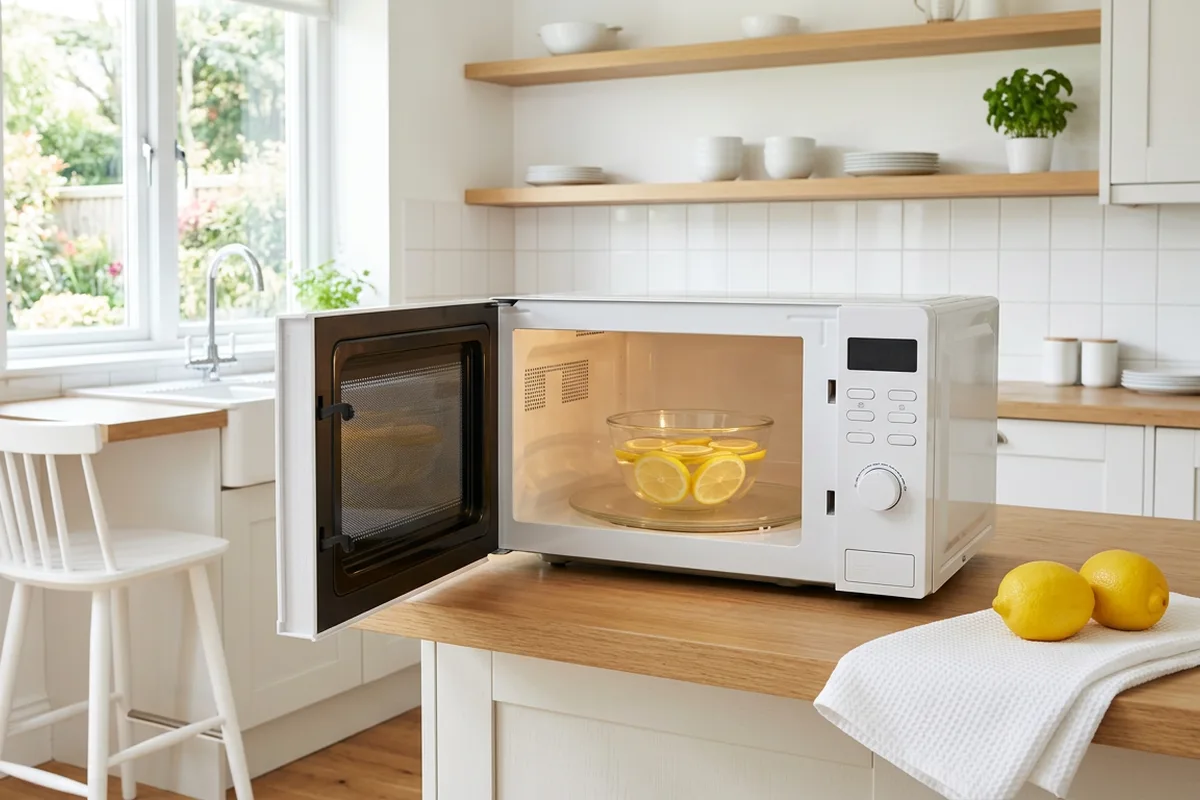
How to Clean a Microwave With Lemon: What You’ll Learn
- The lemon steam method, with times and power levels
- How to clean a microwave with lemon and vinegar, or with baking soda
- How to clean the turntable, door, seals and vents
- What to do about stuck-on splatters and stubborn smells
- How often to clean, and the safety rules that protect your microwave
What You Need
- 1 lemon (or 2 to 3 tablespoons of bottled lemon juice)
- 1 cup (about 250 ml) of water
- A large microwave-safe glass or ceramic bowl, at least 2 cups in size
- A wooden spoon or chopstick (optional, but it helps prevent boil-over)
- A soft sponge and a microfiber cloth
- Oven mitts for removing the hot bowl
Use a bowl that is much bigger than the water you put in it. A wide bowl gives the water room to steam without bubbling over.
The Lemon Steam Method, Step by Step
This is the core method. It works on most countertop and over-the-range microwaves rated around 800 to 1,200 watts.
Step 1: Prepare the lemon water
Pour 1 cup of water into the bowl. Cut the lemon in half, squeeze the juice into the water, then drop both halves in. The peel holds oils that add extra grease-cutting power and a fresh scent.
Step 2: Add a wooden spoon
Place a wooden spoon or chopstick in the bowl. It gives bubbles somewhere to form, which lowers the risk of the water superheating and suddenly boiling over when you move the bowl.
Step 3: Heat on high for 3 minutes
Set the bowl in the center of the turntable and run the microwave on high (100% power) for 3 minutes, or until the water boils and the window fogs up. In a lower-wattage microwave (700 watts or less), it may take 4 to 5 minutes.
Step 4: Leave the door closed for 5 minutes
Don’t open the door yet. Let the bowl sit for 5 minutes so the steam keeps working on dried food and grease. This rest is what does most of the cleaning, so don’t skip it.
Step 5: Remove the bowl and turntable
Put on oven mitts and lift the bowl out slowly, since the water will still be very hot. Then take out the turntable and its roller ring and set them aside.
Step 6: Wipe the inside
Dip a sponge in the warm lemon water and wipe the ceiling first, then the walls, then the floor of the microwave. Working top to bottom stops drips from landing on areas you already cleaned. Most grime should come off with one pass. Finish with a dry microfiber cloth and leave the door open for 10 minutes to air out.
How to Clean a Microwave With Lemon and Vinegar
For a microwave with heavy grease or weeks of splatter, add vinegar for more acid. To clean a microwave with lemon and vinegar, mix 1 cup of water, 1 tablespoon of white vinegar and the juice of half a lemon in a large bowl. Drop the lemon half in, then heat on high for 3 to 5 minutes and leave the door closed for 5 more.
The vinegar boosts cleaning power and the lemon softens the sharp vinegar smell. If you want to skip lemon entirely, a vinegar-only mix of 1 cup water and 2 tablespoons vinegar works the same way. For more simple mixes like this one, see our natural cleaning recipes.
The Baking Soda Variation
Baking soda is a gentle scrub and a great odor absorber. You can use it two ways:
- Steam version: stir 1 tablespoon of baking soda into 1 cup of water and steam it the same way as the lemon water (3 minutes on high, then 5 minutes with the door closed). It is a good choice when smell is the main problem
- Paste version: after steaming with lemon, mix 2 tablespoons of baking soda with 1 tablespoon of water into a paste. Spread it on stubborn spots, wait 5 minutes, then wipe it off with a damp sponge
- Don’t mix baking soda and vinegar in the same bowl in the microwave. They fizz and cancel each other out, and the foam can overflow
Lemon, vinegar and baking soda are three of the easiest eco-friendly cleaning swaps you can make in the kitchen.
Cleaning the Turntable, Door and Vents
The turntable and roller ring
Let the glass turntable cool first, since a hot plate can crack under cold water. Wash it in warm, soapy water, or put it in the dishwasher if the manual says it is safe. Wipe the roller ring and the floor underneath it, where crumbs collect.
The door, window and seals
The inside of the door collects grease you don’t always see. Wipe it with the warm lemon water, paying attention to the window and the rubber or metal seal around the edge. A clean seal helps the door close properly. For the outside, use a damp cloth with a drop of dish soap, then dry it. Wipe the keypad with a barely damp cloth, never a wet one, so moisture does not get behind the buttons.
Vents and the grease filter
Dust the outside vents with a dry brush or the brush tool on your vacuum. If you have an over-the-range microwave, slide out the metal grease filter under it about once a month and soak it for 10 minutes in hot water with dish soap and a spoonful of baking soda. Rinse, let it dry fully, and put it back. Never spray liquid into the inside vents or onto the small mica cover panel on the wall.
Stuck-On Splatters and Stubborn Smells
If food is still stuck after one round, the fix is more steam, not harder scrubbing:
- Run a second steam cycle with fresh lemon water, this time for 5 minutes on high plus a 5-minute rest
- Dab baking soda paste on the spot, let it sit for 5 to 10 minutes, then wipe
- Use a plastic scraper or the edge of an old card to lift hardened bits. Skip steel wool and metal scrapers, which can scratch the coating
- For burnt popcorn or fish smells, steam a bowl of water with lemon slices and 1 tablespoon of baking soda, then leave the door open overnight
- Set a small bowl of dry baking soda or ground coffee inside the closed microwave overnight to soak up any smell that lingers
To stop splatters before they start, cover food with a microwave-safe lid or a paper towel. A clean microwave also makes the rest of the counter feel calmer, and our small kitchen organization ideas help you keep the space around it clear.
How Often to Clean Your Microwave
- After every spill: wipe fresh splatters with a damp cloth while they are still soft
- Every week: do the 10-minute lemon steam clean if you use the microwave daily
- Every month: wash the turntable, wipe the seals and clean the grease filter on over-the-range models
- Every few months: pull the microwave out (if it is on the counter) and clean behind and under it during a deep cleaning session
Pair the microwave with other quick kitchen jobs and it becomes part of your weekly routine instead of a big chore.
Microwave Cleaning Safety
- Never run the microwave empty. Without water or food to absorb the energy, it can damage the magnetron. Always make sure the bowl has at least 1 cup of water in it
- Use only microwave-safe glass or ceramic bowls. No metal, foil or bowls with metallic trim
- Use a large bowl and a wooden spoon to reduce the risk of superheated water boiling over
- Open the door slowly and lift the bowl with oven mitts, since steam and water are very hot
- Unplug the microwave before you clean the outside vents or keypad
- Don’t use harsh abrasives or bleach inside. They can damage the interior coating and leave fumes
Keep going: next, learn how to clean a glass stove top without scratching with baking soda and a hot towel.
Related guides
Save this for later
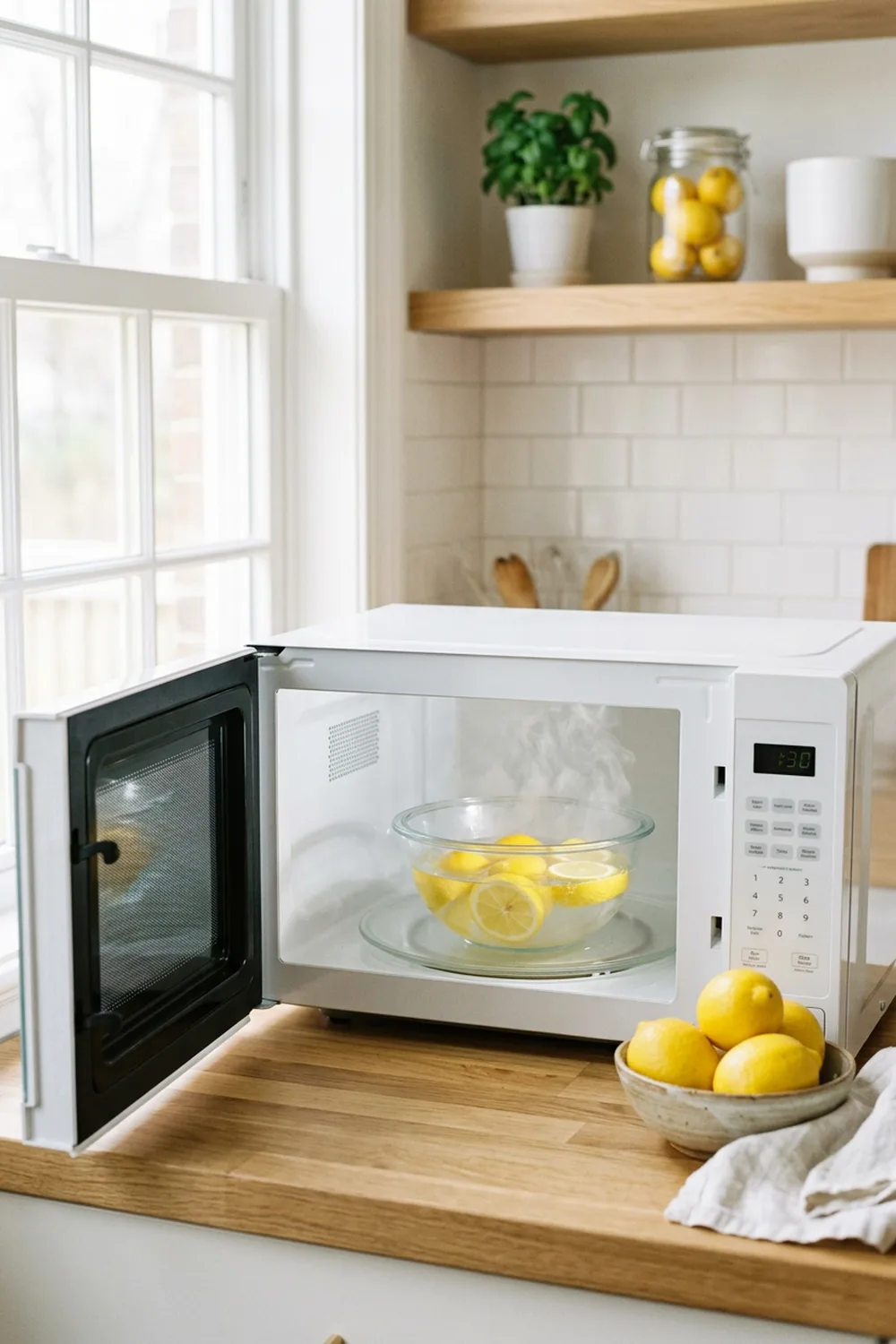
Pin this image to your Pinterest board so it’s there when you need it.
 Save to Pinterest
Good to know: Superheated water can boil over suddenly when you move the bowl. The FDA’s page on microwave ovens explains why, and how to avoid it.
Sources & safety notes
The safety and care points in this guide are based on these public sources. Your appliance manual and product labels always come first, so follow them where they differ from general advice.
- Microwave: Cleaning Recommendations (GE Appliances): unplug before cleaning, soften cooked-on food by heating a cup of water for about three minutes and letting it stand, and do not use oven cleaners, abrasive cleaners, ammonia or bleach on any part of the microwave.
- Top tips for a safe spring cleaning (National Capital Poison Center): citric acid (as in lemon) is a mild acid that is generally safe around children and pets; never mix household cleaners.
Frequently Asked Questions
How do you clean a microwave with lemon?
Put 1 cup of water, the juice of one lemon and both lemon halves in a large microwave-safe bowl. Heat on high for 3 minutes, leave the door closed for 5 minutes, then remove the bowl and turntable and wipe the inside from top to bottom with a sponge.
How long do you microwave lemon water to clean it?
Run it on high (100% power) for about 3 minutes, or until the water boils and the window steams up. Lower-wattage microwaves may need 4 to 5 minutes. Then keep the door closed for 5 more minutes so the steam can soften the grime.
Is lemon or vinegar better for cleaning a microwave?
Both work well. Lemon smells fresher and is great for regular cleaning. Vinegar is a little stronger on heavy grease. For a very dirty microwave, combine them: 1 cup water, 1 tablespoon white vinegar and the juice of half a lemon.
How do you get rid of a burnt smell in a microwave?
Steam a bowl of water with lemon slices and 1 tablespoon of baking soda for 3 minutes, wipe the inside, then leave the door open to air out. If the smell lingers, leave a bowl of dry baking soda or ground coffee inside overnight.
Can you run a microwave empty to dry it after cleaning?
No. Running a microwave empty can damage the magnetron. Dry the inside with a microfiber cloth and leave the door open for 10 minutes instead.
Learning how to clean a microwave with lemon is one of the easiest wins in the kitchen: one lemon, 3 minutes of steam, a 5-minute rest and a quick wipe. Make it a weekly habit and you will never face a crusty, smelly microwave again.