
If you want to know how to organize a bathroom closet so it stays tidy, start with one idea: every shelf gets one job. A bathroom closet holds towels, toiletries, cleaning supplies, medicine and backups all at once, and without zones they slide into one big pile. This guide shows you how to set up shelf zones, fold towels so stacks stay neat, sort toiletries into bins, keep a backstock shelf, store medicine safely and finish with labels and a 10-minute monthly reset.
⏱️ Short on time?
Grab our FREE printable checklists — the exact routines behind every calm home on this blog:
📋 Room-by-Room Checklist (PDF)📅 Weekly Reset Checklist (PDF)
Part of our Bathroom Cleaning & Organization Guide, which brings every related post together in one place.
These bathroom closet organization ideas work for a full linen closet, a narrow tower cabinet, or the small bathroom closet storage you get in apartments and older homes. You don’t need to buy much. Most of the change comes from deciding where things live.
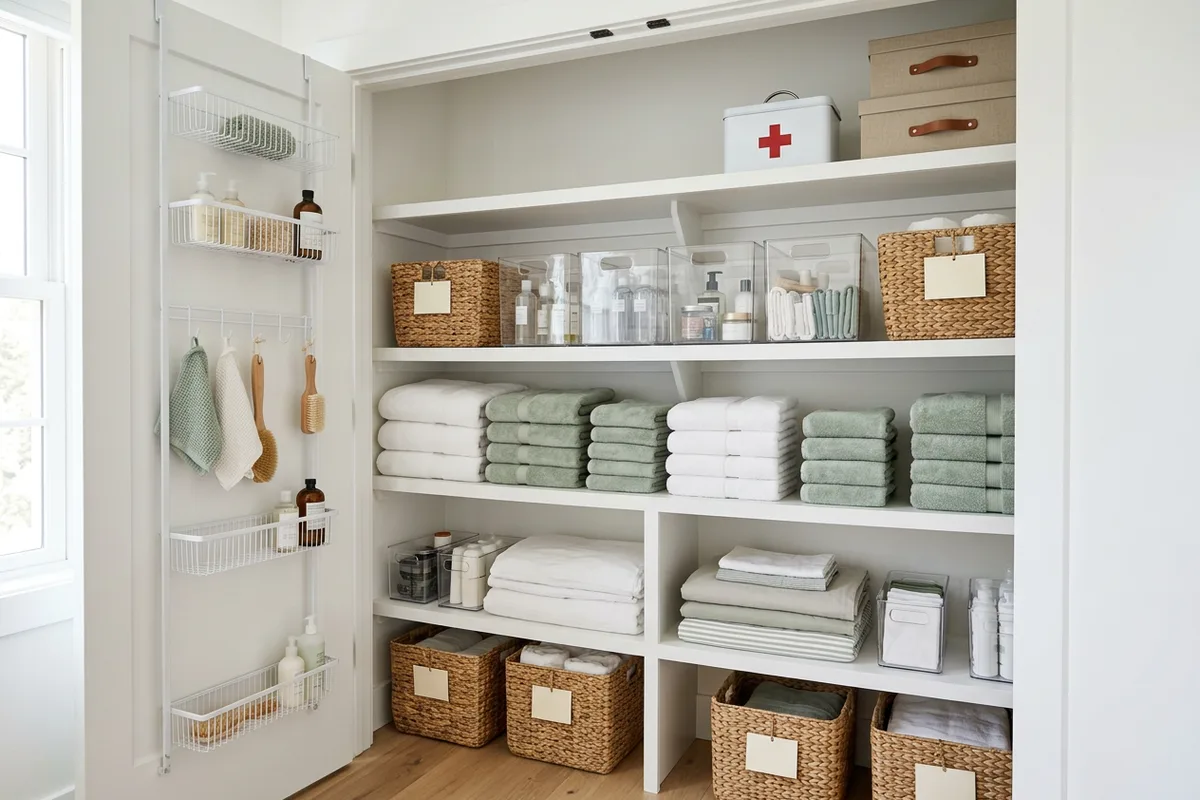
How to Organize a Bathroom Closet: What You’ll Learn
- How to empty, sort and measure your closet before buying anything
- How to zone shelves by height and how often you use things
- Towel folds that keep stacks neat and save space
- Which bins work for toiletries, and where backups go
- How to store medicine safely, use the door, label and reset monthly
Step 1: Empty, Sort and Measure
Take everything out and put it on the bed or the floor. It feels like more work, but it is the only way to see what you have. Toss expired sunscreen, dried-out nail polish, old makeup, sample bottles you will never use and towels that are frayed or stiff. Old towels can go to an animal shelter or become cleaning rags.
Group what’s left into piles: towels and washcloths, daily toiletries, hair tools, skincare and makeup backups, first aid and medicine, cleaning supplies, toilet paper and tissues, and anything that doesn’t belong in a bathroom at all. That last pile goes back to its own room today.
Then measure each shelf. Note the depth, the width and the clear height up to the shelf above. Most bathroom closet shelves are 12 to 16 inches deep with 10 to 14 inches of clear height. Write the numbers down so the bins you buy actually fit.
Step 2: Set Up Shelf Zones
Zones are the core of bathroom closet organization. Place things by how often you use them and how heavy they are:
- Top shelf (above about 66 inches): backstock, guest towels, seasonal items and the medicine safety bin, if small children live in the house
- Eye level (about 48 to 66 inches): everyday towels and the toiletry bins you reach for daily
- Waist level: hair tools, skincare, first aid basics and bulk cotton rounds or swabs
- Bottom shelf and floor: toilet paper, tissues, cleaning supplies in a caddy, and heavy refill bottles
If the closet is tiny, combine zones: towels and toiletries on one shelf, backstock and paper goods on another. The rule is still one job per shelf. For more ideas on making a tight space work, see our small bathroom organization ideas.
Step 3: Fold Towels So Stacks Stay Neat
Towels take up the most room, so how you fold them matters. Pick one method and use it every time so stacks line up.
- Thirds fold: fold the towel lengthwise into thirds, then in half or thirds again. The folded edge faces out, so the stack looks clean and doesn’t show raw edges
- Roll: roll bath towels tightly from the short end. Rolls fit well in deep bins or baskets and let you grab one without toppling a stack
- File fold: fold hand towels and washcloths into small rectangles and stand them upright in a bin, like files, so you can see every color
Keep stacks to 4 or 5 bath towels so they stay stable. Use shelf dividers to keep tall stacks from leaning. A good target is 2 to 3 bath towels per person plus one guest set. Anything beyond that is extra you can donate. Our linen closet organization ideas show more ways to fold and store sheets and towels together.
Step 4: Use Bins for Toiletries
Loose bottles tip over and small items get lost at the back. Bins turn a shelf into drawers you can pull out.
- Use clear plastic bins at eye level so you can see what is inside without pulling them out
- Use woven or fabric baskets on higher shelves where you want a calmer look
- Give each bin one category: hair care, skin care, dental, shaving, travel minis, nail care
- Choose bins about 1 inch shorter than the shelf depth so they slide in and out easily
- Add small drawer organizers or cups inside larger bins for cotton swabs, hair ties and floss picks
- For a shared bathroom, give each person their own labeled bin
Items you use every morning belong on or under the vanity, not in the closet. Our bathroom vanity organization ideas and under-sink organization ideas cover those spaces.
Step 5: Create a Backstock Shelf
Backstock is the shampoo, soap, toothpaste and toilet paper you bought ahead. Without a home, it spreads across every shelf. Give it one shelf or one large bin and keep it there.
- Store unopened backups together, grouped by type, so you can see at a glance what you have
- Put new purchases at the back and move older ones forward so nothing expires
- Set a limit, such as one backup of each product and one 12-pack of toilet paper
- Check the backstock shelf before you shop to avoid buying duplicates
Step 6: Make a Medicine Safety Shelf
Bathroom humidity from showers can shorten the life of some medicines, so the FDA suggests storing them in a cool, dry place. A hallway closet next to the bathroom is often better than the bathroom itself. If your closet is inside a steamy bathroom, keep only a small first-aid kit there.
- Keep all medicine in one lidded bin on the highest shelf, well out of children’s reach and sight
- Use a locking box or a child-resistant latch if young kids or visitors live in or visit the house
- Keep medicine in its original packaging with the label and dosage instructions
- Check dates every few months and use a pharmacy take-back program for expired medicine
- Keep a separate first-aid bin with bandages, antiseptic, a thermometer and tweezers at waist level for adults
Step 7: Use the Door and Walls
The back of the closet door is often the most unused space you have. A slim rack adds storage without taking shelf space.
- Hang an over-the-door rack with adjustable baskets for hair products, lotion and spray bottles
- Use clear over-the-door shoe pockets for small items like hair ties, travel bottles and masks
- Add adhesive hooks for a hair dryer, a straightener (cool only) or a hanging toiletry bag
- Measure the gap between the door and the shelves first. Most door racks need 3 to 5 inches of clearance
Step 8: Label Everything
Labels keep the system working after the first week, because everyone knows where things go back. Label the front of each bin and the shelf edge. Use broad names like Hair, Skin, Dental, First Aid, Backups and Cleaning rather than product names that change. Removable labels or clip-on tags let you adjust zones later.
Your 10-Minute Monthly Reset
Set a reminder for the first weekend of each month and do a quick reset. It keeps the closet from sliding back into chaos.
- Minutes 1 to 3: pull out each bin, toss empties and expired items, and put strays back in their zone
- Minutes 4 to 5: refold any messy towel stacks
- Minutes 6 to 7: check the backstock shelf and add low items to your shopping list
- Minutes 8 to 9: wipe the shelves with a damp cloth and check for leaks from bottles
- Minute 10: check medicine dates and make sure the safety bin is closed and on top
Twice a year, add the closet to your deep cleaning checklist: empty it fully, wash the bins and give the shelves a real clean.
Related guides
Save this for later
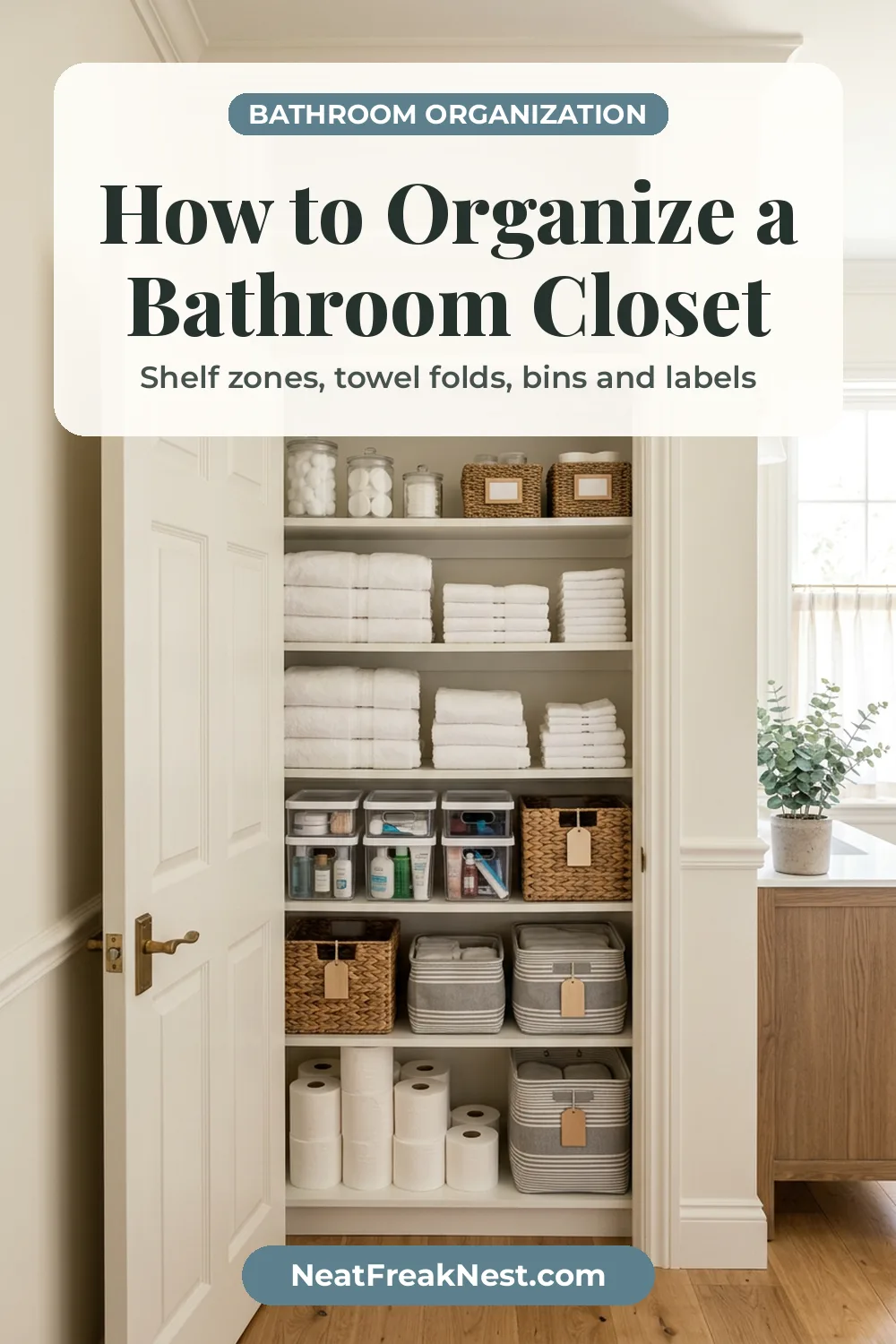
Pin this image to your Pinterest board so it’s there when you need it.
 Save to Pinterest
Good to know: Not sure where to keep medicine? The FDA’s guide on disposing of unused medicines explains take-back options and safe storage.
Frequently Asked Questions
How do you organize a bathroom closet?
Empty it, toss expired items and sort into categories. Give each shelf one job: backstock and medicine on top, towels and daily toiletries at eye level, paper goods and cleaning supplies at the bottom. Use bins for small items and label every bin.
What is the best way to fold towels for a bathroom closet?
Fold bath towels in thirds lengthwise, then in half or thirds, with the folded edge facing out. Keep stacks to 4 or 5 towels. Rolled towels work well in deep baskets, and hand towels can be file-folded upright in a bin.
Should you store medicine in a bathroom closet?
Only if the closet stays dry. Shower humidity can affect some medicines, so a cool, dry hallway closet is often better. Wherever you store it, keep medicine in a lidded or locking bin on the highest shelf, out of children’s reach.
How do you maximize small bathroom closet storage?
Use the door with an over-the-door rack, add shelf risers to split tall gaps, choose bins that match the shelf depth, roll towels to save width, and keep only one backup of each product.
How often should you reorganize a bathroom closet?
Do a 10-minute reset once a month to toss empties, refold towels and check backstock and medicine dates. Twice a year, empty the closet fully and wash the bins and shelves.
A bathroom closet stays organized when every shelf has one job, every bin has a label and you spend 10 minutes a month putting things back. Start with the towel shelf this weekend, then work through bins, backstock and the medicine shelf one at a time.