
The best eco-friendly cleaning swaps replace things you throw away every week. Swap paper towels for Swedish dishcloths, dryer sheets for wool dryer balls, disposable mop pads for washable microfiber, single-use spray bottles for refillable glass bottles with concentrate, and plastic sponges for coconut or loofah scrubbers. Start with those three or four, finish the products you already own, then replace the rest as they run out. All 15 swaps are below, with costs and which ones save the most money.
⏱️ Short on time?
Grab our FREE printable checklists — the exact routines behind every calm home on this blog:
📋 Room-by-Room Checklist (PDF)📅 Weekly Reset Checklist (PDF)
Part of our Cleaning Routines, Checklists & Natural Cleaning Guide, which brings every related post together in one place.
You don’t need to throw out everything under your sink tomorrow and start over. That’s expensive, wasteful, and honestly the opposite of eco-friendly. The smart way to green your cleaning routine is one swap at a time: finish what you have, then replace it with the better version. These eco-friendly cleaning swaps show you where to start.
Each swap below tells you what to ditch, what to buy instead, what it costs, and how long the replacement lasts. Start with the three easiest — they’re marked — and work through the rest as your old products run out.
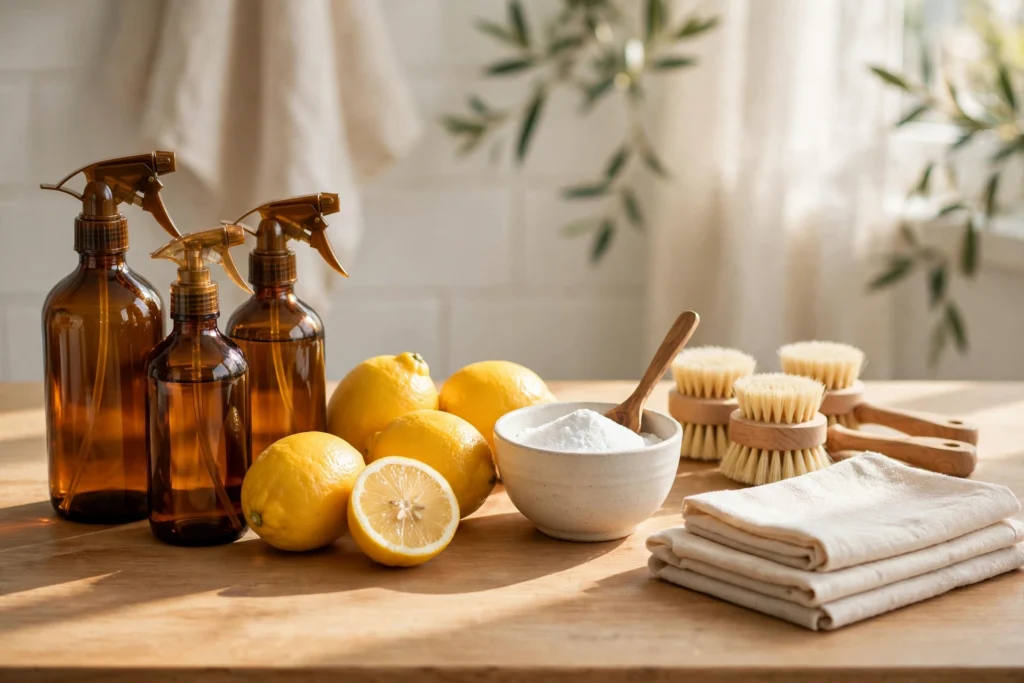
Eco-Friendly Cleaning Swaps: What You’ll Learn
- 5 kitchen swaps, from paper towels to plastic wrap (ideas 1–5)
- 4 bathroom swaps that cut plastic bottle waste (ideas 6–9)
- 3 laundry swaps your clothes will thank you for (ideas 10–12)
- 3 whole-house swaps for everyday cleaning (ideas 13–15)
- A printable checklist to track your swaps
Kitchen Swaps
The kitchen generates the most cleaning waste in the house. It’s also where the easiest swaps live.
1. ⭐ Paper Towels → Swedish Dishcloths
Ditch: Paper towels. The average household burns through 2–3 rolls a week — that’s over 100 rolls a year headed straight to landfill, and they can’t be recycled once they’re dirty.
Switch to: Swedish dishcloths. One cloth replaces about 15 rolls of paper towels and lasts 6–9 months with regular washing. A 10-pack costs $12–$18, so you’re set for years. They absorb 20 times their weight, wipe streak-free, and go right in the dishwasher or washing machine to sanitize.
The math: 10-pack ($15) vs. 100+ rolls of paper towels ($120+/year). You save over $100 in the first year alone.
Start here because: It’s the single biggest waste reduction you can make in one purchase, and most people are converted within a week.
2. Plastic Sponges → Coconut or Loofah Scourers
Ditch: Yellow-and-green plastic sponges. They’re made from polyurethane, shed microplastics down your drain with every scrub, and harbor bacteria in a way that should honestly concern you — studies have found billions of bacteria per cubic centimeter in used kitchen sponges.
Switch to: Coconut fiber scourers ($8–$12 for a 5-pack) or natural loofah sponges ($10 for 6). Both scrub just as well, rinse clean faster, and compost at the end of their life (about 4–6 weeks each with daily use).
The math: Roughly the same annual cost as cheap sponges, minus the microplastics.
Start here because: You touch this thing every day. Once you feel how well a coconut scourer works, the plastic ones feel gross by comparison.
3. Disposable Mop Pads → Washable Microfiber Pads
Ditch: Single-use mopping pads. At $8–$12 for a box of 10–20, you’re paying a subscription fee to throw things away.
Switch to: Washable microfiber mop pads ($12–$18 for a 3-pack). They fit the same flat-head mops, clean better because the fibers actually grab dirt instead of pushing it around, and each pad survives 100+ washes. Three pads in rotation means you’re buying mopping supplies roughly never again.
The math: One $15 purchase replaces about $50/year in disposables.
4. Plastic Wrap → Beeswax Wraps
Ditch: Cling wrap. It’s used for an average of about 10 minutes and then exists in a landfill for centuries. It also can’t be recycled curbside anywhere.
Switch to: Beeswax wraps ($15–$20 for a 3-pack in assorted sizes). Warm them with your hands and they mold around bowls, half-cut produce, and sandwiches. Rinse with cool water and mild soap, air dry, reuse for about a year. They even keep produce fresher than plastic in most cases because the cotton breathes slightly.
The math: A $18 set replaces roughly $30/year in cling wrap.
Watch out for: Don’t use them on raw meat, and don’t wash with hot water (it melts the wax coating).
5. Feather Dusters → Washable Microfiber Duster
Ditch: Disposable dusters with replaceable heads. The refills cost $6–$10 a pack and mostly just push dust into the air.
Switch to: A washable microfiber duster with an extendable handle ($12–$18). The fibers use static to actually trap dust, the head pops off for machine washing, and the extendable handle reaches ceiling fans and tall shelves without a step stool.
The math: Pays for itself in about 3 months of skipped refills.
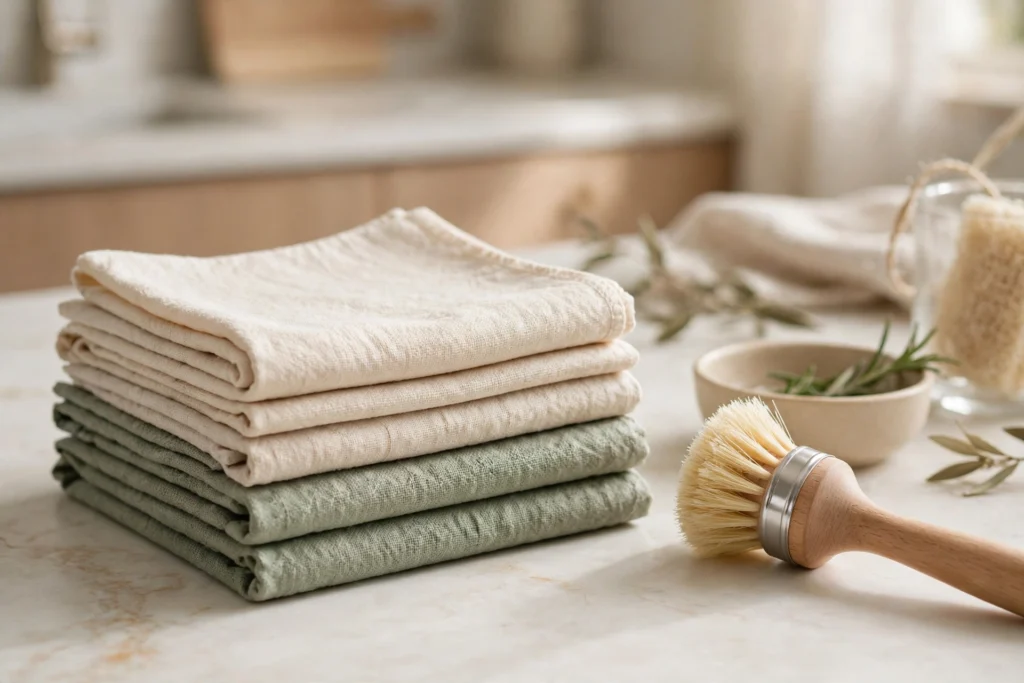
Bathroom Swaps
Bathrooms are plastic-bottle central. These four swaps cut that dramatically.
6. ⭐ Mini Toiletries → Refillable Dispensers
Ditch: Individual plastic bottles of shampoo, conditioner, and body wash — plus those tiny hotel bottles you’ve been hoarding since 2019.
Switch to: Wall-mounted or countertop refillable dispensers ($15–$25 for a set of 3). Buy shampoo and body wash in bulk refill pouches or from refill stations, which use about 70% less plastic than rigid bottles. Bar shampoo ($8–$12 per bar, lasts 2–3 months) eliminates the bottle entirely.
The math: A family of four goes through roughly 25–30 plastic toiletry bottles a year. Dispensers cut that to nearly zero.
Start here because: It’s visible every single day, which keeps the motivation alive for the rest of the swaps.
7. Disposable Wipes → Washable Cleaning Cloths
Ditch: Single-use disinfecting and cleaning wipes. They’re convenient the way fast food is convenient — and they create the same kind of waste problem. Most contain plastics that don’t break down.
Switch to: A stack of washable microfiber cloths ($12 for 12) kept in a basket under the sink, plus a spray bottle of your usual cleaner. For disinfecting, the cloth + spray combo actually cleans better because you’re not relying on a drying-out wipe with uneven chemical coverage. Toss used cloths in a small mesh laundry bag and wash weekly.
The math: $12 once vs. $5–$8/month in wipes. Break-even in under two months.
8. Plastic Toilet Brush → Bamboo or Silicone
Ditch: The cheap plastic toilet brush that came with the $5 set. It holds water in the holder (hello, bacteria soup) and the whole thing goes to landfill when the bristles splay.
Switch to: A bamboo-handled brush ($12–$16) with a ventilated holder that lets it dry between uses, or a flat silicone brush ($10–$14) that rinses clean and doesn’t trap anything. Both last 1–2 years with basic care.
The math: Comparable cost, dramatically less gross.
9. Cotton Rounds → Reusable Cotton Pads
Ditch: Single-use cotton rounds and balls. Cotton is one of the thirstiest crops on earth — a single reusable pad prevents hundreds of disposables.
Switch to: Reusable cotton or bamboo pads ($10–$14 for 16). Use for makeup removal, toner, and nail polish remover. They go in the included mesh bag straight into your regular laundry. Each pad lasts 500+ washes.
The math: 16 pads for $12 replaces roughly $40/year in disposables.
Laundry Swaps
Your laundry routine touches your skin all day. These swaps are gentler on both you and the waterways.
10. ⭐ Dryer Sheets → Wool Dryer Balls
Ditch: Single-use dryer sheets. They’re coated in synthetic fragrances and softening chemicals, leave residue on your clothes and your dryer sensor, and every sheet is trash after one load.
Switch to: Wool dryer balls ($10–$15 for 6). They bounce around separating clothes so hot air circulates better — cutting drying time by 10–25% — and naturally soften fabric without chemicals. Add 2–3 drops of essential oil to a ball before the cycle if you miss the scent. Each set lasts 1,000+ loads, which is roughly 3–4 years for most households.
The math: $12 once vs. $8–$10 every few months for sheets. Plus lower energy bills from shorter dry times.
Start here because: Zero behavior change required. Throw them in, forget about them, save money.
11. Plastic Detergent Jugs → Sheets or Refills
Ditch: Giant plastic detergent jugs. Americans throw away over 700 million of them a year, and most aren’t actually recycled.
Switch to: Detergent sheets ($12–$16 for 60 loads) — pre-measured, zero plastic, dissolve completely, and weigh almost nothing to ship. Or buy liquid detergent from a refill station in your own container. Both clean just as well as the jug stuff for everyday laundry.
The math: Sheets run about $0.20–$0.27 per load, right in line with mid-range liquid detergent.
Watch out for: For heavily soiled work clothes or cloth diapers, you may still want a conventional detergent — sheets handle normal family laundry beautifully but aren’t miracle workers on ground-in grease.
12. Liquid Fabric Softener → White Vinegar
Ditch: Liquid fabric softener. It coats fibers with chemicals that reduce towel absorbency over time and can irritate sensitive skin.
Switch to: Half a cup of plain white distilled vinegar in the rinse cycle (about $0.10 per load). It dissolves detergent residue, which is what actually makes clothes feel stiff — so clothes come out softer, towels stay absorbent, and there’s no fragrance unless you add it. The vinegar smell rinses out completely; your clothes will not smell like salad.
The math: A $4 gallon lasts months. This is the cheapest swap on the entire list.
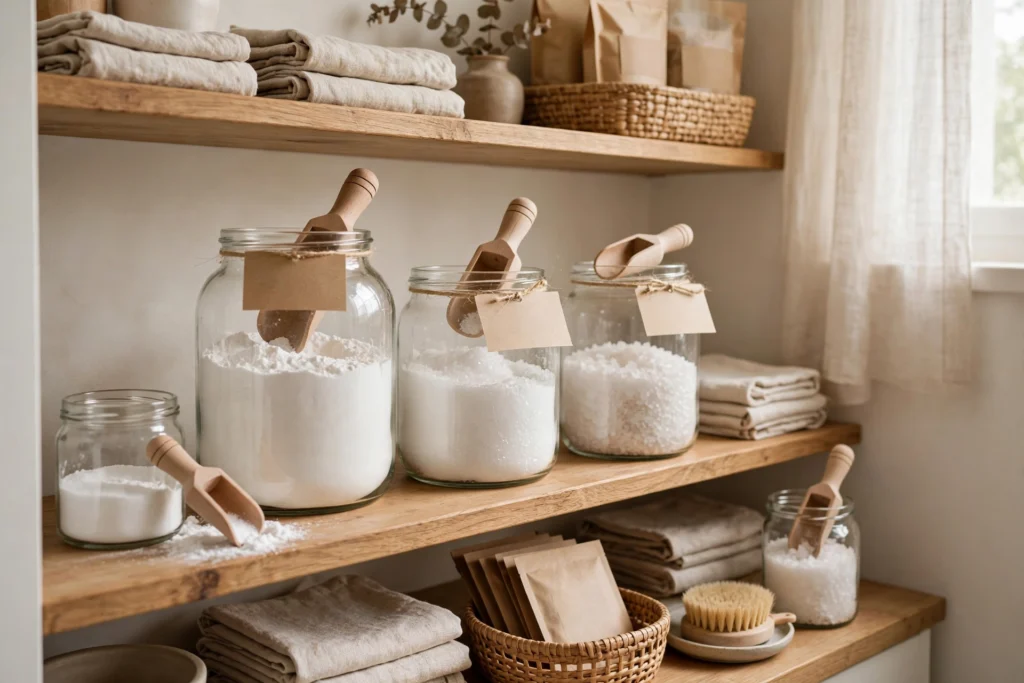
Whole-House Swaps
Three final switches that cover everything else.
13. ⭐ Single-Use Spray Bottles → Refillable Glass Bottles
Ditch: Buying a new plastic spray bottle every time you need cleaner. The bottle is most of what you’re paying for — the liquid inside costs pennies.
Switch to: Sturdy glass spray bottles ($10–$14 for a 2-pack, amber or cobalt to protect contents from light). Fill with your own cleaners — diluted castile soap for all-purpose, vinegar and water for glass. When a bottle finally breaks after years, glass recycles cleanly unlike the mixed-plastic trigger sprayers.
The math: Two bottles + bulk ingredients = under $20 to set up a whole cleaning caddy that lasts years.
Start here because: It pairs perfectly with homemade cleaners, and there’s something deeply satisfying about a matching set of amber bottles under your sink.
14. Scented Trash Bags → Compostable or Fewer Bags
Ditch: Heavily scented plastic trash bags. The fragrance chemicals are unregulated, and the scent is covering up odors instead of solving them.
Switch to: Compostable bags for food waste ($12–$18 for a roll, certified compostable — look for the BPI or TÜV OK compost mark, not just “biodegradable,” which means almost nothing legally). For regular trash, switch to smaller bags and take trash out more often — less bag, less smell, less waste. A sprinkle of baking soda in the can handles odors better than any artificial lemon scent.
The math: Comparable cost; the real win is fewer chemicals in your kitchen air.
15. Plug-In Air Fresheners → Simmer Pots and Beeswax
Ditch: Plug-in and aerosol air fresheners. They don’t clean air — they coat your nasal passages with fragrance chemicals so you can’t smell the problem. Some contain phthalates, which are worth avoiding.
Switch to: Stovetop simmer pots (sliced lemon + rosemary + vanilla in water, simmered low for an hour — costs under $1 and makes the whole house smell incredible) or 100% beeswax candles ($8–$15, burn 30–50 hours with no soot or synthetic fragrance). Open windows for 10 minutes daily beats every air freshener ever made.
The math: Pennies per use vs. $4–$6 per refill plug-in. Your lungs say thanks for free.
Your Eco Swap Checklist
Work through these as your current products run out — no need to waste what you have:
- ☐ ⭐ Swedish dishcloths (start here — biggest impact)
- ☐ ⭐ Refillable toiletry dispensers
- ☐ ⭐ Wool dryer balls
- ☐ ⭐ Glass spray bottles
- ☐ Coconut or loofah scourers
- ☐ Washable mop pads
- ☐ Beeswax wraps
- ☐ Washable microfiber duster
- ☐ Washable cleaning cloths for the bathroom
- ☐ Bamboo or silicone toilet brush
- ☐ Reusable cotton pads
- ☐ Detergent sheets or refills
- ☐ White vinegar for the rinse cycle
- ☐ Compostable bags + baking soda for trash
- ☐ Simmer pots or beeswax candles instead of plug-ins
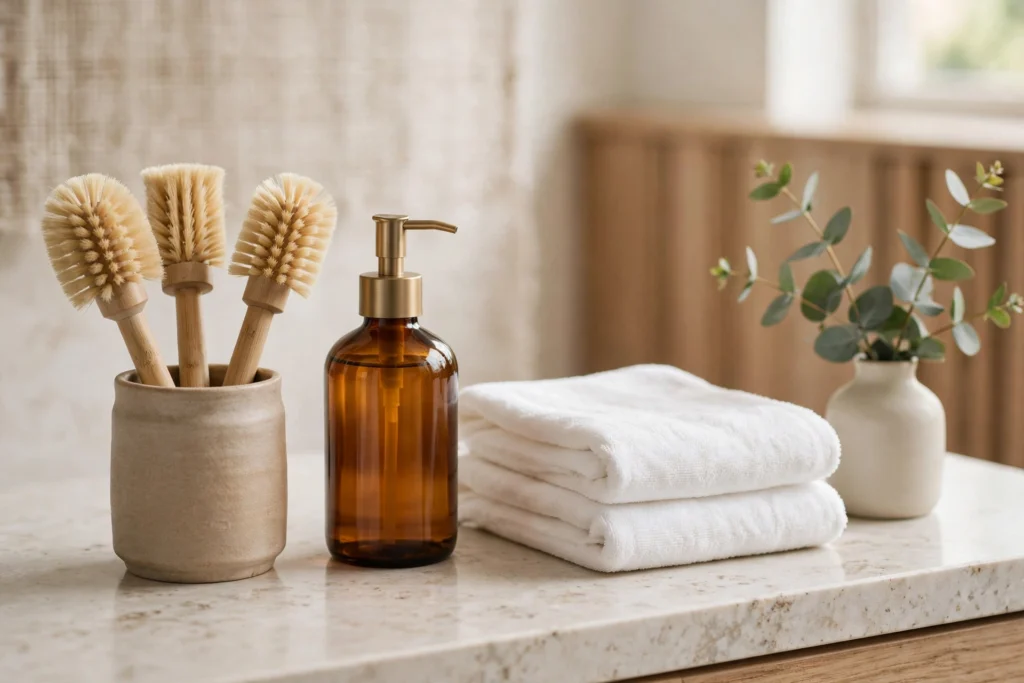
Which Eco-Friendly Cleaning Swaps Save the Most Money?
Not every green swap pays for itself, but the reusable ones usually do, often within a few months. Here is a rough guide based on typical US store prices. Your numbers will depend on how much you use now.
| Swap | Typical upfront cost | What it replaces | Pays for itself |
|---|---|---|---|
| Wool dryer balls (set of 6) | $12–$20 | Dryer sheets; a set often lasts 1,000+ loads | 2–4 months |
| Swedish dishcloths (pack of 10) | $15–$20 | Paper towels for wiping and spills | 2–3 months |
| Washable microfiber mop pads (3) | $12–$18 | Disposable mop pads, washable 100+ times | 1–2 months |
| Glass spray bottles + concentrate | $15–$25 to start | Ready-to-use sprays in new plastic bottles | 3–6 months |
| Reusable cleaning cloths | $10–$15 | Disposable cleaning wipes | 1–2 months |
| Beeswax wraps (3-pack) | $15–$20 | Plastic wrap; each lasts about a year with care | 6–12 months |
If you only make three swaps, make them dryer balls, Swedish dishcloths and washable mop pads. They replace things you buy most often, so they cut the most waste and save the most money. When you do buy a cleaner, look for the EPA Safer Choice label, which marks products reviewed for safer ingredients.
Eco-Friendly Cleaning for the Toughest Kitchen Jobs
The jobs that tempt people back to harsh sprays are almost always in the kitchen. Here is how to handle each with vinegar, baking soda, lemon and dish soap, with a full step-by-step guide for each one.
- Microwave: steam a bowl of water and lemon slices for 3 minutes, wait 5, then wipe. Full method: how to clean a microwave with lemon.
- Dishwasher: a cup of white vinegar on the top rack for a hot cycle, then baking soda on the floor for a short rinse. See how to clean a dishwasher with vinegar and baking soda.
- Oven door glass: a thick baking soda paste, 20 minutes, then a damp microfiber cloth. Between the panes: how to clean oven door glass.
- Oven racks: an overnight soak in hot water with dish soap or dishwasher detergent in the bathtub. No scrubbing needed: how to clean oven racks without scrubbing.
- Glass stove top: baking soda, a hot damp towel and a flat razor scraper held low. See how to clean a glass stove top without scratching.
Three safety rules for green cleaning
- Never mix vinegar with bleach. It releases chlorine gas. Don’t mix vinegar and hydrogen peroxide in one bottle either; use them one after the other instead.
- Keep vinegar and lemon off natural stone. Acids can etch granite, marble and travertine. Use warm water with a drop of dish soap, or a pH-neutral stone cleaner.
- Label every refill bottle. Write the recipe and the date on it, and keep DIY mixes away from kids, like any other cleaner.
Want the recipes? These natural cleaning recipes cover an all-purpose spray, a glass cleaner and a soft scrub you can mix in minutes.
Grab the Free Printables
Our free room-by-room cleaning checklist pairs perfectly with these swaps — check off each room as you green it. Get the free printables here.
Good to know: When you replace a product, look for the EPA Safer Choice label; it is an easy shortcut to cleaners made with safer chemical ingredients.
Keep Reading
Save this for later
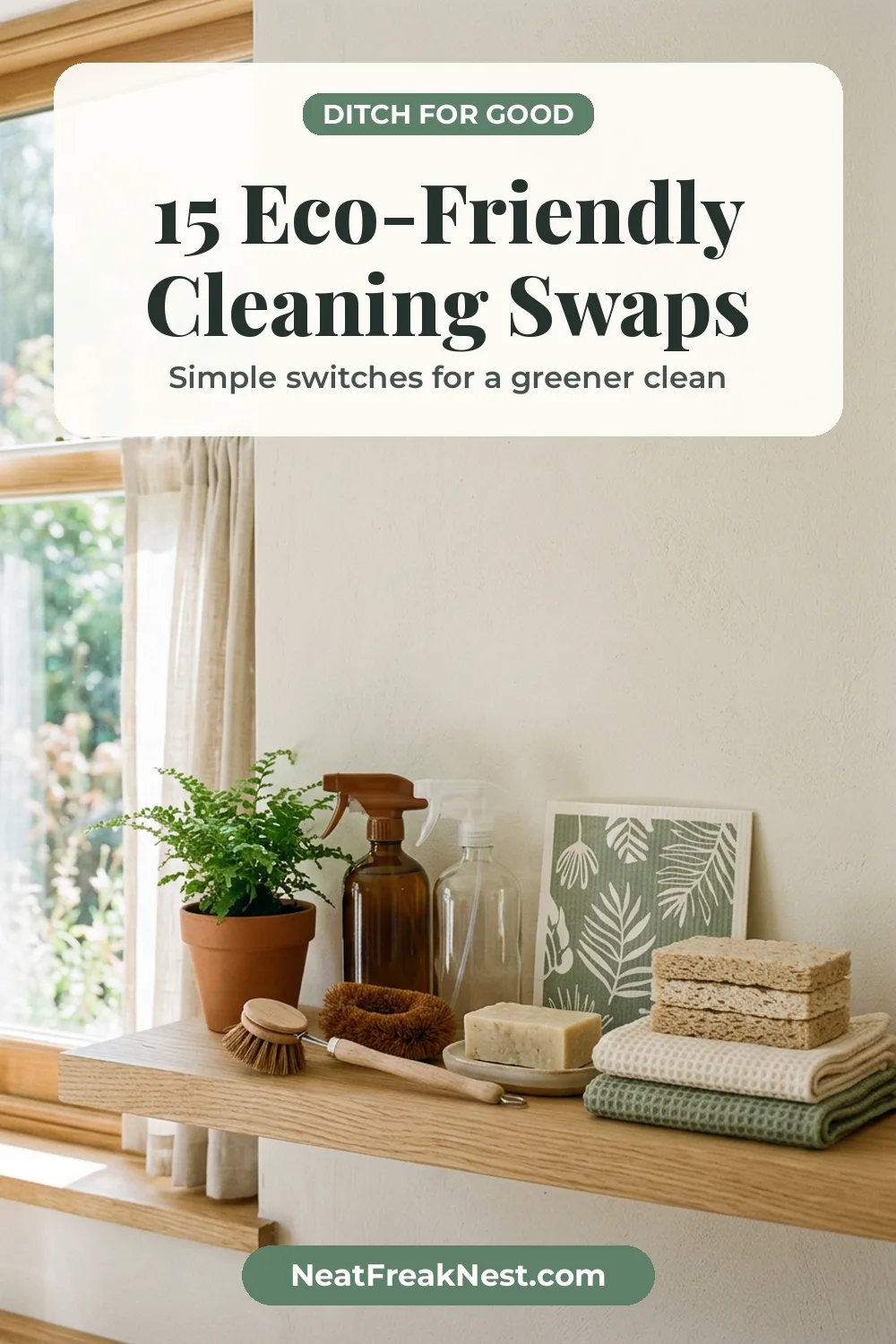
Pin this image to your Pinterest board so it’s there when you need it.
 Save to Pinterest
Sources & safety notes
The safety and care points in this guide are based on these public sources. Your appliance manual and product labels always come first, so follow them where they differ from general advice.
- Safer Choice (U.S. EPA): the EPA Safer Choice label helps you find cleaning products made with ingredients that are safer for human health and the environment.
- Top tips for a safe spring cleaning (National Capital Poison Center): explains which everyday cleaners are mild acids and mild alkalis, and why household cleaners should never be mixed.
- Dangers of Mixing Bleach with Cleaners (Washington State Department of Health): if you still keep chlorine bleach, store it away from vinegar, ammonia and other cleaners and never combine them.
Frequently Asked Questions
What are the easiest eco-friendly cleaning swaps to start with?
Start with wool dryer balls instead of dryer sheets, Swedish dishcloths instead of paper towels and washable microfiber mop pads instead of disposable ones. They cost little, replace things you buy every few weeks and need no change to how you clean.
Do eco-friendly cleaning products actually work?
For everyday dirt, grease and grime, yes. Microfiber, dish soap, baking soda and vinegar handle most household cleaning. For disinfecting, such as after raw meat or illness, use a product registered as a disinfectant and follow its label contact time.
Is vinegar safe to clean everything?
No. Vinegar is great on glass, sinks, faucets and soap scum, but it can etch natural stone like granite and marble, dull some wood finishes and damage rubber seals over time. Never mix it with bleach.
Are eco-friendly cleaning swaps more expensive?
Reusable swaps cost more upfront but usually pay for themselves within a few months, since they replace products you rebuy constantly. Refillable bottles with concentrate are often cheaper per use than buying a new spray bottle each time.