
You can scrub the inside of the window spotless and still be staring at brown drips and grease streaks, because the mess is trapped between the panes. Knowing how to clean oven door glass properly means treating it as three surfaces: the inside pane facing the oven, the outside pane facing your kitchen, and the hidden space in between. This guide covers all three, including two ways to reach between the glass: the bottom-drawer wand trick that takes about 20 minutes, and removing the door panel for a full clean.
⏱️ Short on time?
Grab our FREE printable checklists — the exact routines behind every calm home on this blog:
📋 Room-by-Room Checklist (PDF)📅 Weekly Reset Checklist (PDF)
Part of our Kitchen Cleaning & Organization Guide, which brings every related post together in one place.
Everything here applies to standard electric and gas ranges and wall ovens. Always start with the oven off and completely cool, and keep your owner’s manual (or the model number from the sticker inside the drawer or door frame) handy, because door designs vary by brand.
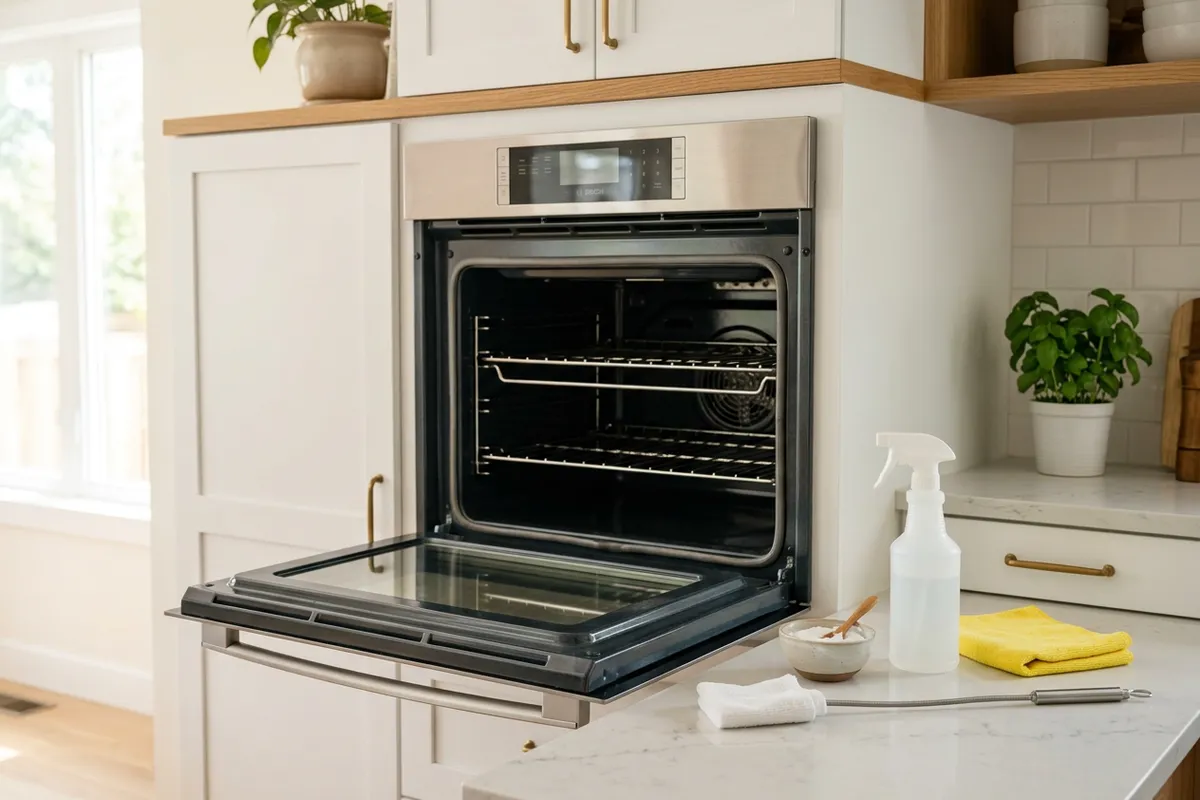
Why Grease Gets Between the Oven Door Glass
Most oven doors are built from two to four panes of tempered glass with an air gap between them for insulation. To stop the door overheating, there are vent slots along the top or bottom edge of the inner door. Those vents are the problem: steam and grease vapor from roasting get drawn into the gap and condense on the cooler glass, and drips from a bubbling casserole can run down the inside of the door and through the slots.
What You Need
- 1/2 cup baking soda mixed with about 3 tablespoons of water (a paste like thick frosting)
- A spray bottle of equal parts white vinegar and water
- A plastic scraper or old gift card, plus a non-scratch sponge
- 3 or 4 microfiber cloths
- A long, thin, flat tool: a store-bought oven glass cleaning wand, a 24-inch radiator brush, or a wooden yardstick or paint stirrer
- Rubber bands or painter’s tape to secure a cloth to the tool
- A screwdriver set (Phillips and Torx) and a large towel, only if you’ll remove the glass
- Dish soap and hot water, plus a degreaser that is safe on glass for heavy buildup
Step 1: Clean the Inside Oven Door Glass
Start here, because this is the pane that takes the heaviest beating and the one you’ll see first when the door is open.
Apply the paste
Open the door fully so it lies flat. Wipe off loose crumbs with a damp cloth, then spread the baking soda paste over the glass in a layer about 1/8 inch thick. Keep it on the glass and away from the rubber door gasket, which can be damaged by scrubbing and is hard to rinse.
Let it sit
Give it at least 20 minutes for light spatters and 1 to 2 hours, or overnight, for dark baked-on spots. The paste softens carbonized grease so it lifts off instead of needing force.
Lift and wipe
Hold a plastic scraper at a low angle and push the softened paste toward the bottom of the door, then wipe it up with a damp microfiber cloth. Work any stubborn spots in small circles with a non-scratch sponge. Mist with the vinegar spray to dissolve the white baking soda film, wipe again and buff dry.
Some brown spots on the inner pane are actually polymerized grease that baking soda won’t fully shift. For those, a cream cleanser made for cooktops, or a soft cleanser like Bar Keepers Friend Soft Cleanser, used with a damp non-scratch sponge, usually finishes the job. Test a corner first and rinse well. If your manual says the inner pane has a reflective or heat-retaining coating, skip abrasive cleansers and razor blades on it entirely.
Step 2: Clean the Outside Glass
Close the door and spray the outside glass with the vinegar mix or a regular glass cleaner. Spray onto the cloth rather than the door if your controls sit just above the glass, so liquid doesn’t run into the control panel. Wipe in an S pattern from top to bottom and buff with a dry cloth.
Step 3: How to Clean Between Oven Door Glass (No Disassembly)
This is the method to try first. It works on many freestanding ranges from brands like Whirlpool, Frigidaire, GE, Kenmore and Maytag, where the bottom of the door has slots you can reach once the storage or warming drawer is out of the way.
Remove the bottom drawer
Pull the storage drawer all the way open. Most lift up and out once fully extended; some have small tabs on each rail that you press, one up and one down, to release it. Set it aside with whatever was stored in it.
Find the gap
Open the oven door just slightly, about 2 to 3 inches, and use your phone flashlight to look up at the bottom edge of the door. On many models you’ll see long vent slots or an opening that leads straight into the space between the panes. If you can see the glass from underneath, this method will work for your oven.
Make or prep your wand
Wrap a thin microfiber cloth tightly around the end of your wand or yardstick and secure it with two rubber bands or painter’s tape, so it can’t slip off and get stuck inside the door. Keep the wrapped end as flat as possible; the gap between panes is often only about 1/2 inch.
Clean in two passes
Dampen the cloth with hot water and a drop of dish soap, or with a light mist of degreaser, and wring it until it’s barely damp. Slide it up through the slot and wipe the back of the outer pane and the front of the inner pane in long up-and-down strokes. Check your progress from the front. Rinse or swap the cloth often. Finish with a fresh cloth dampened with the vinegar mix to remove streaks, then a dry cloth to buff.
Two cautions. Use as little liquid as possible, because water dripping into the door can soak the insulation or reach wiring. And if the wand meets resistance, stop: you may be hitting insulation or a bracket rather than open glass.
Step 4: How to Remove the Inner Glass for a Full Clean
If your range has no drawer opening, your oven is a wall oven, or the grime is too baked on for a wand, the more thorough fix is to open up the door. Many newer models, including several European-style ovens from brands like Bosch and Neff, are designed so the inner panes lift out with clips or a top trim. Look in your manual for a section on removing the door or door glass before you start, and stop if your model says the door shouldn’t be taken apart by the owner.
Take the door off
Open the door fully. At each hinge there’s usually a small lever or locking arm; flip both up or toward you to lock the hinges open. Close the door partway, to about a 45-degree angle, grip it firmly at the sides and lift it up and out. Oven doors are heavy, often 20 to 30 pounds, so get a second pair of hands if you can, and keep fingers clear of the hinges, which are spring-loaded.
Open the door up
Lay the door face down on a thick towel on the floor or a table. Depending on the model, you’ll either unscrew the screws along the top edge or inner frame (often Torx or Phillips), or release clips and slide out a trim strip. Take a phone photo at each step so reassembly is easy.
Clean each pane
Lift the panes out one at a time and lay them on a towel. Before you clean, put a small piece of painter’s tape on each pane marking which way is up and which side faces the oven; coated panes and spacers only fit one way. Wash each pane in the sink with hot soapy water, or use the baking soda paste on stubborn areas, then rinse, spray with vinegar and dry completely with microfiber. Tempered glass is strong but can shatter if an edge or corner gets knocked, so handle the panes by their faces.
Reassemble and rehang
Replace the panes in the same order and orientation, refit the trim and screws, then hang the door by sliding both hinge arms back into their slots, opening it fully and flipping the hinge levers back down.
How to Clean Oven Door Glass: Quick Fix Guide by Problem
| Problem | Best fix |
|---|---|
| Light grease film on inside pane | Vinegar spray, wait 5 minutes, wipe and buff |
| Dark baked-on spots | Baking soda paste for 1 hour to overnight, then plastic scraper |
| Brown streaks between the glass | Drawer wand method with soapy, barely damp microfiber |
| Drips that ran into the door | Remove the inner glass and wash the panes |
| Streaks after cleaning | Distilled water or vinegar mix, then a completely dry cloth |
| Hazy white film | Leftover baking soda: mist with vinegar and wipe again |
What Not to Use on Oven Door Glass
- Steel wool and green scouring pads: they scratch the glass and any coating.
- Razor blades on coated panes: fine on plain glass held flat and wet, but they can strip reflective coatings.
- Spray oven cleaner near the gasket or between the panes: the fumes and residue are hard to rinse out of a closed space, and it can damage the door seal.
- Soaking the door: water inside the door can ruin insulation and electronics.
- The self-clean cycle as a glass fix: it bakes the inner pane at very high heat but doesn’t touch the space between the panes, and can set drips harder.
How to Keep Oven Door Glass Clean Longer
- Wipe the inside pane with a damp cloth once the oven has cooled after any messy roast.
- Cover or loosely tent splattery dishes like roasts and casseroles with foil.
- Put a sheet pan on the rack below anything that might bubble over. Check your manual before using any oven liner, and never cover the oven floor or block the vents with foil.
- Clean the glass before a big cooking day, not after, so drips don’t bake on twice.
If you’re getting the kitchen ready for the holidays, do the door the same day as the racks with our guide to how to clean oven racks without scrubbing, then finish the stove with how to clean a glass stove top without scratching. The Thanksgiving prep checklist has the rest of the timeline, and the lemon steam method handles the microwave in 10 minutes.
Add the monthly inside-pane clean and a twice-yearly between-the-glass clean (before Thanksgiving and before spring) to the kitchen section of your deep cleaning checklist, and use our natural cleaning recipes for the vinegar and baking soda mixes.
Keep going: got a countertop oven too? Here’s how to clean a toaster oven, including the glass door, crumb tray and baked-on grease.
Related guides
Save this for later
Pin this image to your Pinterest board so it’s there when you need it.
 Save to Pinterest
Sources & safety notes
The safety and care points in this guide are based on these public sources. Your appliance manual and product labels always come first, so follow them where they differ from general advice.
- Range & Wall Oven: Cleaning Between the Oven Door Glass (GE Appliances): on many ranges and wall ovens you can clean between the door panes with a cloth-wrapped yardstick and mild dish soap; do not try it on doors with cameras or side-swing doors, and check your owner’s manual for door removal.
- Using oven cleaners safely (National Capital Poison Center): oven cleaners are usually highly caustic, so follow the label exactly, protect skin and eyes, and ventilate.
- Cleaning Options for Ranges (GE Appliances): self-clean ovens should not be treated with commercial oven cleaners or liners, and stainless steel racks should come out before a self-clean cycle.
Frequently Asked Questions
How do you clean between the glass on an oven door?
On many freestanding ranges, remove the bottom storage drawer, open the oven door slightly and look for vent slots along the door’s bottom edge. Slide a thin wand wrapped in a barely damp, soapy microfiber cloth up between the panes and wipe, then finish with a vinegar-dampened cloth and a dry one. If there’s no opening, remove the door and the inner glass following your manual.
Can you get between oven glass without taking the door off?
Often, yes. The bottom-drawer method lets you reach the space between the panes on many Whirlpool, Frigidaire, GE, Kenmore and Maytag ranges. Wall ovens and models without a bottom opening usually need the door removed.
What is the best homemade cleaner for oven door glass?
A paste of 1/2 cup baking soda and about 3 tablespoons of water left on the inside glass for 20 minutes to overnight, then lifted with a plastic scraper and rinsed with a 1:1 vinegar and water spray.
Why is there grease between my oven door glass?
Oven doors have vent slots so the door doesn’t overheat. Steam and grease vapor get drawn in through them and condense on the cooler glass, and spills can drip in through the slots, leaving streaks you can’t reach from either side.
Is it safe to use oven cleaner on oven door glass?
Many brands allow spray oven cleaner on plain inner door glass if it’s rinsed thoroughly, but keep it off the door gasket and out of the vents, and never spray it between the panes. Check your manual first, especially for self-cleaning ovens and coated glass.
Now you know how to clean oven door glass from every side: baking soda paste for the inside pane, a quick polish outside, and the drawer wand or panel removal for the grime in between. Do it before your next big cooking day and the window will stay clear for months.