
If the filter above your stove feels sticky, looks brown, or your kitchen smells like last week’s fried fish, it’s time. The good news: learning how to clean a range hood filter takes about 15 minutes of hands-on time and things you already own. For most metal filters, a soak in boiling water with baking soda and dish soap melts the grease so it rinses away with a soft brush. This guide covers that method step by step, plus a degreaser option for really neglected filters, when the dishwasher is safe, how mesh, baffle and charcoal filters differ, and how often each one needs attention.
⏱️ Short on time?
Grab our FREE printable checklists — the exact routines behind every calm home on this blog:
📋 Room-by-Room Checklist (PDF)📅 Weekly Reset Checklist (PDF)
Part of our Kitchen Cleaning & Organization Guide, which brings every related post together in one place.
A clean filter matters more than it looks. The hood can only pull smoke, steam and grease out of the air if air can pass through the filter, and a grease-caked filter is also a fire risk sitting right above an open flame or hot burner.
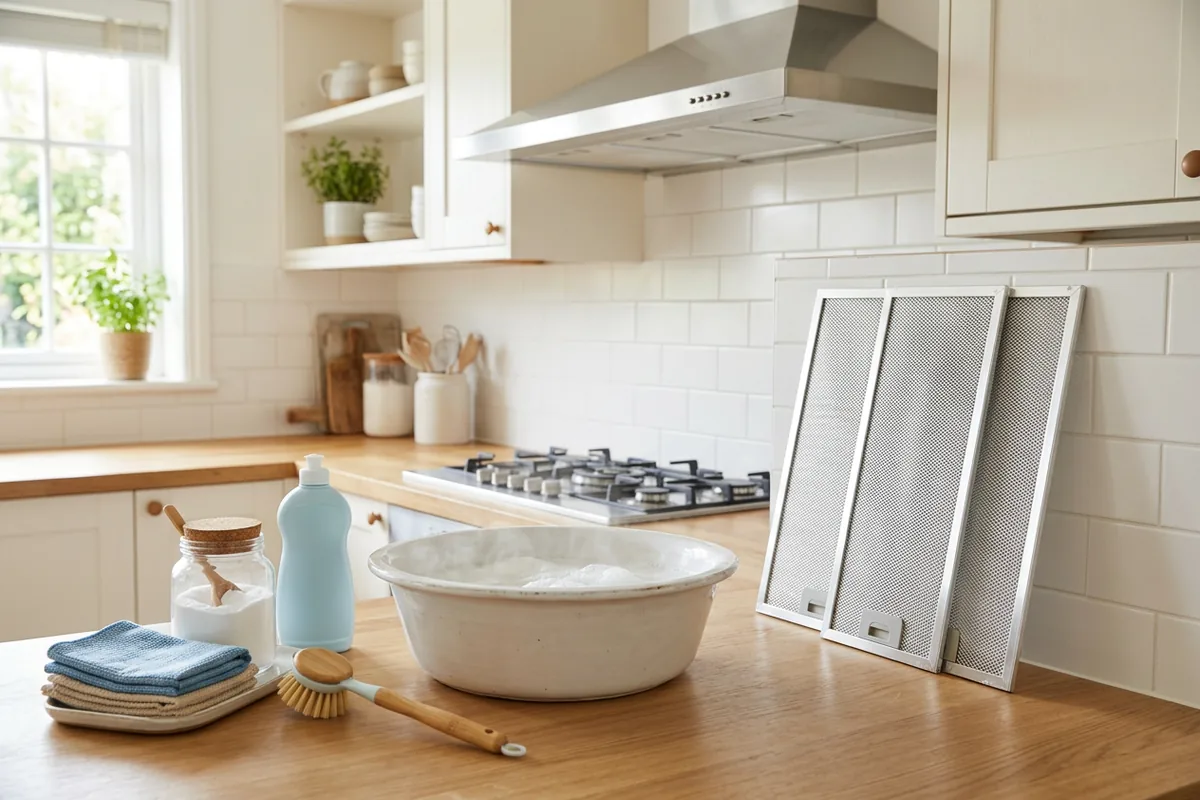
How to Clean a Range Hood Filter: Quick Answer
- Remove the filter once the hood and stove are off and cool.
- Soak it in boiling water with about 1/4 cup baking soda and a good squirt of grease-cutting dish soap for 10 to 15 minutes.
- Scrub gently with a soft nylon brush, working with the mesh or baffle lines.
- Rinse in hot water, then dry completely before you slide it back in.
- Charcoal filters can’t be washed: replace them every 3 to 6 months.
First, Know Which Filter You Have
Before you grab a brush, check what kind of filter is in your hood. The cleaning method depends on it, and the wrong method can ruin a filter that would otherwise last for years. Most U.S. homes have one of three types:
| Filter type | What it looks like | Washable? | Best cleaning method |
|---|---|---|---|
| Aluminum mesh | Flat panel with layers of fine silver mesh; common in under-cabinet hoods and over-the-range microwaves | Yes | Boiling water + baking soda soak, or mild degreaser |
| Stainless steel baffle | Heavy panel of angled, overlapping metal channels; common in chimney and pro-style hoods | Yes | Soak, degreaser or dishwasher |
| Charcoal (carbon) | Black or gray pad or cartridge, often behind a mesh filter in ductless (recirculating) hoods | No (unless the maker says it is) | Replace every 3 to 6 months |
Over-the-range microwaves often have both: metal grease filters on the underside and a charcoal filter behind the top vent grille. Wash the metal ones and replace the charcoal one. If you aren’t sure, look for a model number on the filter frame or inside the hood and check the manual.
What You’ll Need
- A sink, large plastic tub, or roasting pan big enough to lay the filter flat (a stockpot works for small filters)
- A kettle or pot of boiling water
- 1/4 to 1/2 cup baking soda
- Grease-cutting dish soap (such as Dawn)
- A soft nylon brush or old toothbrush (no steel wool)
- Rubber gloves to protect your hands from hot water and grease
- A microfiber cloth or clean towel for drying
- Optional: a kitchen degreaser spray labeled safe for aluminum or stainless steel
Method 1: The Boiling Water and Baking Soda Soak
This works for nine out of ten filters. Hot water softens hardened grease, dish soap breaks it up, and baking soda adds a little gentle alkaline lift without the harsh fumes of commercial cleaners.
Step 1: Remove the filter
Turn off the hood and the stove and let everything cool. Most filters slide out or drop down when you pull a small tab, ring or spring latch on the front edge. Support the filter with your other hand, because a greasy filter can slip, and drips may land on the cooktop.
Step 2: Fill with boiling water
Put the plug in the sink (or set the filter in a tub), lay the filter flat and pour boiling water over it until it’s fully submerged. If your sink is small, do one filter at a time. Keep kids and pets well away.
Step 3: Add baking soda and dish soap
Slowly sprinkle in about 1/4 cup of baking soda (up to 1/2 cup for a large sink) and stir with the brush handle. Add it a spoonful at a time, because baking soda foams when it hits very hot water. Then squeeze in about 2 tablespoons of dish soap. You’ll often see the water turn yellow-brown within a few minutes; that’s the grease letting go.
Step 4: Soak 10 to 15 minutes
For a filter cleaned every month or two, 10 to 15 minutes is plenty. For a heavily coated filter, let it soak until the water cools to warm, about 30 minutes. Don’t leave aluminum in a strong baking soda solution for hours; long soaks in alkaline water can dull or darken bare aluminum.
Step 5: Scrub gently
Put on gloves and scrub with a soft nylon brush, working along the direction of the mesh or baffle channels, on both sides. Add a drop of dish soap directly to the brush for stubborn spots. Avoid steel wool and abrasive scouring pads: they snag and tear mesh and scratch stainless steel.
Step 6: Rinse and dry completely
Rinse under hot running water until no suds or grease film remain. Shake off excess water, pat with a towel and let the filter air-dry fully, standing upright, before reinstalling. A wet filter drips onto the cooktop and can trap moisture in the hood.
Extra-greasy filter? Repeat the soak with fresh boiling water. Two short rounds work better than one long one, because the first batch of water gets saturated with grease. While the filter dries, wipe down the hood itself; for stubborn kitchen grease elsewhere, the same gentle approach works on a glass stove top.
Method 2: Degreaser for Neglected Filters
If a filter hasn’t been cleaned in a year or more, the grease may have turned into a dark, gummy varnish that a soak won’t fully lift. That’s when a degreaser helps.
- Choose the right product. Pick a kitchen degreaser whose label says it’s safe for aluminum (for mesh) or stainless steel (for baffles). Citrus-based degreasers and diluted all-purpose degreasers are good options.
- Pre-soak first. Run Method 1 for 10 minutes so the degreaser has less work to do.
- Spray and wait. Spray both sides and let it sit for the time on the label, usually 5 to 10 minutes. Don’t let it dry on the metal.
- Brush, then rinse thoroughly in hot water.
- Ventilate and wear gloves.
Skip oven cleaner and ammonia on aluminum mesh. Lye-based oven cleaners and strong ammonia can blacken, pit and weaken aluminum in minutes. They are sometimes used on stainless baffles, but a degreaser is safer and almost always enough. If you want a fume-free option, a paste of baking soda and a little dish soap, brushed on and left for 15 minutes, works on light varnish; see more mixes in our natural cleaning recipes.
Method 3: Can You Put a Range Hood Filter in the Dishwasher?
Often, yes, but check your manual first. Stainless steel baffle filters are usually dishwasher safe and come out beautifully. Aluminum mesh filters can usually go in too, but hot water and strong dishwasher detergent can leave them dull or slightly darkened over time. That won’t affect how they work, but if you care about looks, hand-wash them.
- Knock off loose grease first with a 5-minute hot water rinse.
- Stand the filter on its edge on the bottom rack so water hits both sides, away from the spray arm so it can still turn.
- Run it alone or with pots and pans on the hottest cycle, not with glasses or fine dishes.
- Use regular detergent and skip heavy-duty pods with bleach on aluminum.
- Afterward, clean your dishwasher filter, because all that grease lands there. Our guide on how to clean a dishwasher with vinegar and baking soda shows you how.
What About Charcoal Filters?
Charcoal (activated carbon) filters are used in ductless hoods and over-the-range microwaves that recirculate air back into the kitchen. They trap odors and smoke particles inside the carbon, and water or soap destroys that ability. Washing them doesn’t clean them; it ruins them.
- Replace every 3 to 6 months with regular cooking, or sooner if cooking smells linger.
- Order by model number, printed on the old filter or in the manual.
- Clean the metal grease filter in front of it on its normal schedule; that keeps grease from clogging the charcoal early.
- A few brands sell “washable” or regenerating carbon filters. Follow the maker’s instructions exactly for those.
How Often to Clean a Range Hood Filter
| How you cook | Mesh or baffle filter | Charcoal filter |
|---|---|---|
| Daily cooking, frequent frying, searing or stir-frying | Every 2 to 4 weeks | Replace every 3 months |
| Regular home cooking several times a week | Monthly | Replace every 3 to 6 months |
| Light cooking, mostly reheating and boiling | Every 2 to 3 months | Replace every 6 months |
Most hood manufacturers suggest cleaning metal grease filters about once a month. Signs you’re overdue: the filter feels tacky, it looks dark or yellow, grease drips form on the underside of the hood, the fan sounds louder but pulls less smoke, or kitchen odors hang around. Add it to your monthly list in our deep cleaning checklist so it never gets skipped.
Don’t Forget the Hood Itself
While the filters soak, give the hood a 5-minute wipe so clean filters don’t go back into a greasy housing:
- Underside and inside: spray warm water with a few drops of dish soap on a microfiber cloth, wipe, then rinse the cloth and wipe again. Avoid spraying the light or fan motor directly.
- Stainless exterior: wipe with the grain, then buff dry for a streak-free finish.
- Buttons and edges: a cotton swab with a little rubbing alcohol cleans greasy controls.
Before a big holiday cook, it’s smart to do the filter, the oven racks and the oven door glass in one go, so your kitchen is ready for a full day of roasting. Our Thanksgiving prep checklist lays out when to do each job.
Common Mistakes to Avoid
- Using steel wool or wire brushes on mesh. They tear the layers, leaving gaps for grease to pass through.
- Washing charcoal filters. They stop absorbing odors once wet.
- Putting the filter back wet. It drips and can promote rust on steel frames.
- Running the stove with no filter in. Grease goes straight into the fan and ductwork, which is much harder (and pricier) to clean.
- Mixing cleaners. Never combine ammonia, bleach and other products; rinse well between methods.
When to Replace a Metal Filter
A well-kept metal filter can last for many years, but replace it if the mesh is torn or bent, the frame is warped so it no longer fits snugly, there are holes or corrosion, or it’s still stained and sticky after two full cleanings. Replacement mesh and baffle filters are sold by size, so measure length, width and thickness to the nearest 1/16 inch, or order by your hood’s model number.
Keep going: the same grease builds up in small appliances. Here’s how to clean a toaster oven without harsh oven cleaner.
Keep going: next, how to clean stove grates and burner caps.
Related guides
Save this for later
Pin this image to your Pinterest board so it’s there when you need it.
 Save to Pinterest
Good to know: If your hood vents outside, the duct and fan can also collect grease over time. If the fan still struggles after the filters are clean, or you see grease dripping from the hood seams, have the ductwork and fan inspected.
Sources & safety notes
The safety and care points in this guide are based on these public sources. Your appliance manual and product labels always come first, so follow them where they differ from general advice.
- Vent Hood: Cleaning Metal Grease Filters (GE Appliances): soak metal grease filters in hot water and detergent, brush lightly, let them dry completely, and do not use ammonia or ammonia products on them.
- Top tips for a safe spring cleaning (National Capital Poison Center): ventilate while you clean, wear gloves for strong products, and never mix cleaning products.
- Dangers of Mixing Bleach with Cleaners (Washington State Department of Health): ammonia and chlorine bleach release toxic chloramine gases when combined.
Frequently Asked Questions
What is the easiest way to clean a range hood filter?
Soak the metal filter in boiling water with about 1/4 cup baking soda and a squirt of grease-cutting dish soap for 10 to 15 minutes, scrub gently with a soft brush, rinse in hot water and let it dry completely before reinstalling.
Can you put a range hood filter in the dishwasher?
Stainless steel baffle filters are usually dishwasher safe. Aluminum mesh filters can often go in too, but they may dull or darken over time. Check your manual, stand the filter on the bottom rack, and clean the dishwasher filter afterward.
How often should you clean a range hood filter?
Clean mesh or baffle filters about once a month with regular cooking, every 2 to 4 weeks if you fry or sear often, and every 2 to 3 months with light cooking. Replace charcoal filters every 3 to 6 months.
Can you wash a charcoal range hood filter?
No. Water and soap ruin the activated carbon so it no longer traps odors. Replace charcoal filters every 3 to 6 months unless the manufacturer specifically labels yours as washable or regenerating.
What dissolves grease on a range hood filter?
Boiling water, grease-cutting dish soap and baking soda dissolve most grease. For baked-on buildup, use a kitchen degreaser labeled safe for aluminum or stainless steel. Avoid oven cleaner and ammonia on aluminum, which can darken and pit it.
That’s really all it takes to know how to clean a range hood filter: identify your filter type, soak metal filters in boiling water with baking soda and dish soap, bring in a degreaser or the dishwasher when needed, and replace charcoal filters on schedule. Put a monthly reminder on your calendar and your hood will keep your kitchen fresher, quieter and safer.