
The garage is the one room in the house that never gets a proper plan. Holiday bins land wherever there is floor space, sports gear piles up by the door, tools vanish into a drawer you can’t reach, and somehow the car ends up parked in the driveway all winter. If that sounds familiar, you don’t need a bigger garage. You need zones, wall storage, and a few habits that stop the pile from coming back.
⏱️ Short on time?
Grab our FREE printable checklists — the exact routines behind every calm home on this blog:
📋 Room-by-Room Checklist (PDF)📅 Weekly Reset Checklist (PDF)
Part of our Closets, Laundry & Storage Guide, which brings every related post together in one place.
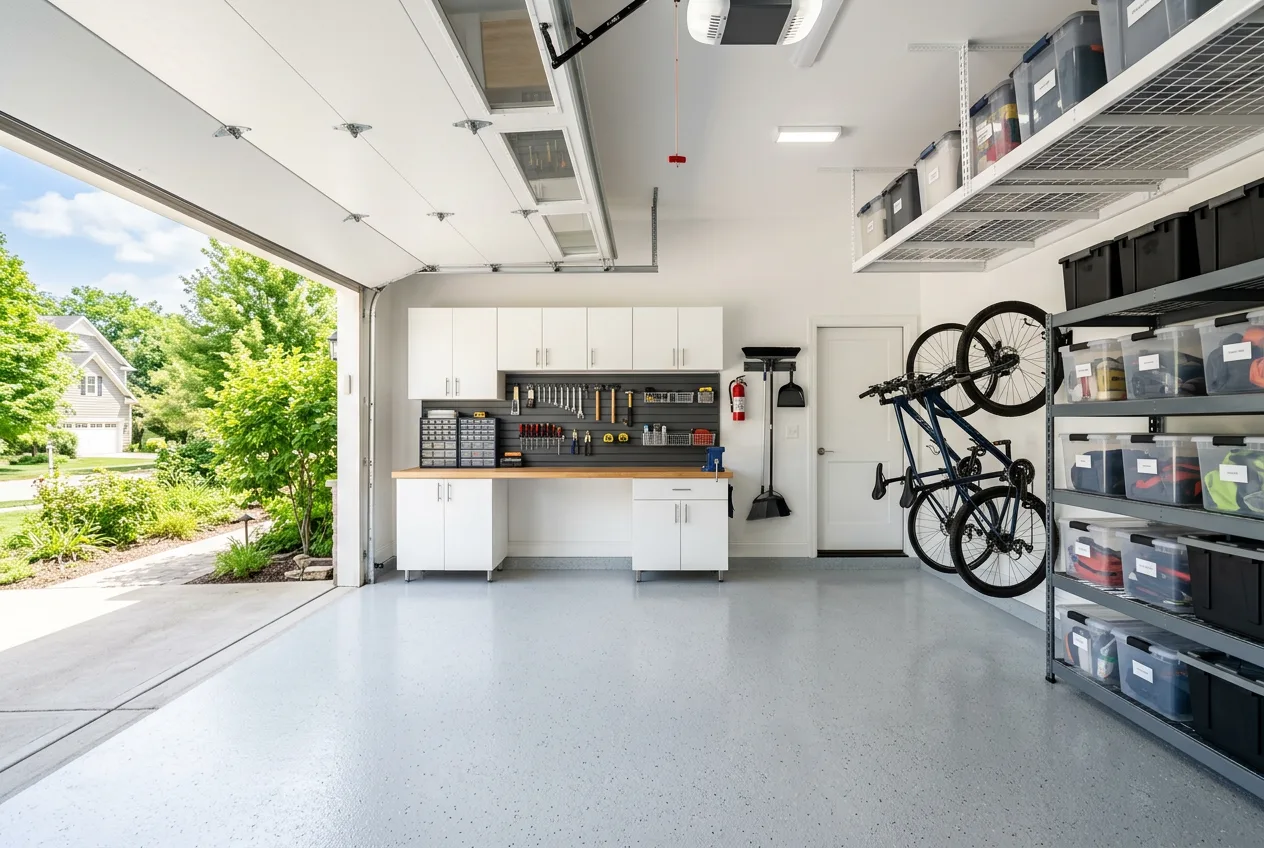
These 19 garage organization ideas work for one-car and two-car garages, rentals and owned homes, and budgets from almost nothing to a full weekend upgrade. Most of the impact comes from sorting and zoning, which cost nothing. The rest is about getting things off the floor and onto walls, shelves and ceilings.
Garage Organization Ideas: What You’ll Learn
- How to sort and zone a garage before you buy a single bin
- Wall, shelf and ceiling storage that frees up floor space
- Smart setups for tools, sports gear and holiday decor
- What should never be stored in a garage
- A weekend checklist and simple habits to keep it working
Start With a Clean Slate: Sort and Zone
1. Empty one wall at a time, not the whole garage
Pulling everything onto the driveway at once sounds efficient, but it turns into an overwhelming yard sale that stalls by lunchtime. Work one wall or one corner at a time instead. Pull items out, sort them, and put back only what belongs. You keep momentum, you can stop at any point, and the car can still fit inside by evening.
2. Sort into keep, donate, sell, trash and “belongs elsewhere”
Garages collect things that don’t belong in garages: old paint you’ll never use, broken chairs, kids’ outgrown bikes, and boxes that were supposed to go to the attic years ago. Use five clear categories and be honest. If you haven’t used something in two full seasons and it isn’t sentimental or seasonal, it’s a strong candidate to go. Our 30-day decluttering plan walks through the same keep-or-go questions for the rest of the house.
3. Create zones based on how you actually use the space
Every garage works better with zones. Common ones are: car care, tools and DIY, lawn and garden, sports and outdoor gear, holiday and seasonal storage, and an overflow pantry or bulk-buy shelf. Put the things you grab daily closest to the house door, the things you use weekly along the side walls, and seasonal items in the hardest-to-reach spots: high shelves, the back wall, or overhead racks.
4. Leave a clear “landing strip” by the house door
The few feet right by the door into the house are the most valuable real estate in the garage. Keep them for a shoe tray, a few hooks for jackets and reusable bags, and a small bin for things that need to go back inside. If your garage doubles as your main entrance, borrow ideas from our mudroom organization guide to turn that strip into a mini drop zone.
Get Everything Off the Floor
5. Install sturdy freestanding shelving along one wall
Heavy-duty metal or resin shelving units are the backbone of most organized garages. Choose units with adjustable shelves so you can fit tall bins at the bottom and shallow ones up top. Anchor tall units to the wall with anti-tip brackets, especially if kids play in the garage. Keep heavy items on the lowest shelves and light, bulky items higher up.
6. Use matching clear bins with big labels
Clear bins let you see what’s inside, and matching sizes stack neatly and look calm instead of chaotic. Label the short end of every bin in large letters so you can read it from across the garage: “Camping,” “Car Care,” “Christmas Lights.” Lidded bins also keep dust, moisture and pests out better than open boxes. Cardboard breaks down quickly in garages, so it’s worth replacing it with plastic for anything you plan to keep long term.
7. Turn one wall into a pegboard or slatwall tool center
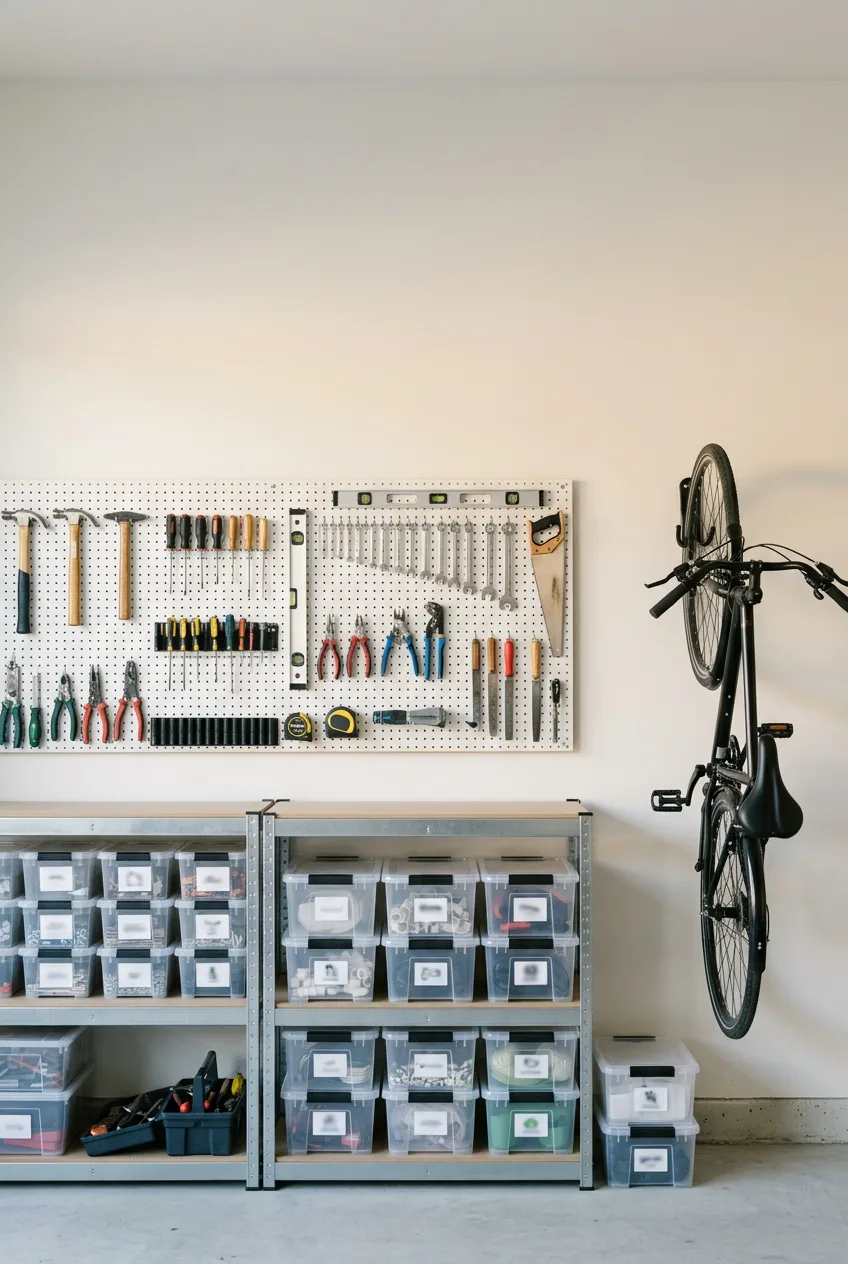
A pegboard or slatwall panel gives every hand tool a visible home. Hang the tools you use most at eye level and outline each one with a marker so it’s obvious when something hasn’t been returned. Slatwall costs more but holds heavier items like shelves, baskets and power-tool holders, and it can grow with your needs over time. Mount either one into studs, not just drywall.
8. Hang bikes vertically or on the ceiling
Bikes are the biggest floor hogs in most garages. Wall-mounted vertical hooks store a bike in about a foot of wall depth, and ceiling hoist systems lift bikes completely out of the way. If family members ride daily, use wall hooks at a height everyone can reach. Save the ceiling for bikes that only come out on weekends or in summer.
9. Add overhead ceiling racks for seasonal storage
The space above the garage door track and over the hood of the car is usually completely empty. Ceiling-mounted racks turn it into storage for holiday decor, camping gear and off-season clothes. Check the weight rating, make sure the rack is bolted into ceiling joists, and keep enough clearance for the garage door to open and close. Store lighter bins up high so they’re easy and safe to lift down.
Smart Setups for Tools, Gear and the Holidays
10. Build a simple workbench zone
Even a compact workbench, or a sturdy table with a pegboard behind it, gives DIY projects a home that isn’t the hood of the car. Keep a shallow drawer unit or small parts organizer on or under the bench for screws, nails, batteries and hardware. Sort small parts into labeled drawers once and you’ll save hours of hunting later.
11. Corral sports gear in open bins and wall racks
Balls, bats, helmets and gloves get used often and put away in a hurry, so they need open storage. Tall open bins, ball cages and wall racks let kids toss things back without opening a lid. Give each family member one bin or one hook, and keep the zone close to the garage door so gear can go straight to the car.
12. Hang long-handled garden tools on a rail
Rakes, shovels, brooms and hoes fall over the moment you lean them in a corner. A wall-mounted tool rail with hooks or clips keeps them upright, separated and easy to grab. Hang the hose on a wall-mounted reel and keep small garden tools, gloves and seed packets in a labeled bin nearby.
13. Give holiday decor its own shelf, not its own floor
Holiday bins tend to spread out every November and never quite find their way back. Dedicate one shelving unit or one overhead rack to seasonal decor, and use color-coded bins so you can grab the right holiday at a glance. Our Christmas organization ideas and Halloween decor storage guide share packing tricks that keep ornaments and lights in good shape until next year.
14. Set up a car-care caddy
Keep washing supplies, microfiber cloths, an ice scraper, a tire gauge and windshield fluid together in one caddy or bin near where you park. In winter, add a small bin for de-icer, a snow brush and a spare pair of gloves. When everything lives in one portable caddy, a quick car clean takes minutes instead of a scavenger hunt.
15. Create a bulk-buy and overflow pantry shelf
If you shop warehouse stores, a garage shelf for paper towels, water and extra cleaning supplies keeps the kitchen from overflowing. Keep it to non-food items and canned or sealed goods that can handle temperature swings, and store everything in lidded bins up off the floor. Our pantry organization ideas cover how to keep the indoor side of your overflow system tidy.
Safety and Habits That Keep It Working
16. Know what should never live in the garage
Garages get hot in summer and cold in winter, and they’re often damp. That makes them a poor home for photos, important papers, electronics, fabric items you care about and latex paint, which can be ruined if it freezes. Propane tanks belong outdoors, not in an enclosed garage. Store gasoline only in approved containers, away from heat sources and appliances with pilot lights, and check your local fire code for limits.
17. Lock up chemicals and sharp tools
Pool chemicals, pesticides, automotive fluids and sharp tools should be stored up high or in a locking cabinet, especially in homes with kids or pets. Keep products in their original labeled containers and never mix chemicals. A simple metal cabinet with a lock is one of the most worthwhile garage upgrades you can make.
18. Do a 10-minute monthly reset
A garage slides back into chaos one dropped bag at a time. Once a month, spend ten minutes putting stray items back in their zones, emptying the “goes inside” bin and sweeping the floor. Pair it with your weekly reset routine once a month so it becomes automatic rather than a dreaded project.
19. Do a bigger seasonal swap twice a year
In spring, move snow gear and holiday decor up high and bring lawn and outdoor gear down. In fall, do the reverse. This twice-yearly swap is also the perfect moment to toss broken items and donate what didn’t get used. If you’re doing a full-house refresh this season, our fall cleaning checklist includes the garage alongside every other room.
Budget Tips: Organize Your Garage for Less
You don’t need a professional garage system to get great results. Start with sorting and decluttering, which is free. Then add one sturdy shelving unit, a pegboard and a handful of matching bins. Hooks and rails are inexpensive and make a huge difference. Look for heavy-duty shelving on sale around spring cleaning season, and check our budget organization ideas under $25 and Dollar Tree organization finds for small-parts storage, labels and drawer organizers that work just as well in the garage.
Your Garage Organization Checklist
- Clear and sort one wall or corner at a time
- Sort everything into keep, donate, sell, trash and “belongs elsewhere”
- Define zones: car care, tools, garden, sports, seasonal and overflow
- Keep a clear landing strip by the house door
- Install anchored shelving and switch to labeled, lidded clear bins
- Add a pegboard or slatwall for hand tools
- Hang bikes and long-handled tools on the wall
- Use overhead racks for seasonal storage, bolted into joists
- Move papers, photos, electronics and propane out of the garage
- Lock up chemicals and sharp tools
- Schedule a 10-minute monthly reset and a twice-yearly seasonal swap
Related guides
Save this for later
Pin this image to your Pinterest board so it’s there when you need it.
 Save to Pinterest
Good to know: Old paint, motor oil and pesticides shouldn’t go in the trash. The EPA’s household hazardous waste guide explains how to store and dispose of them safely.
Frequently Asked Questions
Where do I start organizing a really cluttered garage?
Start with one wall or one corner, not the whole garage. Sort what’s there into keep, donate, sell, trash and “belongs elsewhere,” and only put back what you’re keeping. Finishing one small area builds momentum and shows you which zones and storage you actually need before you spend money.
What is the cheapest way to organize a garage?
Declutter first, because fewer items means less storage to buy. Then add one sturdy shelving unit, a pegboard for tools and wall hooks for bikes and long-handled tools. Matching lidded bins can be added a few at a time. Most of the visible change comes from getting things off the floor, which hooks and shelves do inexpensively.
What should you not store in a garage?
Avoid storing photos, important documents, electronics, delicate fabrics and latex paint, since temperature swings and humidity can damage them. Propane tanks should be kept outdoors. Store gasoline only in approved containers away from heat and pilot lights, and keep chemicals locked up and out of reach of kids and pets.
How do I keep my garage organized long term?
Give every item a labeled home, keep a “goes inside” bin by the door, and do a quick 10-minute reset once a month. Twice a year, swap seasonal gear between easy-reach and high storage and declutter anything that wasn’t used. Small regular resets prevent the big weekend overhaul.
Are overhead garage storage racks safe?
They are safe when they’re installed correctly: bolted into ceiling joists, used within their weight rating and placed where they won’t interfere with the garage door or opener. Store lighter, bulky items like holiday decor and camping gear up there, and use a sturdy ladder whenever you load or unload them.
An organized garage gives you back more than floor space. It’s where the morning rush starts, where holiday decor waits all year and where weekend projects happen. Pick one wall this weekend, sort it, and give it a real home. Next weekend, take the next wall. In a month, you’ll pull the car in, find every tool on the first try, and wonder why you didn’t start sooner.
Pingback: 20 Christmas Organization Ideas for Decor Storage