
Knowing how to clean a garbage disposal is the quickest way to get rid of that sour, rotten-food smell drifting up from your kitchen sink. The good news: you don’t need harsh chemicals or a plumber. Ice, coarse salt, baking soda, vinegar and a lemon will scrub the grinding chamber, break up grease and neutralize odors in about 10 minutes.
⏱️ Short on time?
Grab our FREE printable checklists — the exact routines behind every calm home on this blog:
📋 Room-by-Room Checklist (PDF)📅 Weekly Reset Checklist (PDF)
Part of our Kitchen Cleaning & Organization Guide, which brings every related post together in one place.
This guide gives you the exact step-by-step routine, a fix for the stubborn smells that remain, what never to put down the drain and a simple schedule so the problem doesn’t return. It works for both batch-feed and continuous-feed disposals.
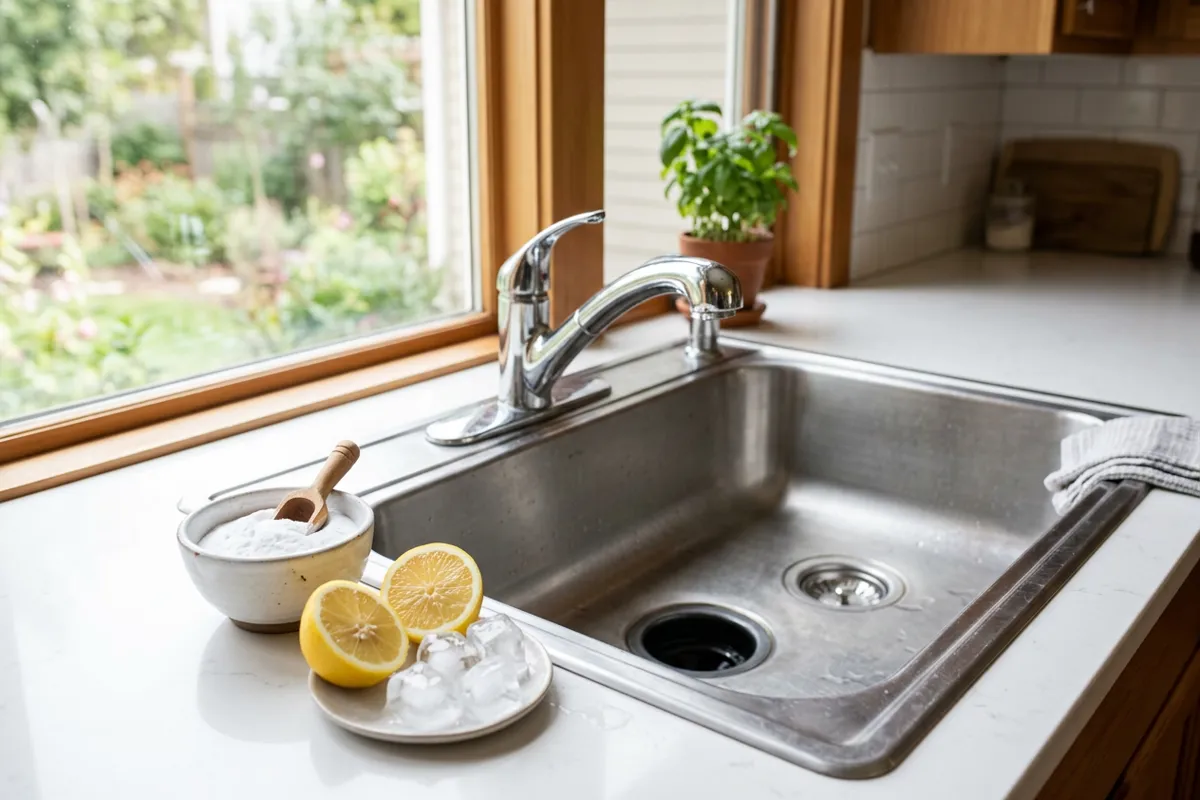
How to Clean a Garbage Disposal: What You’ll Learn
- Safety rules to follow before you clean anything
- The 10-minute ice, salt, baking soda and vinegar method
- How to clean the splash guard and the underside of the rubber flange
- What to do when the smell won’t go away
- What never belongs in a disposal and how often to clean it
Why a Garbage Disposal Smells
A disposal doesn’t really have blades that chop food the way a blender does. Impellers fling scraps against a grind ring, and water flushes the pieces into the drain pipe. Whatever doesn’t flush away, such as a film of grease, fibrous peels and soft food residue, sticks to the chamber walls and the underside of the rubber splash guard. Bacteria feed on it and produce the sour smell you notice.
The splash guard (the rubber collar at the top of the drain) is the most overlooked spot. Food flicks up there every time you run the disposal, and you can’t see the buildup from above. Cleaning it is half the battle. A tidy sink area also helps, so pair this routine with our under sink organization ideas to keep the cabinet below dry and free of leaks and odors.
Safety First: Before You Clean
- Turn it off at the switch. For a deep clean, also switch off the disposal’s circuit at the breaker or unplug it under the sink if it has a plug.
- Never put your hand down the drain. Use tongs, pliers or a long-handled brush to remove anything you can see.
- Don’t mix cleaners. Never combine bleach with vinegar or any ammonia product. Pick one method per session.
- Skip drain cleaners. Liquid drain openers can damage the rubber parts and splash back on you.
If the unit hums but won’t spin, or you see a leak, stop. That’s a jam or a seal problem, not a smell problem, and it’s a job for the manufacturer’s reset button (usually on the bottom) or a plumber.
What You Need
- 2 cups of ice cubes
- 1/2 cup coarse salt (kosher or rock salt)
- 1/2 cup baking soda
- 1 cup white vinegar
- 1 lemon, cut into wedges
- An old toothbrush or bottle brush
- Dish soap and a sponge
- Rubber gloves and a flashlight
How to Clean a Garbage Disposal in 6 Steps
Step 1: Switch it off and look inside
With the power off, shine a flashlight down the drain. Use tongs to pull out any visible items: bits of citrus peel, a bottle cap, a twist tie. Many odors come from one forgotten scrap.
Step 2: Scrub the splash guard
Lift the rubber flaps of the splash guard and scrub the underside with dish soap and a toothbrush. This is where black slime lives. Rinse with hot tap water and wipe dry. If your splash guard is removable (some twist or pull out), take it out and wash it in the sink.
Step 3: Run ice and salt
Switch the power back on. Fill the chamber with two cups of ice and add the coarse salt. Run cold water and turn on the disposal for 20 to 30 seconds. The ice knocks loose grease and gunk from the grind ring and chamber walls, and the salt adds gentle abrasion. It will sound loud, which is normal.
Step 4: Add baking soda and vinegar
Switch the disposal off. Pour 1/2 cup of baking soda into the drain, then slowly pour in the vinegar. It will fizz for a few minutes, loosening residue and neutralizing odors. Let it sit for 10 minutes, then flush with hot (not boiling) water for a minute.
The fizz is mostly a reaction between the baking soda and the acid. It doesn’t disinfect, but it lifts buildup and removes smell-causing residue. If you want a sanitizing step, use the dishwasher-safe splash guard soak in hot soapy water instead of mixing cleaners.
Step 5: Grind the lemon
Drop a few lemon wedges into the drain, run cold water and run the disposal for 15 seconds. The citrus oils leave a fresh scent. Orange or lime peels work too, but use only small amounts at a time, as too much fibrous peel can clog the line.
Step 6: Wipe the sink and flush
Run cold water for another 30 seconds to push everything through. Wipe the sink basin and the area around the drain. Our microwave lemon cleaning guide uses the same citrus trick for the rest of the kitchen.
When the Smell Won’t Go Away
If you still smell something after the steps above, try these fixes in order:
- Repeat the ice-and-salt step two more times. Heavy grease buildup can take two or three rounds.
- Clean the drain pipe trap. Place a bucket under the P-trap, unscrew the slip nuts by hand, and rinse out the sludge. Reassemble and run water to check for leaks.
- Check the dishwasher drain hose. Many disposals connect to the dishwasher. A clogged hose causes odors in both. Our dishwasher cleaning guide covers its filter and drain.
- Look for a dry P-trap or vent problem. If water drains slowly and gurgles, the issue may be in the plumbing, not the disposal.
A smell like rotten eggs that persists after cleaning can signal a sewer gas problem, which a plumber should check. Don’t ignore it.
Best Natural Cleaners, Compared
| Method | Best for | How long | Caution |
|---|---|---|---|
| Ice + coarse salt | Scrubbing grease off chamber walls | 1 minute | Loud; use cold water |
| Baking soda + vinegar | Light odors and residue | 10 minutes | Don’t combine with bleach |
| Lemon or citrus peel | Fresh scent | 15 seconds | Small amounts only |
| Dish soap + toothbrush | Splash guard slime | 3 minutes | Wear gloves |
| Commercial disposal cleaner | Heavy buildup | Per label | Follow label; ventilate |
For a broader natural-cleaning toolkit, our natural cleaning recipes list safe, cheap mixes for the rest of the house.
What Never Belongs in a Garbage Disposal
- Grease, oil and fat: they coat the pipes and harden. Pour them into a jar and throw it away.
- Coffee grounds and eggshells: they pack into a sludge that clogs the trap.
- Stringy or fibrous foods: celery, corn husks, onion skins and artichokes wrap around the impellers.
- Starchy foods: pasta, rice and potato peels swell and turn to paste.
- Bones and fruit pits: too hard for most home units.
- Non-food items: bottle caps, utensils, glass and plastic.
Scrape plates into the trash or compost first, and use the disposal for small soft scraps only. Always run cold water while grinding and for 15 seconds after, so fats stay solid and move down the pipes.
How Often to Clean Your Disposal
- Weekly: run cold water and a few ice cubes or a citrus wedge for 15 seconds.
- Every 2 weeks: do the ice-and-salt step.
- Monthly: do the full 6-step routine, including the splash guard.
- Before holidays: clean it before Thanksgiving and Christmas cooking, when it gets the heaviest use.
Add it to your monthly list in our deep cleaning checklist and to the kitchen section of the room-by-room cleaning checklist. If you’re prepping for guests, the Thanksgiving prep checklist shows where this fits in the week before.
Common Mistakes to Avoid
- Using hot water while grinding: it melts grease so it travels down and re-solidifies farther along the pipe. Use cold while grinding.
- Pouring bleach as a routine cleaner: it can degrade rubber seals and is not needed for odors.
- Ignoring the underside of the splash guard: this is the top source of the smell.
- Overloading: feed scraps in small handfuls, not a whole plate at once.
- Reaching in by hand: always use tools, with the power off.
Related guides
Save this for later
Pin this image to your Pinterest board so it’s there when you need it.
 Save to Pinterest
Frequently Asked Questions
What is the best way to clean a garbage disposal?
Turn it off, scrub the underside of the splash guard, then run two cups of ice with coarse salt and cold water. Follow with baking soda and vinegar left for 10 minutes, then grind a lemon and flush with cold water.
How do you clean a garbage disposal that smells?
Remove visible debris with tongs, scrub the splash guard with dish soap, and run ice and salt. If the smell remains, clean the P-trap and check the dishwasher drain hose, which often connects to the disposal.
Can you clean a garbage disposal with vinegar and baking soda?
Yes. Pour 1/2 cup baking soda down the drain, add 1 cup vinegar, wait 10 minutes and flush with hot water. It loosens residue and neutralizes odors, though it isn’t a disinfectant. Never mix vinegar with bleach.
How often should you clean a garbage disposal?
Run ice or citrus weekly, do ice and salt every two weeks, and do the full cleaning, splash guard included, once a month. Clean more often if you cook a lot.
Does ice really sharpen garbage disposal blades?
Not exactly, since disposals use impellers rather than sharp blades. Ice does knock grease and residue off the grind ring and chamber walls, which is why it’s a useful cleaning step.
Knowing how to clean a garbage disposal comes down to a few safe steps: scrub the splash guard, grind ice and salt, fizz with baking soda and vinegar, then finish with lemon. Repeat monthly and your kitchen will stay fresh.