
Learning how to clean a coffee maker with vinegar is one of the easiest ways to make your morning coffee taste better. Mineral scale and coffee oils build up inside the machine, slow the brew and leave a bitter, flat flavor. A simple mix of white vinegar and water dissolves that buildup in about an hour, with almost no effort.
⏱️ Short on time?
Grab our FREE printable checklists — the exact routines behind every calm home on this blog:
📋 Room-by-Room Checklist (PDF)📅 Weekly Reset Checklist (PDF)
Part of our Kitchen Cleaning & Organization Guide, which brings every related post together in one place.
Below you’ll find the exact vinegar-to-water ratio, a step-by-step routine for drip machines, what to do differently for pod and single-serve brewers, how to clean the carafe and basket, and how often to descale. Always check your manufacturer’s manual first, because some brands recommend their own descaling solution.
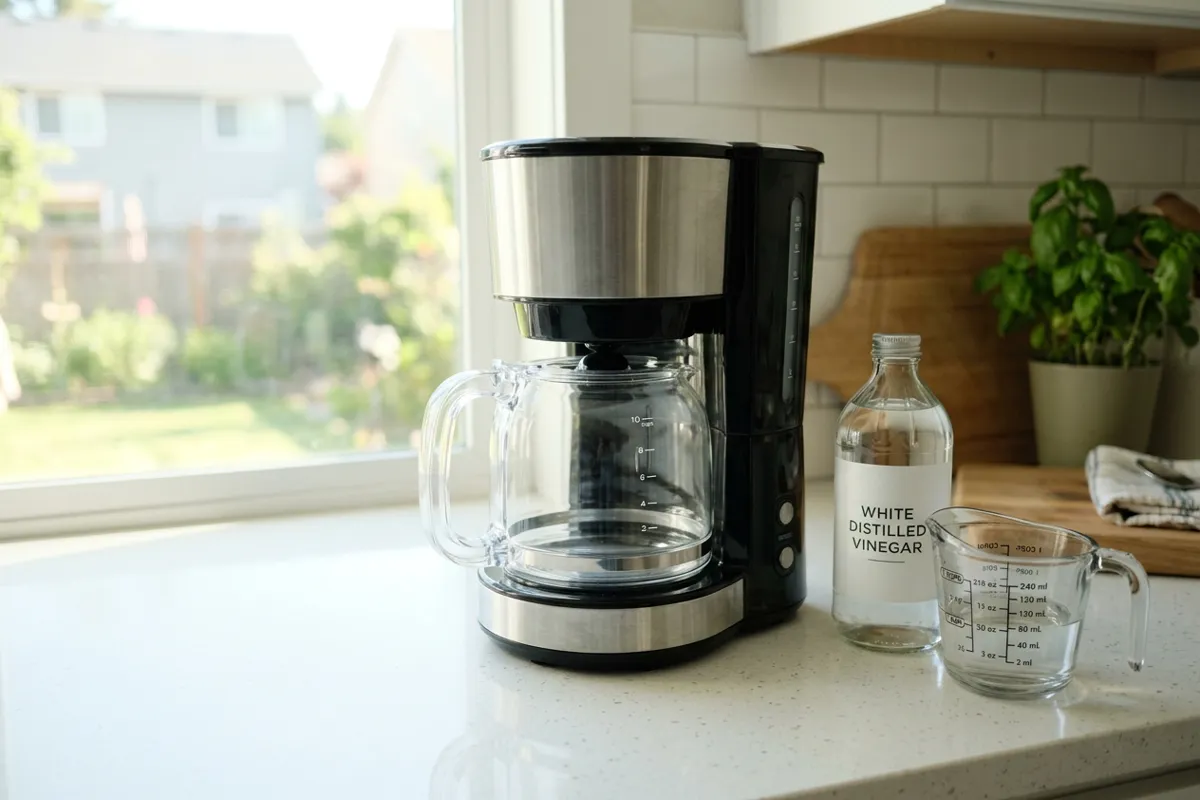
How to Clean a Coffee Maker with Vinegar: What You’ll Learn
- The right vinegar and water ratio for a drip coffee maker
- A 7-step descaling routine, with timing
- How to clean the carafe, basket and lid
- What to do for pod and single-serve machines
- How often to clean, and signs you’re overdue
Why You Should Clean Your Coffee Maker
Every cup passes through hot water, and hot water leaves behind minerals, mainly calcium and magnesium, especially if your tap water is hard. These form a chalky scale inside the heating element and tubing. Meanwhile, coffee oils coat the carafe, basket and spray head and turn rancid over time. The result is slow brewing, lukewarm coffee, strange tastes and sometimes a machine that stops working early.
Damp parts such as the water reservoir and filter basket can also grow mold and yeast if they stay wet. Regular cleaning keeps your machine running well and your coffee tasting the way it should. It’s a small habit that also fits nicely into a tidy kitchen routine, like the one in our coffee station organization ideas.
What You Need
- White distilled vinegar (5% acidity)
- Fresh cool water
- A paper filter (for the basket)
- Dish soap and a soft sponge
- A clean microfiber cloth
- Baking soda for the carafe, if it has stains
Use plain white vinegar. Apple cider and flavored vinegars contain sugars and color that can leave residue.
How to Clean a Coffee Maker with Vinegar in 7 Steps
Step 1: Empty and unplug-ready
Throw out any used grounds and the old filter. Empty the carafe and rinse it. Make sure the machine is cool and the basket is empty.
Step 2: Mix the vinegar solution
For a standard 10 to 12 cup drip machine, fill the reservoir halfway with white vinegar and the rest of the way with water, so about a 1:1 mix. For machines with a lot of visible scale, you can use two parts vinegar to one part water, though most models only need the half-and-half mix. For lightly used machines, one part vinegar to two parts water also works.
Step 3: Place a paper filter in the basket
A filter catches any flakes of scale that come loose. Leave out the coffee grounds.
Step 4: Run half a brew cycle, then pause
Start the cycle and let about half the solution run into the carafe. Turn the machine off. If your machine doesn’t have an off switch mid-cycle, unplug it for a moment, then plug it back in.
Step 5: Let it sit for 30 to 60 minutes
This soak time lets the vinegar dissolve scale in the heating element and tubing. Use the full 60 minutes if the machine hasn’t been cleaned in months.
Step 6: Finish the cycle
Turn it back on and let the rest of the vinegar run through. Pour out the hot vinegar and rinse the carafe.
Step 7: Rinse with fresh water twice
Fill the reservoir with fresh water only and run a full cycle. Do this at least two times, using a new paper filter each time, until there’s no vinegar smell. Many people find three rinses is safest for sensitive noses.
How to Clean the Carafe, Basket and Lid
While the vinegar soaks, wash the removable parts. Most baskets and carafes are top-rack dishwasher safe, but check the manual. Otherwise, scrub them with warm soapy water.
- Stained carafe: make a paste of baking soda and a little water, scrub gently and rinse.
- Basket and spray head: use a soft brush or toothpick to clear the tiny holes, where grounds collect.
- Lid and reservoir: wipe with a vinegar-dampened cloth, then dry fully to prevent mold.
- Outside of the machine: wipe with a damp microfiber cloth. Never submerge the base.
Glass and stainless steel look best when you dry them right away. If you’re also tackling the rest of the kitchen, our dishwasher cleaning guide and microwave lemon cleaning guide use the same pantry staples.
Pod and Single-Serve Coffee Makers
Single-serve brewers have narrow needles and small water lines, so they scale up quickly. Follow your manufacturer’s descaling instructions first, because some say not to use plain vinegar, and a few void warranties if you do. If the manual allows vinegar, use this approach:
- Remove the pod and empty the water reservoir.
- Fill the reservoir with equal parts vinegar and water, or use the maker’s descaling solution.
- Run brew cycles without a pod into a large mug until the reservoir is empty, pausing if your model suggests it.
- Let the machine sit for 30 minutes, then rinse the reservoir.
- Run at least 12 cycles with fresh water to flush all vinegar.
Also clean the needle area with a paperclip or the tool provided, and wash the drip tray and pod holder weekly.
Vinegar vs Other Descalers, Compared
| Cleaner | Best for | Cost | Notes |
|---|---|---|---|
| White vinegar | Routine descaling | Low | Rinse thoroughly; check manual |
| Citric acid solution | Heavy scale | Low to medium | About 1 to 2 tablespoons per quart of water |
| Commercial descaler | Single-serve and espresso machines | Medium | Follow the label exactly |
| Baking soda paste | Carafe stains only | Low | Not for the internal tubing |
Vinegar is the cheapest option, and for most drip machines it works well. If you have very hard water, consider citric acid or a descaler, or switch to filtered water to slow down scale.
How Often Should You Clean a Coffee Maker?
- After every use: discard grounds and filter, rinse the carafe, leave the lid open to air-dry.
- Weekly: wash the basket, carafe and removable parts with soap.
- Every 1 to 3 months: descale with vinegar. Monthly if you have hard water or brew daily.
- Every 3 to 6 months: deep clean the exterior, tray and reservoir.
Signs you’re overdue: slow or sputtering brewing, loud gurgling, bitter or sour coffee, white crust around the heating plate and coffee that isn’t hot. Add descaling to your monthly list in the deep cleaning checklist so you never forget.
Mistakes to Avoid
- Skipping the rinse cycles: leftover vinegar makes the next pot taste sour.
- Using undiluted vinegar: it can be harsh on rubber seals.
- Mixing vinegar with bleach: never do this, since it releases toxic gas.
- Ignoring the manual: some machines need a specific descaler.
- Leaving water in the reservoir: stagnant water breeds mold and tastes stale.
Keep your supplies together near the machine. A small caddy with vinegar, filters and a brush makes monthly cleaning almost automatic, and our small kitchen organization ideas show how to give them a home.
Keep going: another small appliance to refresh: a crock pot with burnt-on food.
Related guides
Save this for later
Pin this image to your Pinterest board so it’s there when you need it.
 Save to Pinterest
Frequently Asked Questions
How do you clean a coffee maker with vinegar?
Fill the reservoir with half white vinegar and half water, put a paper filter in the basket and run half a cycle. Let it sit 30 to 60 minutes, finish the cycle, then run two or three cycles of fresh water to rinse.
What is the ratio of vinegar to water for cleaning a coffee maker?
Use equal parts white vinegar and water for most drip machines. If your water is hard and the machine has heavy scale, you can go stronger, but always follow the manufacturer’s guidance.
How often should you clean your coffee maker with vinegar?
Every one to three months is typical, and monthly if you have hard water or brew every day. Wash removable parts with soap weekly.
Can you use vinegar to clean a Keurig or pod coffee maker?
Check your manual first. Some pod machine makers recommend their own descaling solution. If vinegar is allowed, dilute it with equal water and run many fresh water cycles afterward to flush it out.
How do you get the vinegar smell out of a coffee maker?
Run at least two full cycles of fresh water with new paper filters, until there is no smell. Wash the carafe and basket with soap and leave the lid open to air out.
Cleaning your coffee maker with vinegar takes a few minutes of work and an hour of waiting. Use a 1:1 mix, soak, then rinse until the smell is gone, and repeat every one to three months for better, hotter coffee.